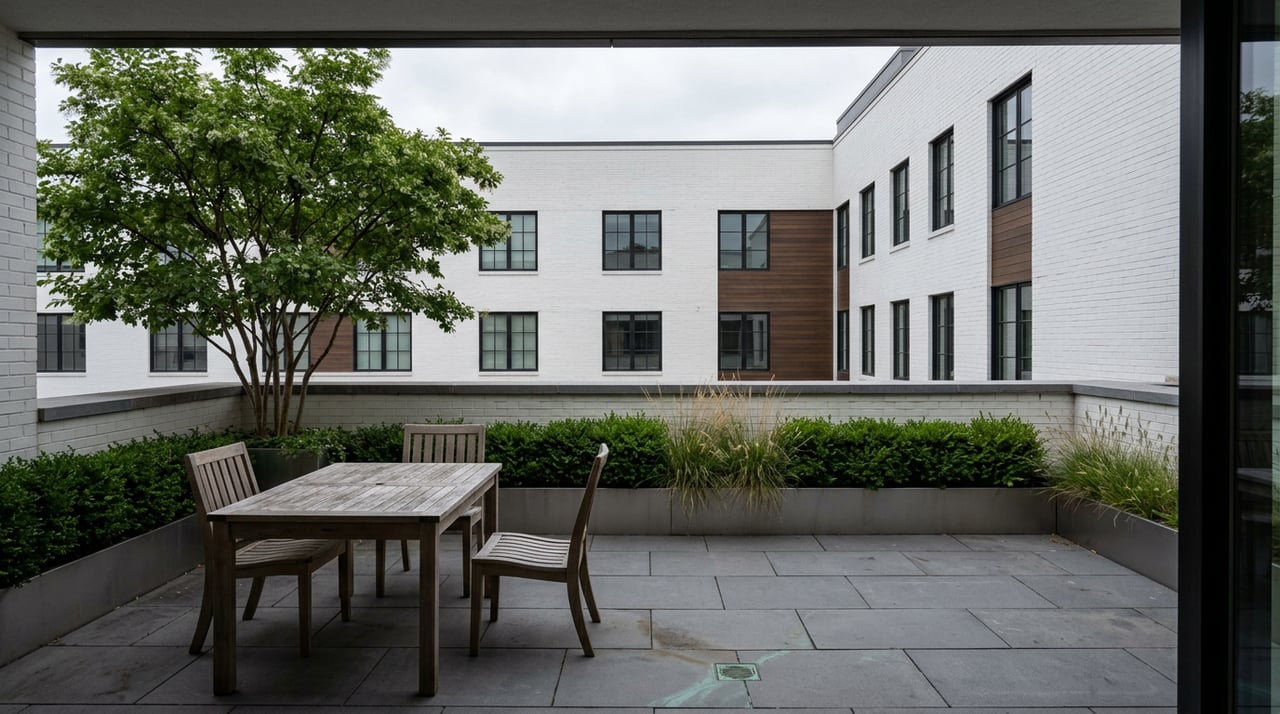
A four-bedroom property near East Nashville, a lender pre-approval in hand, and an AirDNA projection showing just enough revenue to clear the debt service threshold. The DSCR loan had already told him the deal worked. What it had not told him was that the permit attached to the property was non-transferable, the AirDNA number was pulled from a comparable set that included properties with pools he did not have, and his actual occupancy floor was closer to 42 percent than the 58 percent the projection assumed. The loan said yes. The underwriting said no.
That gap — between what a DSCR loan approves and what a Nashville STR actually produces — is the most important thing I can explain to an investor right now.
What a DSCR Loan Actually Does
DSCR loans qualify you based on your property's projected cash flow rather than your personal income, eliminating the documentation barriers that block self-employed investors and portfolio builders from scaling their STR businesses. That is a real and meaningful advantage. If you are self-employed, a W-2 earner with heavy write-offs, or simply someone who does not want conventional financing limiting your portfolio growth, DSCR is a logical path.
A DSCR loan is a rental property loan that qualifies the borrower based on the property's cash flow, not personal income. DSCR stands for Debt Service Coverage Ratio — the ratio that compares a property's monthly rental income to its monthly debt obligations. When that ratio is 1.0 or higher, the property qualifies. The borrower's W-2, tax returns, and employment history are not part of the evaluation.
Depending on the lender and the terms of the loan, DSCR loans usually require down payments of 20% to 25% and credit scores of at least 620 to 680. For STR-specific programs, the down payment requirement often runs higher. STR-focused DSCR loans typically require 25% to 30% down (70% to 75% LTV), which is slightly more than traditional rental DSCR loans due to the higher perceived risk of short-term rental income.
As of June 2026, DSCR loan rates currently sit at 6.5 to 8.0%. That spread is wide, and where your deal lands in that range depends on your credit score, your DSCR ratio, your LTV, and whether you are financing a long-term or short-term rental. STR properties carry an additional rate premium. That single distinction drives everything else, including a roughly 0.25 to 0.50 point higher rate and a lower maximum loan-to-value (commonly 75 percent for STR versus up to 80 percent for long-term DSCR).
The structure is genuinely useful. The risk is not in the product — it is in how the income number is generated.
The Hidden Risk: How STR Income Gets Into the Loan
Here is the piece most buyers never fully understand before they close.
The key difference from long-term rental DSCR is how income is evaluated: for STR, the qualifying income comes from AirDNA projections rather than appraiser market rent. AirDNA is a data analysis tool that aggregates short-term rental history from Airbnbs across the U.S. and makes a projection about a property based on comparable properties with similar specifications.
That word — projection — carries enormous weight. The lender is not looking at what your property has earned. It is looking at what a model thinks similar properties have earned in your area. Because a projection is not proven income, lenders build in a cushion. The common rule: if the property has fewer than twelve months of short-term rental history, the lender applies a haircut to the AirDNA number, frequently around 25 percent, before running the ratio. A $96,000 projection becomes $72,000 of qualifying income after a 25 percent haircut.
That haircut is the lender protecting itself. It is not protecting you. If the underlying projection is optimistic to begin with — and in Nashville's current supply environment, many are — the 25 percent haircut still produces a DSCR that clears the threshold, and the loan closes. What does not close is the gap between projected revenue and real-world performance once you are operating the property.
Short-term rental income is projected using an STR income report from AirDNA, actual booking history, or a rent schedule with STR adjustments. Lenders typically apply discount factors to the STR revenue figures — typically 10 to 25 percent — to account for seasonality and market risk. But even with a discount applied, a flawed comparable set produces a flawed number. Garbage in, garbage out — just with a mortgage attached.
What Nashville's STR Market Actually Looks Like Right Now
Understanding the lending mechanics means nothing without understanding the market the loan is supposed to finance. Nashville's STR landscape in 2026 looks different from the headline numbers would suggest.
With 4,158 active Airbnb listings, an average daily rate of $217, and seasonalized annual revenue of $48,559, the market offers meaningful earning potential — though property values averaging $758,548 mean investors need to underwrite carefully. Occupancy sits at 32%, above the Tennessee state average of 29%, signaling that Nashville's demand engine remains durable even amid a growing supply base.
Read that occupancy number carefully: 32 percent across the full market. That is the average. Entry-level properties — the bottom 25 percent — average 27% occupancy, potentially facing higher vacancy. If a lender's AirDNA model is pulling comps from the top half of the market and applying them to a mid-range property, the projected revenue is structurally overstated before the loan ever funds.
The seasonality problem compounds this. Nashville's STR market is heavily event-driven, with peak demand from April through October. June, in particular, sees high occupancy, largely due to events like the CMA Fest. October is the strongest month and January is the softest, so investors should expect demand to move meaningfully throughout the year rather than stay flat. A lender running an annualized AirDNA projection does not feel January. You do. Every month, with a mortgage payment due regardless of occupancy.
There is also the permit problem, which is Nashville-specific and expensive to get wrong. Davidson County's non-owner-occupied STR permit list sits at roughly 4,800 active units heading into 2026, and the Metro Council's Type 2 moratorium in most residential zones means that number is capped, not growing. A DSCR loan does not verify permit status. It verifies that the projected income clears a ratio. Those are two entirely different things.
Nashville's short-term rental advisory process starts with permit and zoning verification before we ever model revenue. That is not a secondary step. It is the first step. The loan comes after.
Four Checks That Tell You If the DSCR Loan Is Helping or Hiding
Here is the practical framework I use before advising a client to proceed with DSCR financing on a Nashville STR:
1. Stress-test the AirDNA number independently. Pull the comparable set the lender used and audit it yourself. Are the comps in the same neighborhood? Do they have the same bedroom count, parking situation, and amenity profile? Annual revenue in Nashville ranges from $25,415 for studios to $148,197 for 6-plus bedroom properties, with 4-bedroom units at $67,313 offering a strong balance of earning power and relative acquisition feasibility. A 2-bedroom in Inglewood does not comp to a 4-bedroom in Germantown. If the lender's AirDNA set includes larger or better-located properties, the projection is inflated.
2. Run a downside scenario, not just a base case. Underwriting must be conservative — use a $225 ADR and 55% occupancy base case instead of relying on older peak comps. I push that conservatism further: model a scenario at 45 percent occupancy with your fully loaded debt service including taxes, insurance, HOA if applicable, and management fees. If that scenario still produces positive cash flow, the DSCR loan is helping you. If it turns negative, the loan is masking a thin deal.
3. Confirm permit transferability before ordering the appraisal. One of the most common and expensive mistakes investors make is assuming a property can be used as a short-term rental simply because similar listings exist nearby. In reality, permits are not guaranteed and, in many cases, cannot be transferred after a sale. A DSCR lender does not verify this. Neither does a general title search. You need someone who knows how to pull the Metro permit database and read what comes back.
4. Know your rate sensitivity. At 7 percent or higher, debt service on a $650,000 Nashville STR is roughly $4,300 to $4,600 per month on principal and interest alone, before taxes and insurance. At 32 percent market occupancy and a $217 ADR, many properties do not clear that threshold at a 1.0x DSCR without optimistic assumptions built into the AirDNA model. Higher interest rates near 7% significantly impact cash flow compared to the 4% rates available in previous years. Operators who purchased at rates like 7.5% while modeling optimistic occupancy numbers are currently facing financial distress.
When the DSCR Loan Is Actually the Right Tool
None of this is an argument against DSCR financing. It is the right product in the right situations, and I recommend it regularly.
The DSCR loan works cleanly when a property has an established STR operating history — twelve trailing months of actual booking statements that replace projected revenue with verified income. If your property already operates as a short-term rental, actual income history from 12 to 24 months of bank statements or booking platform reports carries more weight than projections. That removes the biggest risk in the model: you are no longer underwriting a projection, you are underwriting a track record.
It also works when the STR income is clearly superior to long-term rent. STR investors have increasingly turned to DSCR loans as the most practical financing path for Airbnb and VRBO portfolios, given that conventional lenders underwrite STR income only on long-term market rent comparables, which can dramatically understate actual earnings. Forward-thinking DSCR lenders qualify STR properties using projected income data from platforms like AirDNA, which provides occupancy and rate projections specific to each submarket. If long-term rent on a Germantown property is $2,800 per month and verified STR income is $6,500 per month, the DSCR loan is the vehicle that actually reflects reality. Conventional underwriting would kill that deal on paper even though the economics are strong.
And it works when you are a self-employed buyer or portfolio investor who has already hit conventional lending limits. Since DSCR loans don't impact personal debt-to-income ratios, investors can acquire multiple short-term rentals more efficiently. That scalability advantage is real, and it matters for the serious investor building a portfolio across Nashville's strongest STR neighborhoods — Germantown, East Nashville, The Nations, and SoBro among them.
How We Actually Advise Clients on This
The conversation I have with every Nashville STR buyer before they talk to a DSCR lender goes like this: the loan is the last thing we solve. Permit viability, zoning confirmation, and conservative revenue modeling come first. The financing structure follows the underwriting, not the other way around.
Here is what that looks like in practice. We pull the zoning on the property and confirm it supports a non-owner-occupied STR permit. We verify whether a current permit exists and whether it is transferable upon sale. We run our own revenue model using conservative occupancy assumptions — not peak-season comps — and we cross-reference that model against the AirDNA number the lender will use. If the lender's AirDNA number is materially higher than our model, that is a flag, not a green light.
Only after that sequence do we engage a DSCR lender. At that point, if the deal is real, the loan closes cleanly. If the deal does not survive the underwriting, we tell the client before they spend $1,000 on an appraisal and two weeks of due diligence. That conversation is harder than saying yes. It is also the reason clients come back — and why we have been recognized as one of Nashville's leading STR and investment advisors.
Our Nashville STR advisory process includes pre-purchase zoning and permit verification, proprietary revenue modeling through the Costigan Group STR Underwriting Calculator, and a clear read on whether the financing structure matches the deal — not just whether the ratio clears on paper.
If you are evaluating a Nashville STR and a DSCR lender has already told you the deal works, reach out before you go further. The number the loan approved and the number the market will produce are not always the same. Knowing the difference is the whole job. Explore more about how we work with Nashville STR investors on our short-term rental advisory page.
Frequently Asked Questions: DSCR Loans for Nashville STR Buyers
What is a DSCR loan and how does it work for Nashville short-term rental buyers?
A DSCR loan is a type of mortgage for investment properties that looks at the property's rental income instead of the borrower's personal income, tax returns, or work history to see if they qualify. For Nashville STR buyers specifically, lenders use AirDNA revenue projections — not long-term lease comparables — to calculate whether the property's projected income covers its monthly debt service. If the ratio meets the lender's minimum (typically 1.0 to 1.25), the loan qualifies regardless of what appears on your personal tax returns. This makes it useful for self-employed investors and portfolio buyers, but it also means the quality of the revenue projection matters enormously. A flawed AirDNA number produces a qualifying ratio that does not reflect real-world performance.
What down payment is required for a DSCR loan on a Nashville Airbnb property?
STR-focused DSCR loans typically require 25% to 30% down (70% to 75% LTV), which is slightly more than traditional rental DSCR loans due to the higher perceived risk of short-term rental income. Standard long-term rental DSCR programs can go up to 80% LTV, so STR buyers should plan for a larger down payment. On a $650,000 property in Germantown or East Nashville, that means $162,500 to $195,000 in equity at close — before closing costs, reserves, and furnishing. Budget accordingly before you fall in love with a listing.
What DSCR ratio do I need to qualify for an STR loan in Nashville?
Most lenders require a minimum DSCR between 1.0 and 1.25 for approval. Properties with ratios above 1.35 typically qualify for better interest rates, while some specialty lenders offer "no-ratio" programs that accept properties with DSCR below 1.0 in exchange for larger down payments and higher rates. The practical challenge in Nashville is that at current interest rates of 6.5 to 8 percent and an average market occupancy of around 32 percent, many properties only barely clear the 1.0 threshold when modeled conservatively. A ratio that just clears is not a good deal — it is a fragile one. Aim for a 1.25x ratio or better modeled at conservative occupancy assumptions before you consider a deal viable.
Can the DSCR loan tell me if a Nashville STR permit is transferable?
No. A DSCR loan verifies that projected income covers debt service. It does not verify permit eligibility, zoning compliance, or whether a non-owner-occupied STR permit can transfer to a new buyer at closing. One of the most common and expensive mistakes investors make is assuming a property can be used as a short-term rental simply because similar listings exist nearby. In reality, permits are not guaranteed and, in many cases, cannot be transferred after a sale. Permit verification is a pre-offer step, not a post-approval step. If you wait until you are under contract to check, you may find out at closing — and the lender will not unwind the deal for you.
Is a DSCR loan the right financing for a first-time Nashville STR buyer?
It can be, but first-time buyers face the highest risk from optimistic AirDNA projections because they have no baseline to compare against. Conventional investment loan programs create a frustrating barrier — they require strong documented income, a low debt-to-income ratio, and a personal financial profile that often does not match the reality of someone building wealth through real estate. DSCR solves that documentation problem. What it does not solve is the underwriting discipline required to evaluate whether Nashville's current market actually supports the revenue the lender is using to qualify the loan. A first-time STR buyer in Nashville should work with an advisor who underwrites the deal independently — not just a lender who approves it.
Jack Costigan is the founder of The Costigan Group at Compass in Nashville, where his team has closed more than $100 million in real estate across Greater Nashville and Middle Tennessee. Specializing in luxury advisory, investment, and short-term rental real estate, Jack is known for a data-driven approach that helps buyers, sellers, and investors understand the numbers, the neighborhood, and the long-term value before making a decision. Featured in Apple News as one of Nashville's most sought-after short-term rental advisors, Jack pairs deep local expertise with modern marketing and a strategy-first approach to real estate. Learn more at thecostigangroup.com.