A client called last spring with a straightforward question: "Should I buy something on the East Bank before it blows up?" He had read about the stadium, seen the Oracle renderings, and heard the word "transformation" enough times to feel like he was already late. His instinct was reasonable. His execution plan had several gaps that would have cost him significantly. This is the conversation he needed to have first.
The Mistake Most People Are Making With East Bank Nashville Real Estate
The most common error right now is treating the East Bank as a single market with a single outcome. Buyers talk about it as if proximity to the project automatically translates into equity appreciation. Investors assume event-night foot traffic means short-term rental income. Sellers within a mile of the construction zone think the hype alone justifies their ask. None of those assumptions are precise enough to build a real estate decision on.
The East Bank is not a neighborhood. It is a 550-acre area adjacent to the Cumberland River, running from River North and the planned Oracle campus all the way to I-24 to the south, and includes 130 acres of Metro-owned land. That is an enormous footprint with multiple sub-districts, multiple timelines, and multiple demand drivers. A property near the Oracle campus in River North is a completely different investment thesis than a condo two blocks from the stadium site. Treating them as the same bet is the mistake.
What Is Actually Being Built and When
Let's establish what is real right now so we can work from facts, not renderings.
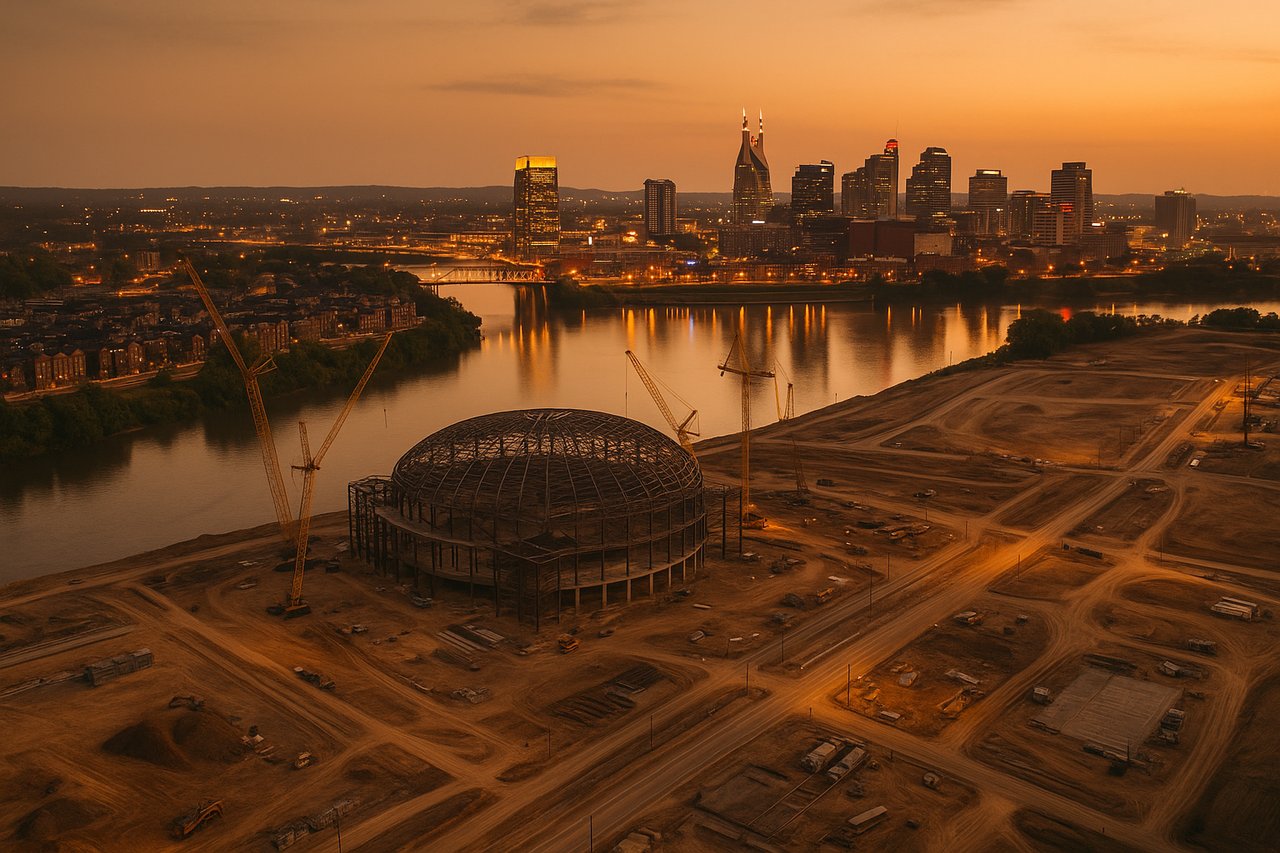
The new Titans stadium. The Tennessee Titans are building a new indoor stadium that will serve as the centerpiece of Nashville's East Bank, expected to open in the spring of 2027. The 60,000-seat stadium is projected to cost $2.1 billion, including $1.26 billion of public money — the largest stadium subsidy in U.S. history. The structure is topped out. This is no longer a rendering.
The Fallon Company's 30-acre Initial Development Area. In April 2024, Nashville's Metro Council unanimously approved a Master Developer Agreement with The Fallon Co. to develop the first 30 acres of Metro-owned land. Vertical construction is anticipated to start once the new stadium is completed. The first ground-up buildings — including an affordable housing component and a hotel — are projected to break ground by the end of 2026, though Metro's chief development officer has acknowledged that many of the pictures showing multiple buildings are years away from reality, with a full buildout likely taking ten to fifteen years.
Oracle's River North campus. The development will span about 70 acres along the East Bank and include more than 2 million square feet of office space, retail areas, a luxury Nobu hotel, and new public park space along the Cumberland River. Once complete, the campus is expected to bring more than 8,000 high-paying jobs to the area and position Nashville as a major hub for artificial intelligence innovation. But there is a real complication: Oracle has told Nashville leaders it is moving forward with the project despite creeping doubts on the heels of the company's large-scale corporate layoffs. Oracle has not announced a construction start date for the East Bank campus, and the demolition permits alone do not lock in the project. The pedestrian bridge connecting Germantown to the Oracle site is confirmed in design, but construction timelines remain fluid. This is a story that needs monitoring, not blind pricing in.
The Nashville East Bank Plan envisions 22 million square feet of new mixed-use development across four walkable districts. The scale is real. So is the timeline: the size of the project is nearly 10 times the size of Nashville's Gulch neighborhood. The Gulch took about fifteen years to mature into what it is today. The East Bank is larger, more complex, and more infrastructure-dependent.
Who Benefits: Four Clear Winners
1. Germantown Owners and Buyers
Germantown is the most directly positioned neighborhood for East Bank appreciation, and the thesis is specific enough to underwrite. Germantown sits directly across the river from the Oracle campus, and the planned pedestrian bridge will connect Germantown's residential core to the new headquarters — which means Germantown is the closest walkable neighborhood to what will be Oracle's front door. The new pedestrian bridge will link Germantown to the East Bank, while added green space will expand access along the Cumberland River and strengthen ties between neighborhoods.
Prices in Germantown are already rising — home values had risen 4.5% in early 2025 compared to the previous year. Current median prices in the area range from roughly $500,000 to $600,000, with the high end reaching well above $1M for larger historic homes, and limited inventory has kept appreciation above the citywide average. If Oracle executes at anywhere near its stated job target, that pedestrian bridge is a commute infrastructure improvement that gets priced into Germantown real estate the same way a new transit stop does. Buyers who move now are buying ahead of the pricing event, not after it. That said, the Oracle uncertainty is real and worth hedging — do not overpay today banking entirely on a campus that has not broken ground.
2. Long-Term Sellers in East Nashville's Inner Pockets
If you own in Lockeland Springs, Cleveland Park, or on any of the tighter residential blocks between downtown and Shelby Park, the East Bank builds your exit narrative significantly. In March 2026, East Nashville home prices were selling for a median price of $560K. That is a market in transition, not a market in distress. The development story is something a sophisticated listing should be telling explicitly — walkable proximity to a new waterfront district, a new NFL stadium, and one of the largest corporate campuses in the state's history is a legitimate amenity story. The sellers who will benefit most are the ones who market that story with documented specifics rather than vague neighborhood hype.
3. Investors Buying Pre-Retail Infrastructure
When a 550-acre district goes from parking lots to a mixed-use urban core, early retail and hospitality demand gets absorbed by what already exists nearby. East Nashville's Five Points corridor, the restaurants and bars on Gallatin Avenue, and the hotel operators along the riverfront are all positioned to absorb demand years before the East Bank's own retail activates. Investors who buy into established East Nashville commercial corridors right now are buying the "before" with reasonable confidence that "after" is coming. The risk is timeline slippage — buying based on a 2027 transformation while the full retail infrastructure is realistically a 2030 to 2032 story.
4. Relocating Buyers Who Want Downtown Access Without Downtown Pricing
A buyer relocating from Los Angeles, Chicago, or New York who is weighing where to land in Nashville should be hearing about East Nashville as a serious alternative to the Gulch or SoBro right now. Los Angeles homebuyers searched to move into Nashville more than any other metro, followed by Atlanta and Chicago. These buyers understand the concept of buying into a neighborhood in transformation — they watched it happen in Brooklyn, Wicker Park, and Silver Lake. East Bank Nashville real estate is a recognizable thesis for that buyer profile. If you are advising one of those clients, our Nashville relocation advisory is built precisely for this decision: how to triangulate lifestyle, commute, and appreciation potential across Nashville's most dynamic submarkets.
Who Does Not Benefit: Three Real Risk Profiles
1. Buyers Expecting Short-Term Returns Near the Construction Zone
Active construction on 550 acres means road closures, noise, and visual chaos for years. Buyers know that 550 acres under construction for the next decade means traffic disruptions, noise during certain phases, and visual chaos for a while. Properties that sit adjacent to the most active work zones — particularly around the current stadium site and the Fallon IDA parcels — will face real resale headwinds until the surrounding public realm is complete. These are not properties you want to flip in two years. They are properties you hold through construction and sell into a completed district. If your timeline is under three years, the near-construction-zone bet carries meaningful friction risk.
2. STR Investors Assuming Event Night Economics
Stadium-proximate STR investing is one of the most misunderstand strategies we see. Yes, a new enclosed stadium hosting Super Bowls, Final Fours, and major concert events will generate event-night premium demand. The stadium will host Super Bowl LXIV in 2030, which will be the first Super Bowl in Nashville. That is a real revenue event. But STR performance is built on weekly and monthly occupancy averages, not event spikes. The question is what happens the other 300 nights a year. Davidson County's STR permitting environment is also a live variable that affects whether a given property can legally operate. Our Nashville STR advisory process starts with permit viability and underwriting before the offer — not after it. Anyone buying near the East Bank purely on event-night upside without that groundwork is speculating, not investing.
3. Sellers Trying to Price in a Development That Has Not Delivered Yet
This is the risk on the other side. A seller in the Shelby's Bend section of the East Bank corridor — the southernmost zone between Korean Veterans Boulevard and I-24 — is not sitting on the same demand catalyst as a Germantown homeowner. The Fallon master plan covers the central Metro-owned parcels. Shelby's Bend is later in the sequencing. Pricing a property in 2026 as though it is adjacent to a completed mixed-use waterfront district, when that district is realistically a 2032 story, is how sellers sit on market and gradually give back their negotiating position. Price the present. Market the future. Those are two different conversations.
The Costigan Framework: Four Checks Before Any East Bank Decision
We use four filters when advising clients on East Bank Nashville real estate, regardless of whether they are buying, selling, or investing.
- Sub-district precision. Which of the four East Bank zones does this property actually sit in or benefit from? River North and Oracle proximity is a different thesis than Central Waterfront and stadium proximity, which is different again from Shelby's Bend. Get specific about the zone before pricing the upside.
- Timeline honesty. What is the realistic delivery window for the infrastructure that drives value? A pedestrian bridge to Oracle, stadium opening in 2027, and a completed boulevard are three separate timelines. Which one actually matters for your property, and when does it arrive?
- Construction exposure. How close is the property to active work zones, and for how long? This directly affects days on market, resale liquidity, and negotiating position on any exit within a five-year window.
- Demand driver specificity. Is your property positioned for the Oracle employment base, the stadium event economy, or neighborhood spillover from East Nashville's established demand? Each requires a different buyer profile and different marketing strategy. Knowing which driver you are relying on matters more than the general "East Bank is booming" narrative.
For sellers, this framework also shapes how we position listings. Our Nashville luxury real estate strategy applies directly here — the East Bank story is a premium narrative that needs to be marketed with precision and documentation, not aspirational language that sophisticated buyers immediately discount.
The Honest Big Picture
The Gulch analogy is useful, but it cuts both ways. The Gulch went from a rail yard to one of Nashville's most expensive zip codes — and the East Bank is ten times that footprint, with more institutional investment behind it and a defined development authority running the show. That scale is real. So is the complexity. The biggest projects on this site — Oracle's campus, the Fallon mixed-use parcels, the East Bank Boulevard itself — are all at different stages of certainty. Metro's chief development officer has acknowledged "there's no getting around the infrastructure challenges," citing thorny problems around the boulevard alignment, James Robertson Parkway, and utility work with no fixed timelines yet.
None of that makes East Bank Nashville real estate a bad bet. It makes it a bet that requires actual underwriting, not enthusiasm. The people who made real money in the Gulch were not the ones who bought because they heard it was going to be great. They were the ones who bought a specific property with a specific thesis at a price that made sense even if the full vision took longer than expected. That is exactly the standard we hold East Bank clients to. For clients exploring Nashville's broader neighborhood ecosystem, our Nashville neighborhood guides provide a fuller picture of how each area fits the overall market.
If you are evaluating an East Bank or East Nashville position right now — as a buyer, seller, or investor — let's have the specific conversation, not the general one. The map matters. The timeline matters. The sub-district matters. And getting those three things right before you act is the only version of this trade that makes sense.
Frequently Asked Questions: East Bank Nashville Real Estate
Is now a good time to buy real estate near the East Bank in Nashville?
It depends on what you are buying and why. Properties with specific proximity to Oracle's planned pedestrian bridge in Germantown, or established East Nashville blocks with clear walkability to the future district, represent defensible buys right now. Properties directly adjacent to active construction zones carry real short-term friction. The most important variable is your hold timeline — a three-year flip near a construction site is a very different risk profile than a seven-to-ten-year hold on a Germantown bungalow. Buy with a thesis, not based on general optimism about the project.
What is the current median home price in East Nashville?
As of March 2026, East Nashville home prices were selling for a median price of $560K according to Redfin data. That number masks significant variation between sub-neighborhoods. Lockeland Springs and Inglewood continue to see strong demand for well-renovated product, while pockets closer to active construction zones are showing more days on market and more negotiating room. Price by block and product type, not by the broad East Nashville average.
Will the new Titans stadium increase property values nearby?
The stadium is a real catalyst — the Tennessee Titans' new indoor stadium is expected to open in the spring of 2027 — but the direct value impact depends on property type and distance. Stadium-adjacent residential benefits most from long-term appreciation as the surrounding district develops, not from event-night short-term rental income alone. The more durable value driver is the broader East Bank buildout the stadium anchors: the $2.1 billion enclosed venue anchors 550 acres of East Bank redevelopment including residential, hospitality, and infrastructure expansion. Event-only investors without a full STR underwriting analysis are frequently disappointed by the actual occupancy numbers the rest of the year.
How does the Oracle campus factor into East Bank real estate values?
The state and Metro approved the Oracle deal anchored by the company's pledge to employ 8,500 workers in Nashville by the end of 2031. If executed, that is a structural employment driver that would lift demand across East Nashville, Germantown, and the broader East Bank corridor. However, the project carries real uncertainty: the layoffs, the disruption from AI, and the sheer amount of time since the project was announced have generated serious questions about the status of the tech giant's ambitious plans. We advise clients to treat Oracle as a meaningful upside catalyst, not a guaranteed pricing floor. Buy at a price that works without Oracle delivering in full; let Oracle be the upside.
Is the East Bank good for short-term rental investment in Nashville?
Selectively yes, but not for the reason most investors cite. The event economy — driven by the stadium hosting Super Bowl LXIV in 2030 and other major events — will generate real premium nights. The challenge is that STR performance is built on average annual occupancy, not peak events. A property needs to perform consistently year-round, not just on game days. Davidson County's STR permitting rules also apply, and permit eligibility has to be verified before the offer. Our Nashville STR underwriting process runs the full analysis — permit status, projected annual occupancy, revenue range, and break-even — before any offer is made. Skip that step and you are buying a hope, not an investment.
If you are trying to determine exactly where you stand in the East Bank development story — whether that means timing a sale, positioning a buy, or underwriting an investment property — reach out directly. The map of who benefits and who waits is specific enough that a fifteen-minute conversation can tell you which side of it you are on.
Jack Costigan is the founder of The Costigan Group at Compass in Nashville, where his team has closed more than $100 million in real estate across Greater Nashville and Middle Tennessee. Specializing in luxury advisory, investment, and short-term rental real estate, Jack is known for a data-driven approach that helps buyers, sellers, and investors understand the numbers, the neighborhood, and the long-term value before making a decision. Featured in Apple News as one of Nashville's most sought-after short-term rental advisors, Jack pairs deep local expertise with modern marketing and a strategy-first approach to real estate. Learn more at thecostigangroup.com.