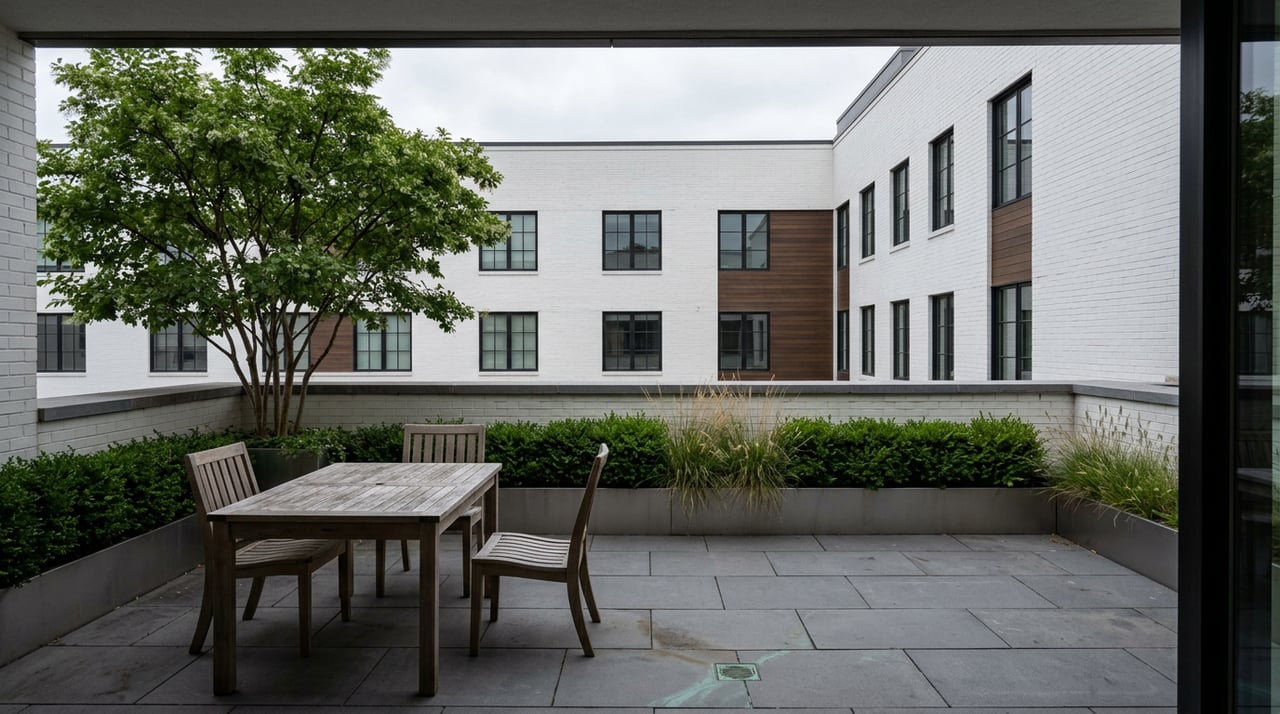
A client sent me a listing last month. Four-bedroom townhome in a purpose-built STR community. The seller was advertising $95,000 in annual gross revenue. The photos looked great. The location was solid. They wanted to write an offer the same week.
Before we touched the contract, we pulled the AirDNA comp set, verified the zoning district, confirmed permit type, and requested twelve months of actual bank-reconciled income statements. The gross revenue number was real. The net operating income, after a 20% management fee, utilities, insurance, cleaning, and furnishing refresh budget, told a different story at that purchase price.
We still bought in that neighborhood — just a different unit, at a number that actually penciled. That is what comparing Nashville Airbnb listings for sale actually looks like when it is done correctly.
This market has matured. The short-term rental market is no longer a place where almost anything works. Many of the properties bought during the 2021–22 boom were priced on peak pandemic income, not on real estate fundamentals. That income has normalized, and the market is now sorting: well-bought, well-run properties still sell fast, while overpriced ones sit. If you are shopping Nashville Airbnb listings right now, the framework you use to compare them will determine whether you build a real investment or inherit someone else's problem.
The Mistake Most Buyers Make
Most buyers shopping Nashville Airbnb listings for sale compare the wrong things first. They look at the photos, the location, and the seller's stated revenue number. Then they run a quick back-of-envelope calculation to estimate cash flow. Then they make an offer.
That sequence is backwards.
Revenue stated by a seller is a marketing document, not an underwriting input. Pro forma income rests on assumed nightly rates, assumed occupancy, and assumed expenses, and the party who wrote it carries none of the operating risk. Lenders discount it. Appraisers wrestle with it. Consequently, the buyer absorbs the entire gap between promise and performance.
The second mistake is treating location as scenery rather than economics. Two four-bedroom townhomes in the same price band — one in Germantown, one in a secondary corridor near the airport — do not have the same demand ceiling, the same guest profile, or the same resale market. Location is not a preference. It is a revenue variable.
The third mistake — and the one that ends deals — is assuming the STR permit comes with the property.
Check One: Zoning and Permit Status First, Always
Nashville's STR regulatory framework is the most consequential variable in any purchase decision, and it is the one most buyers underestimate until they are in contract.
New non-owner-occupied permits are not permitted in AR2A, R, RS, or RM zoned properties. Existing permit holders in these zoned districts may be eligible to apply for renewals, but those permits are not transferable if the property is sold or transferred. Read that twice. An existing STR operating perfectly legally in a residential zone today cannot hand that permit to the next buyer. On sale, the existing permit is gone for good.
This is why we treat permit type as the first line of any Nashville STR underwriting. There are two permit classes only: Owner-Occupied and Not Owner-Occupied, and the rules diverge sharply between them. New non-owner-occupied permits are banned in nearly all residential zones. Buildable supply is locked to specific commercial, mixed-use, and downtown zones.
Before evaluating revenue on any listing, confirm three things: the current zoning district, the permit type (owner-occupied or non-owner-occupied), and whether the buyer can obtain a new permit in that zone after closing. If you are buying in a purpose-built STR community zoned for commercial or mixed-use use, this is usually straightforward. If someone is selling you an operating STR in a residential neighborhood and implying the permit transfers, get that confirmed in writing from Metro Codes before you go under contract — not after.
Our Nashville STR advisory process starts with zoning verification before any revenue conversation. It is not optional, and it takes less than 24 hours. Discovering a permit problem during due diligence after going under contract is recoverable. Discovering it after closing is not.
Check Two: Revenue — What the Numbers Actually Mean
Nashville's short-term rental market has 13,898 active listings as of June 2026, according to AirDNA. The average active listing earned $40.9K in revenue over the trailing twelve months, with 54% occupancy and a $349 average daily rate. That average matters, but it is not what you are buying. You are buying a specific address with a specific permit, a specific bedroom count, specific reviews, and a specific location. The market average is a baseline, not a forecast.
Here is how we read revenue when evaluating Nashville Airbnb listings for sale:
- Trailing 12-month actuals, bank-reconciled: Not AirDNA projections, not a seller-prepared summary, not a screenshot from the Airbnb dashboard. Actual payouts from Airbnb or Vrbo to the seller's bank account, matched to the calendar. If a seller cannot produce these, that tells you something important.
- Occupancy pattern, not just occupancy rate: A property at 60% occupancy in October and 35% in January is a different investment than one running 55% consistently year-round. Peak revenue month for Nashville STRs is typically October, while February often presents the lowest earnings. Ask for month-by-month data, not annualized averages.
- ADR trend: From June 2025 to June 2026, Nashville STR revenue is down 6.1%, occupancy is up 1.7%, ADR is down 6.0%, and RevPAR is down 9.8%. An ADR declining while occupancy holds suggests the property is competing on price, not on quality or uniqueness. That is a positioning problem, not a demand problem.
- Operating expense reality: In Nashville, professional property management fees typically range from 15% to 23% of gross rental revenue, depending on scope of services. Add cleaning, utilities, maintenance, insurance, and a furnishing refresh reserve — and many listings that look like 8% cap rates on gross revenue come in closer to 5% on net.
Top-10%-performing Nashville STRs achieve $9,093 or more per month. That ceiling is real, but it requires a specific combination of location, bedroom count, amenity profile, and operational quality. Underwrite to the median, stress-test to the bottom quartile, and if the numbers still work, the upside takes care of itself.
Check Three: Location as an Investment Variable
The dominant Nashville Airbnb investment property type is the 4-bedroom, 4-bathroom townhome with rooftop deck. Nashville welcomed approximately 17 million visitors in 2025, supporting continued tourism-driven demand for short-term rental accommodations. But not all neighborhoods within Davidson County absorb that visitor demand equally.
The average Nashville STR sale price reached approximately $754,000 in 2025. Investor acquisitions concentrate heavily in zip codes 37207, 37203, and 37209 — redevelopment corridors surrounding downtown Nashville. Germantown, East Nashville, The Gulch, and properties within walking distance of Broadway anchor the strongest demand. Neighborhoods outside the urban core can perform well, but they require a specific guest acquisition strategy — typically targeting leisure groups rather than bachelorette parties and concert-goers — and they have a narrower resale buyer pool.
The location checklist we walk clients through:
- Drive time to Broadway: Under 10 minutes is the sweet spot for Nashville's bachelorette and group travel market. Properties at 20–25 minutes compete on price, which compresses ADR.
- Walkability to food and entertainment: A rooftop deck with a skyline view commands a premium. So does a location where guests can walk to dinner. Properties that require a car for every outing lose guest ratings over time, which shows up in your occupancy curve.
- Neighborhood supply concentration: A single street with twelve competing four-bedroom STRs is a different environment than a block with two. Pull active listings within a half-mile before you underwrite demand.
- Resale buyer depth: Who is going to buy this property from you in five years? If the answer is only a very narrow pool of STR-specific investors, your exit is more constrained than the acquisition suggests.
Our Nashville neighborhood guides provide the foundation for this kind of location-level analysis. Location is not a gut call — it is a set of measurable inputs that show up in booking data, ADR, and ultimately sale price when you exit.
Check Four: Furnishings — Asset or Liability?
Most buyers treat furnished Nashville Airbnb listings as a convenience. Experienced buyers treat furnishings as a due diligence item with real financial consequences.
The distinction matters in two directions. A fully operational, well-maintained, guest-ready property with quality furnishings, smart home technology, professional photography, and an established five-star review history is genuinely worth more than the same building empty. Turnkey properties can command premiums over comparable unfurnished properties but eliminate significant setup costs and months of negative cash flow during launch. That premium is justified when the furnishings are actually in good condition and do not require immediate replacement.
The flip side: dated, worn, or low-quality furnishings in an otherwise solid listing are a hidden cost that buyers routinely underestimate. Beat-up interiors or obvious deferred maintenance cause buyers to mentally subtract at 1.5 to 2 times the real fix cost. Dated, low-quality furnishings telegraph upcoming reinvestment.
When we evaluate a furnished Nashville STR listing, we request a furnishings inventory with estimated replacement cost as a standard due diligence item. That document serves multiple purposes: it tells you what the real reinvestment requirement looks like, it supports a separately allocated personal property line at closing, and it is a key input for the depreciation planning conversation with your CPA — particularly relevant now that the One Big Beautiful Bill Act, signed July 4, 2025, permanently restored 100% bonus depreciation for qualifying property acquired and placed in service after January 19, 2025.
Furnishings are also a negotiation variable. A listing with $40,000 in furniture that the seller claims adds full dollar-for-dollar value to the sale price is a different conversation than one where the furnishings are included at no incremental premium. Know what you are actually paying for.
How We Advise Clients Comparing Nashville STR Listings
When a client brings us a Nashville Airbnb listing to evaluate — or asks us to source options in a specific price band — this is the actual sequence we use before we recommend moving forward:
Step 1: Zoning and permit confirmation. We pull the Metro Nashville zoning map, confirm the base zoning district, identify the applicable permit type, and verify whether the buyer can obtain a non-owner-occupied permit at that address after closing. This takes 24 to 48 hours and happens before any other analysis.
Step 2: Revenue verification. We request trailing 12-month bank-reconciled income statements and cross-reference against AirDNA comp set data for that specific neighborhood and bedroom count. If the seller's stated revenue materially exceeds comparable active listings in the same area, we want to understand why — or discount it accordingly.
Step 3: Operating expense build. We build a full operating expense model using Nashville-specific inputs: management fee range, realistic cleaning frequency, utility estimates, insurance, property tax, and a furnishing refresh reserve. This produces a net operating income figure, not a gross revenue figure.
Step 4: Cap rate and return analysis. We apply a market-appropriate cap rate to NOI to determine whether the ask price is aligned with income value. We also run cash-on-cash return at current financing terms — DSCR lending is the most common financing path for Nashville investment STRs, and the debt service math matters.
Step 5: Location and competitive supply. We pull active STR competition within a half-mile, evaluate guest review quality on comparable listings, and assess the demand segment the property competes for. A 4BR townhome in Germantown is not competing with a 4BR house near Antioch. They are different businesses.
This process is what we built our Nashville STR underwriting process around. It is also available through our proprietary Nashville STR Underwriting Calculator, which we walk clients through before any offer is written. In Nashville, you are buying a permit as much as a house. The due diligence reflects that.
For clients who want the full context on how we approach Nashville STR investing — from initial market positioning to offer strategy and post-close launch — our detailed advisory work has been covered in national press, including a USA Today feature on our STR and investment advisory approach.
If you are currently comparing Nashville Airbnb listings for sale and want a second set of eyes on the numbers, reach out directly. We will run the underwriting before you write an offer — not after you are already in contract wondering whether the deal makes sense.
Frequently Asked Questions
Do Nashville Airbnb STR permits transfer to a new buyer at closing?
New non-owner-occupied permits are not permitted in AR2A, R, RS, or RM zoned properties. Existing permit holders in these districts may be eligible to apply for renewals, but those permits are not transferable if the property is sold or transferred. In eligible commercial and mixed-use zones, the new buyer must apply for their own permit after closing — the seller's permit cancels at the point of sale. Always verify permit eligibility in your specific zone with Metro Codes before going under contract.
What is the average revenue for a Nashville Airbnb in 2026?
According to AirDNA's June 2026 data, the average active Nashville STR listing earned $40.9K in trailing 12-month revenue, with 54% occupancy and a $349 average daily rate. Top-performing properties significantly outperform this average. Best-in-class properties in the top 10% achieve $9,093 or more per month. Market averages are a baseline — individual performance depends heavily on bedroom count, location, amenity quality, and operational execution.
What type of property performs best as a Nashville STR investment?
The dominant Nashville Airbnb investment property type is the 4-bedroom, 4-bathroom townhome with rooftop deck. This format aligns with Nashville's group-travel and bachelorette-party demand profile, where more beds per booking produces higher revenue per stay. Properties accommodating 6 to 8 guests consistently generate stronger RevPAR than smaller units in the same corridors. Purpose-built STR communities in commercially zoned areas of Germantown, East Nashville, and the downtown core represent the most liquid investment segment.
How do I verify the revenue a seller is claiming on a Nashville Airbnb listing?
Request trailing 12-month income statements directly from the Airbnb and Vrbo payout records — not a seller-prepared summary, not a screenshot, and not a projected pro forma. Cross-reference the stated occupancy and ADR against AirDNA market data for that specific neighborhood and bedroom configuration. If the seller's numbers materially exceed what comparable active listings are producing in the same area, ask for the explanation before accepting it. During due diligence, request login access to the booking dashboards to verify calendar history and guest review authenticity.
What financing options are available for buying a Nashville Airbnb?
The most common financing path for Nashville investment STR purchases is a DSCR (debt-service-coverage-ratio) loan, which qualifies the borrower based on the property's rental income rather than personal W-2 income. Many DSCR lenders offer better rates and terms for properties with 12 or more months of documented STR performance versus untested conversions. Conventional investment loans are also used, particularly by buyers with strong income profiles. Cash buyers operate with the most flexibility, especially when competing for well-priced listings with permit-eligible zoning. Always use a lender experienced with Nashville STR transactions — the appraisal requirements and underwriting standards differ from standard residential purchases. Our Nashville STR advisory page covers financing options in detail.
Jack Costigan is the founder of The Costigan Group at Compass in Nashville, where his team has closed more than $100 million in real estate across Greater Nashville and Middle Tennessee. Specializing in luxury advisory, investment, and short-term rental real estate, Jack is known for a data-driven approach that helps buyers, sellers, and investors understand the numbers, the neighborhood, and the long-term value before making a decision. Featured in Apple News as one of Nashville's most sought-after short-term rental advisors, Jack pairs deep local expertise with modern marketing and a strategy-first approach to real estate. Learn more at thecostigangroup.com.