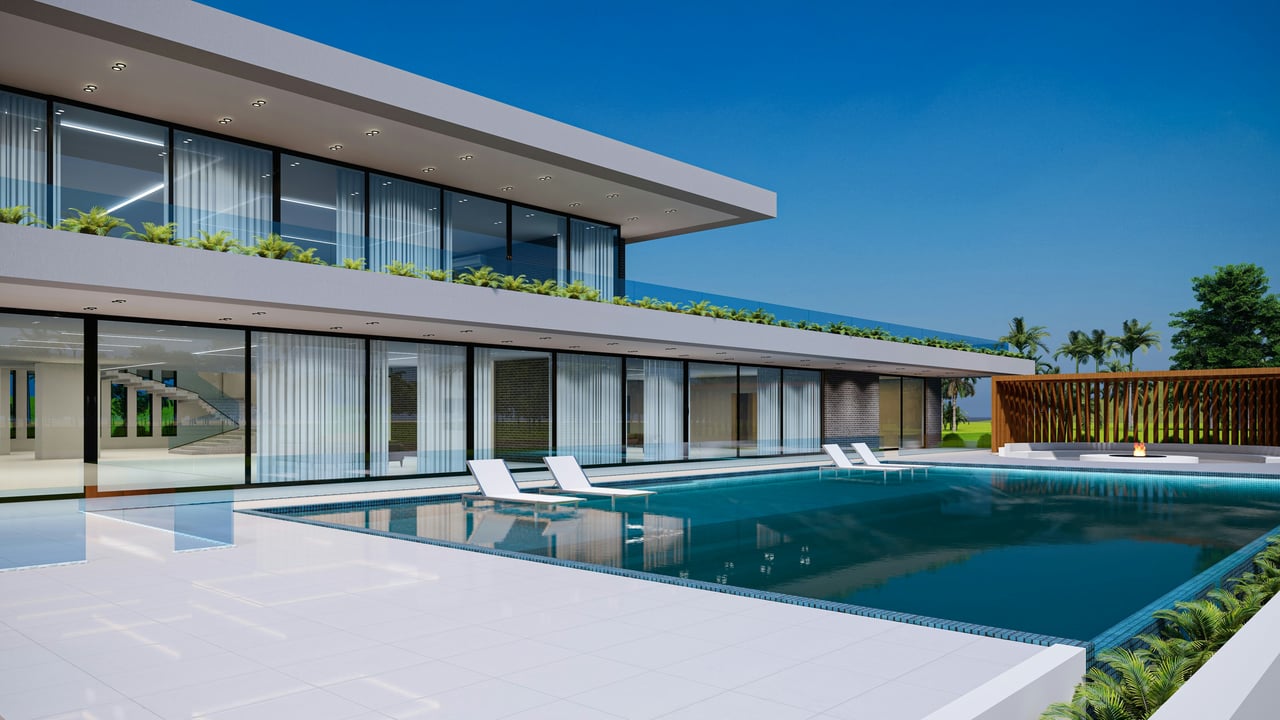
Greater Nashville Realtors reported 9,929 total home closings across the region in Q2 2026 — a 6% increase over Q2 2025 — with Davidson County's median sale price running $525,000 year-to-date through June 22, according to the same source. Those are metro-wide averages. They obscure a market that is, in reality, fifteen different markets stacked inside each other, each with its own absorption rate, buyer profile, and investment logic.
The neighborhood you choose determines your property tax rate, your appreciation trajectory, your rental viability, your commute, and — in several cases — whether the investment math works at all. This guide walks each major Nashville neighborhood in the order the city built itself: from its original urban core outward to the suburban corridors that now command the region's highest medians. For every area, the read is the same: what it was, what moved prices, where it stands now, and what is scheduled next.
No metro-level averages. Every number is neighborhood-specific and sourced.
Downtown Nashville and SoBro: The Vertical Market
Nashville built its first residential high-rises in the 2006–2008 wave. Encore in SoBro was among the pioneers — it now carries the deepest active resale pipeline in the downtown core, with units running $369K to $995K, predominantly one-bedroom and two-bedroom layouts. That building established SoBro as the entry point for downtown vertical living, a position it still holds in 2026.
The market matured in tiers. The Nashville condo market in mid-2026 breaks into a few clear levels: mid-market product in The Gulch, SoBro, and the 12 South corridor runs roughly $350,000–$550,000, while high-rise and luxury product downtown — 505 Nashville, Broadwest, and the Four Seasons residences — starts at $700,000 and runs well past seven figures. At the top of the stack, the Four Seasons commands the market's highest prices, with a median sale price of nearly $2 million and price per square foot averaging $1,631.
The buyer profile here divides cleanly. Lifestyle buyers — often healthcare professionals, music industry executives, or relocating professionals from high-cost coastal cities — pay for the zero-commute premium and the walkability. Investors face a harder calculation. STR permit notes in active Encore listings warn that permits typically take 3–4 years to obtain in downtown buildings, which effectively eliminates short-term rental as a viable strategy in most of these communities. Long-term rental income in a building like 505 or Broadwest is real, but HOA fees run $700 to $3,000-plus per month depending on unit size — factor that before underwriting.
The investment read: Downtown condos are lifestyle holds, not yield plays. Price per foot has appreciated, but carrying costs compress returns. Buy here because you want to live here or own a pied-à-terre, not because the numbers pencil on a cap rate basis.
Germantown: The Original Walk-Score Leader
Germantown is Nashville's oldest intact urban neighborhood. Its brick sidewalks predate most of its buildings. The neighborhood anchored the city's first serious restaurant scene — Rolf and Daughters, Henrietta Red, Café Fundamental — and never lost its identity through the development cycle that reshaped every surrounding corridor.
Through the three months ending May 2026, Germantown home prices were up 15.1% compared to the same period last year, selling for a median price of $708K, with homes averaging 74 days on market. That price range represents the widest spread of any compact urban neighborhood in Davidson County: condos run around $482,500 while single-family homes average $1,747,500 — a function of the product mix between historic loft conversions, new-construction city homes, and the Hanover Germantown development, which brought attached luxury townhomes to the neighborhood's southern edge.
Germantown leads Davidson County for walkable urban luxury, with a James Beard-anchored dining scene and a residential walking radius covering the Nashville Farmers' Market, Bicentennial Capitol Mall State Park, and the historic district. That Redfin-measured Walk Score of 75 is the highest among single-family residential neighborhoods in the city. For buyers who want the Belle Meade price tier without the car-dependent estate lifestyle, Germantown is the counterargument.
The investment read: Thin transaction volume means comps are volatile. A single outlier closing can skew the neighborhood median in a small-sample month. Buyers should pull 12-month RealTracs data filtered by property type before writing an offer. For long-term holds, Germantown has proven its floor. It does not give back appreciation. But it also rarely delivers below-market entry.
East Nashville: The Decade-Long Gentrification Story That Isn't Over
East Nashville's modern arc starts in the late 1990s, when artists and musicians began buying cheap Victorian stock east of the Cumberland. The 1998 tornado that tore through Five Points paradoxically accelerated investment — insurance payouts funded renovations that raised the neighborhood's floor. By 2010, the Five Points corridor was the city's most credible walkable alternative to Midtown.
The price data from Q1 2026 tells a maturing story. The March 2026 median sale price for single-family homes in East Nashville was $665,000, up 4% from the same month last year, while the average was $755,903. The core sweet spot — the $500,000 to $800,000 range where approximately half of all East Nashville closings occur — continued to appreciate, even as the thin top layer of ultra-luxury transactions pulled the average figure around.
Geography is shifting within the neighborhood itself. In January 2025, zip code 37216 accounted for just 31% of closings. By March 2026, that share rose to 47%. More buyers are choosing Inglewood, Greenwood, and the neighborhoods along Ellington Parkway, and the product they're buying there is increasingly comparable to what 37206 offers. That is the directional signal for value-oriented buyers: the price gap between 37206 (Five Points, Lockeland Springs) and 37216 (Inglewood) is compressing. Buyers who pay a 37206 premium in 2026 are partially paying for a perception gap that is closing.
The investment read: Homes in East Nashville receive 2 offers on average and sell in around 86 days, with a median sale price of $583K and price per square foot at $330, up 4.8% year-over-year. For STR investors, East Nashville remains one of the strongest non-owner-occupied permit zones inside Davidson County — but permit availability is not guaranteed, and every acquisition requires pre-offer verification.
The Gulch: The LEED Neighborhood That Priced Out Its Own Identity
The Gulch earned LEED-ND certification in 2009 — one of the first neighborhoods in the country to do so. That designation was the scaffolding. What got built on top was Nashville's densest vertical residential district, anchored by Icon, TWELVE Twelve, and the Capitol View mixed-use tower.
The Gulch is Nashville's high-rise urban core, with modern condos, rooftop bars, and a walk-everywhere layout, generally $500,000 to $900,000 and up. One-bedroom rents in The Gulch track between $2,000 and $2,500 per month, the highest in the city outside the Four Seasons residences. The rental demand is structural — the Gulch sits at the intersection of SoBro, Midtown, and the Music Row employment corridor, which means the tenant pool is deep and stable.
The honest trade-off: new-construction supply in The Gulch corridor continues to add units, which constrains appreciation on any individual floor in any given building. You're buying into a neighborhood with real demand, but also real competition from new supply. Buyers who expect the equity run that early Icon owners experienced are reading the wrong decade.
12 South and Hillsboro Village: Where the Walkability Premium Is Real
12 South became Nashville's first genuinely walkable boutique neighborhood — Frothy Monkey, Imogene + Willie, Draper James, Christie Cookie — and the price data has tracked that scarcity ever since. Hillsboro Village to the north offers a version of the same premise: Fido, Bongo Java, the Belcourt Theatre, and Vanderbilt proximity.
Hillsboro Village and 12 South carry the city's strongest urban-walkable mid-market, with median home prices sitting between $785,000 and $895,000, with restored craftsman and bungalow stock trading materially higher. One source tracking the 12 South market specifically through April 2026 placed the median at $1,495,000 for the core neighborhood, though that figure reflects the concentration of large renovated Victorians and new-construction HPR homes that command a significant size premium.
For buyers, the key variable here is product type. An original 1,100-square-foot bungalow on Linden Avenue sells at a very different number than a 3,200-square-foot HPR new-construction on Kirkwood. Buyers relocating from Los Angeles or New York should know that Nashville's in-migration buyers have been a consistent bid in this corridor — and that Redfin's data shows Los Angeles, Chicago, and Seattle as the top three metros sending buyers to Nashville in early 2026.
The investment read: These neighborhoods have the city's strongest rent-to-value ratios for detached single-family homes. Carry costs are high, but so is long-term price resilience. The supply of walkable detached product in these zip codes is genuinely constrained.
The Nations: The New-Construction Corridor That Found Its Floor
The Nations, in west Nashville's 37209, was the city's most active new-construction townhome corridor from roughly 2016 through 2022. Skinny homes and three-story townhomes replaced former industrial lots along Charlotte Avenue and Tennessee Avenue at a pace that redefined the neighborhood faster than any other district in Davidson County.
As of June 8, 2026, there were 67 active properties for sale in The Nations, with an average listing price of $596,844 and an average price of $383 per square foot. Metro Council approved the Nations Neighborhood Plan in August 2025 — a comprehensive rezoning covering approximately 300 acres — which shapes what gets built next and where density is permitted. That policy context matters for buyers evaluating long-term neighborhood character.
New construction townhomes in the $500K–$800K range remain the most common transaction type. The Nations is the most affordable in-town urban neighborhood in Davidson County for that product category. Five Points in East Nashville will price comparable buyers out by $100,000 to $200,000 on equivalent square footage. For buyers who want walkability, Charlotte Avenue access to downtown, and brewery-row energy without the Five Points premium, the value comparison is real. The neighborhood sits about five miles west of downtown — roughly 8–15 minutes via Charlotte Avenue depending on traffic.
Wedgewood-Houston: The Catalyst is Real Money, Not Just Murals
Wedgewood-Houston (WeHo) has been Nashville's arts-district-in-progress for a decade. What changed it from a neighborhood with potential to one with irreversible momentum was a single development decision: AJ Capital Partners' Wedgewood Village project on the former May Hosiery Mills site.
The 18-acre mixed-use development brings over 1.6 million square feet of residential, retail, and office space, anchored by the historic May Hosiery Mills. Key tenants include Soho House Nashville, Hermès — the French luxury house's first Nashville store — the Academy of Country Music, and restaurants like Momotaro and Pastis. A new 4,400-seat Live Nation music venue called The Truth is scheduled to open in fall 2026. That is not a speculative pipeline. Those are signed tenants in operating or near-complete buildings.
As of April 21, 2026, there were 41 active properties for sale in Wedgewood-Houston with an average listing price of $784,768, ranging from $249,900 to $2,199,000. That range reflects WeHo's current state: a neighborhood with a clear appreciation catalyst where the product mix still spans raw industrial-conversion condos and fully finished luxury townhomes. For investors, this is the type of asymmetry that precedes meaningful price compression — entry costs will not stay this wide once Wedgewood Village is fully occupied.
For our full Nashville neighborhood coverage, WeHo is one of the areas we track most actively heading into 2027.
Green Hills: The Luxury Corridor With the Deepest Transaction Volume
Green Hills is where Nashville's luxury market gets liquid. Unlike Belle Meade — which trades thinly at higher absolute prices — Green Hills runs enough volume to give buyers real comparable data and sellers real competition. Green Hills is upper-tier with more variety. Recent reports for early 2026 placed the median near $998,000 — and because Green Hills has a wider range of property types and more transactions, medians and price-per-square-foot trends tend to be steadier.
The neighborhood draws music industry professionals, younger executives, and design-driven buyers who want proximity to studios, restaurants, and the Green Hills Mall corridor without the estate-lifestyle commitment of Belle Meade. New construction HPR homes in the core zip code (37215) regularly trade above $2 million, while entry-level product — smaller renovated ranches on tight lots — can still be found in the high $700s. That spread is what makes Green Hills Nashville's most versatile luxury submarket.
The Gulch, East Nashville, and 12 South carry the tightest absorption per JLL's 2026 Mid-South Multifamily Outlook — but Green Hills' detached single-family absorption rate rivals any of them at the $1M–$2M tier. Sellers here do not wait long for qualified buyers.
Belle Meade: The Estate Market With Its Own City Government
Belle Meade is technically its own municipality, incorporated in 1938 and covering roughly 2.6 square miles west of Green Hills. It has its own city administration, its own police department, and — relevant for buyers — its own property tax rate. For fiscal year 2025–2026, the City of Belle Meade set a municipal property tax rate of $0.3011 per $100 of assessed value, which layers on top of Davidson County taxes and should be factored in every acquisition underwrite.
Belle Meade's median runs approximately $2.27 million, compared to Green Hills at $1.4 million — according to RealTracs-sourced data through early 2026. Belle Meade is a smaller, more expensive market concentrated at higher price points, with over a third of sales exceeding $3 million. The trophy end goes considerably higher: recent closings along Belle Meade Boulevard have included transactions at $14.25M, $10.3M, $8.1M, and $8.0M.
For buyers targeting this tier, off-market access matters more than anywhere else in Davidson County. Public MLS exposure is only part of the inventory picture in Belle Meade. Our luxury advisory practice serves buyers and sellers throughout this corridor, where presentation and network access drive outcomes more than list price tactics.
Forest Hills: Trophy Pricing, Estate Scale, Almost No Inventory
Forest Hills holds Davidson County's deepest concentration of trophy real estate. Forest Hills holds Davidson County's deepest trophy estate concentration, including the recent $32M Chickering Road closing and a current $28.5M Hillsboro Pike listing. Those are not statistical outliers in a data set — they are the defining characteristic of a neighborhood where multi-acre wooded lots south of the Green Hills retail corridor are genuinely irreplaceable.
The buyer profile here is affluent sellers downsizing from larger estates, out-of-state executives relocating at the C-suite level, and long-term Nashville wealth moving up within the county. Days on market in Forest Hills and Belle Meade together run 11 to 20 median days on market — with Belle Meade and East Nashville at 11–12 days, among the fastest residential markets in the South at the luxury tier. When the right property hits the market in Forest Hills, it is gone quickly at close to ask.
Brentwood: Williamson County's High-End, and It Shows in the Price
Brentwood is the most expensive suburb in the Greater Nashville metro by median. Full stop. Brentwood median home sales prices run approximately $1.6 million as of mid-2026, according to Greater Nashville Realtors data through June. Zillow's home value index for Brentwood, updated June 30, 2026, placed the average at $1,367,356, up 2.2% over the past year.
Brentwood carries larger homes on larger lots and sits closer to Nashville than its Williamson County peer Franklin, which is why its median is higher ($1,320,000 vs. Franklin's $949,995) despite nearly identical price per square foot. The entry band — resale ranch homes from the 1980s in established subdivisions — starts in the high $600s. The ceiling is well above $4 million for new construction on multi-acre lots.
The Brentwood market is somewhat competitive, with homes averaging 92 days on market — slower than the Davidson County luxury tier, which reflects Brentwood's larger inventory and the fact that buyers here are patient, well-capitalized, and do not overpay under pressure. For relocating buyers, Brentwood is the default destination when Williamson County school access is the primary driver. For buyers evaluating the Davidson-versus-Williamson question, we cover that framework in detail through our relocation advisory practice.
Franklin: Williamson County's Largest Market and Its Most Varied
Franklin is not one market. It is seven, mapped almost precisely to its elementary school zones. The Hillsboro Elementary zone toward Leiper's Fork carries a $2,287,500 median at $737 per square foot, while Pearre Creek — the highest-volume zone covering the Westhaven area — runs $1,340,000 at $458 per square foot. Buying in Franklin without knowing which zone a specific address falls in is buying blindly.
Over the trailing 12 months, Franklin recorded 2,114 closed sales at a $919K median , according to RealTracs-sourced data through mid-2026. The housing diversity is remarkable: 201 sales under $500K, another 493 between $500K and $750K, and estates reaching $35 million at the outer edge. Downtown Franklin — Main Street, the historic square, and the blocks surrounding it — trades at a premium for walkability that is unusual in suburban Williamson County.
What makes Franklin the most misunderstood market in Greater Nashville: buyers conflate the city's historic character with affordability. Historic character in Franklin translates to restricted exterior modification under the Historic Zoning Commission overlay in the downtown district, and to premium pricing that reflects decades of infrastructure investment by the city. Franklin is not the affordable alternative to Brentwood. At comparable product quality, it is a peer.
Donelson and Antioch: The True Entry-Level Markets Inside Davidson County
Donelson sits eight miles east of downtown on the I-40 corridor, ten minutes from Nashville International Airport and roughly equidistant from downtown and the Cool Springs employment hub in Williamson County. Areas like Madison, Antioch, and parts of Donelson offer traditional starter homes — often older ranch-style houses on decent-sized lots — typically in the $375,000 to $450,000 range. That price band is the most competitive in the entire metro because it is where the most buyers are qualified to transact.
More affordable zones such as Antioch and Madison offer homes closer to $340,000–$450,000 depending on specific location and property type. For buyers priced out of East Nashville or The Nations, Donelson in particular offers a compelling alternative: intact mid-century ranches on good lots, a BNA proximity premium that is often undervalued, and — critically — lower price-per-foot entry into the Davidson County tax base. The investment case for long-term appreciation in Donelson is built on the same airport-corridor logic that drove price growth in similar markets around Hartsfield-Jackson in Atlanta and DFW in Dallas.
The Contrarian Read Nobody Says Out Loud
Here is the one framework most agents avoid: the Nashville neighborhood that looks most expensive is not always the best investment. And the one that looks cheapest is not always the best value.
Belle Meade at a $2.27M median with a 15-day absorption rate is a better investment than a SoBro condo at $600K with $700/month in HOA fees and a 3-to-4-year STR permit backlog. Forest Hills at $7 million on Chickering Road has a clearer appreciation ceiling than downtown condos at $1.6M, where new supply is always a quarter away.
The framework we use: land scarcity beats building quality. Infill constraint beats amenity packages. Walkability that is organic — Germantown's brick streets, Five Points' corner coffee shop on a 1910 building — holds value longer than walkability that was engineered — a ground-floor retail space in a 2019 high-rise that has turned over three times.
The Nashville Chamber of Commerce reported that roughly 78 people moved into the Greater Nashville area every day at the end of last year — 546 new residents per week. That demand floor does not lift every neighborhood equally. It concentrates in the places that already have something land-constrained and irreplaceable. Knowing where that is requires more than a price-per-foot spreadsheet.
If you are evaluating a Nashville acquisition — whether primary residence, investment property, or a short-term rental underwrite — the right move is a conversation before an offer. Request a neighborhood-specific comp pull and investment analysis from The Costigan Group at thecostigangroup.com before you write a number.
Related reading
- Nashville Luxury Real Estate
- The Complete Nashville Short-Term Rental Investment Guide for 2026
- Nashville Rental Market: What Falling Rents Are Telling Buyers About Home Prices
Frequently Asked Questions
Which Nashville neighborhood has the highest median home price in 2026?
Within Greater Nashville, Brentwood leads with a median home sales price of approximately $1.6 million as of mid-2026, per Greater Nashville Realtors. Within Davidson County proper, Belle Meade runs a median of approximately $2.27 million — but Belle Meade is its own municipality with significantly lower transaction volume than Brentwood, making direct comparisons imprecise. Forest Hills holds the county's highest recorded individual sale prices, with a recent $32M closing on Chickering Road.
What Nashville neighborhoods are best for short-term rental investing in 2026?
Non-owner-occupied STR permits in Metro Nashville are tied to zoning, and not all neighborhoods allow them. East Nashville (37206, 37216) and several areas of Midtown and North Nashville have permitted NOO-STR activity, but availability is address-specific and permit transfers are not automatic at closing. Downtown condo buildings like Encore carry STR permit backlogs of 3–4 years per active listing disclosures. Before underwriting any STR acquisition in Nashville, verify the permit status, the HOA rules, and the zoning at the specific address — not the zip code. The Costigan Group's STR advisory practice does this pre-offer verification on every acquisition we work on.
Is Franklin or Brentwood better for families relocating to Nashville?
Both sit in Williamson County and are served by Williamson County Schools, which ranks as one of Tennessee's top-performing districts. The real difference is product and price floor. Brentwood carries a higher median ($1.32M vs. Franklin's $950K) because it offers larger homes on larger lots and sits closer to Nashville. Franklin offers a wider entry-to-mid range and more total inventory. Families with a budget under $800K will find more options in Franklin. Buyers who prioritize a shorter commute and larger new-construction product lean toward Brentwood. The school zone within Franklin matters as much as the city itself — prices vary by $1M+ across elementary zones.
What neighborhoods in Nashville are still undervalued relative to where they're heading?
Wedgewood-Houston is the clearest near-term case. The Wedgewood Village development — 1.6 million square feet anchored by Soho House, Hermès, the Academy of Country Music, and a 4,400-seat Live Nation venue scheduled to open fall 2026 — is signed and under construction, not speculative. Prices in WeHo have not yet fully repriced for that amenity density. Zip code 37216 (Inglewood, Greenwood) within East Nashville is the second call: the price gap between 37206 and 37216 is compressing as renovation quality and buyer demand in 37216 catch up to the Five Points core.
How much do you need to earn to afford a home in Nashville in 2026?
A report found you need to earn approximately $120,000 annually to afford the median-priced home in Nashville. That calculation assumes standard mortgage qualification ratios at current rates — which are hovering between 6.25% and 6.75% for a 30-year fixed mortgage in 2026. In neighborhoods like Brentwood or Belle Meade, the income requirement is multiples higher. Entry-level buyers targeting Donelson or Antioch at the $375,000–$450,000 range face a more accessible hurdle, though affordability remains constrained relative to pre-2021 Nashville norms.
Does Nashville have a property tax advantage compared to other states?
Yes, structurally. Tennessee has no state income tax, which is a meaningful after-tax income advantage for buyers relocating from California, New York, or Illinois. Davidson County assesses property taxes at approximately $3.254 per $100 of assessed value, and Tennessee assesses residential property at 25% of appraised value, which keeps effective tax bills lower than in many comparable markets. Belle Meade adds a municipal tax rate of $0.3011 per $100 on top of the county rate — a detail that matters on a $2M+ acquisition. Williamson County rates differ from Davidson; verify the current rate for the specific address before closing.
How does Nashville's new inventory level affect which neighborhoods buyers should target?
Greater Nashville Realtors reported 9,929 total home closings in Q2 2026, a 6% increase year-over-year, with active listings jumping 8% year-over-year to 15,617 homes — signaling a balanced market with six months of supply. That headline number, though, is unevenly distributed. Belle Meade, Forest Hills, and the East Nashville Five Points core remain tight. New inventory is concentrated in outer Davidson County, Williamson County's master-planned developments, and downtown condos. Buyers in the $500K–$800K range in East Nashville and The Nations will find more negotiating room than they did in 2022, but still face competition from other well-qualified buyers on clean, well-located listings.
About The Costigan Group
Jack Costigan is the founder of The Costigan Group at Compass in Nashville, where his team has closed more than $100 million in real estate across Greater Nashville and Middle Tennessee. Specializing in luxury advisory, investment, and short-term rental real estate, Jack is known for a data-driven approach that helps buyers, sellers, and investors understand the numbers, the neighborhood, and the long-term value before making a decision. Featured in Apple News as one of Nashville's most sought-after short-term rental advisors, Jack pairs deep local expertise with modern marketing and a strategy-first approach to real estate. Learn more at thecostigangroup.com.