The wrong question is: should I sell my Nashville STR? The right question is: am I making more holding it than I would capturing the equity today? Those are not the same question, and most owners never actually run the second one. My position is direct — a performing Nashville short-term rental can be the right property to sell right now, and the moment most investors finally consider selling is usually six to eighteen months too late.
Here is why that matters in this specific market, in mid-2026, with these specific numbers.
The Nashville STR Market Is Profitable and Softening Simultaneously
Nashville's short-term rental market has 13,898 active listings as of June 2026, and those listings are being booked 54% of nights they were available at an average daily rate of $349. That sounds healthy. It is healthy, relatively speaking. But from June 2025 to June 2026, revenue is down 6.1%, ADR is down 6.0%, and RevPAR is down 9.8%.
A 9.8% drop in RevPAR in twelve months is not a collapse — it is a compression. The difference matters to a seller. Compression means the asset still produces income, still underwrites for an investor-buyer, and still commands a premium over a conventional residential sale. Collapse means you missed the window. Nashville is in compression territory right now. The window is open. It will not stay open indefinitely.
The Nashville STR market in 2026 is meaningfully different from the expansion-driven market of 2021. Higher interest rates have reduced speculative investor demand, and new inventory delivered between 2022 and 2025 has expanded the range of available properties, giving buyers more options than existed during the height of the acquisition cycle. More supply targeting investors means your performing property has to compete harder for the same buyer pool — which is a sellers' timing problem, not an operators' problem.
The Permit Structure Is the Real Urgency
Here is where the Nashville exit calculus diverges completely from every other STR market in the country. Your permit is not a document you hand to the buyer. It evaporates at closing.
Nashville STR permits are annual and non-transferable. They end on sale or any change of ownership entity. New non-owner-occupied permits are banned in nearly all residential zones. Buildable supply is locked to specific commercial, mixed-use, and downtown zones. That is the mechanical reality. Existing non-owner-occupied permits in restricted residential zones may renew, but they are non-transferable. When the property sells, the permit dies with the transaction. This creates a shrinking pool of grandfathered NOO permits in residential areas.
What this actually means for your exit: an investor buying your East Nashville or Nations townhome can still apply for a new permit under current zoning, but the process takes time, the eligibility is not guaranteed on every parcel, and Nashville STR permit applications typically take 30 to 90 days from submission to issuance, with some stalling on missing documentation or zoning clarification questions. The buyer absorbs that risk. A savvy investor-buyer prices that risk into the offer. Your job as a seller is to minimize it through documentation — not pretend it does not exist.
Of the 11,157 NOOSTR permits Metro Nashville has ever issued, 4,897 remain active today. Less than half survive. That attrition is not reversible. Every time a grandfathered residential-zone NOOSTR transacts, the permit dies permanently. From a supply standpoint, that scarcity is part of what props up STR property values in eligible zones — but it also means the buyer pool shrinks over time as the regulatory environment grows more complicated. Sell into demand. Demand is still here.
What Your Property Is Actually Worth to an Investor-Buyer
Investor-buyers in 2026 are not pricing Nashville STRs the same way they did in 2022, and sellers who are benchmarking to that era are going to overprice themselves out of the market. The numbers that worked in 2022 will ruin you in 2026. Rates are higher, insurance is higher, property taxes have been reassessed up, and competitive supply inside the permit cap has actually increased in commercial zones.
The income approach is what serious buyers are running. Annual gross revenue minus operating expenses equals NOI. NOI divided by the market cap rate produces valuation. Buyers in STR-eligible buildings underwrite acquisitions as cash-flowing assets, which means documented historical revenue, current bookings calendar, and permit transfer status materially affect the price a serious investor will pay. The difference between selling at "residential property with STR potential" pricing and "performing STR business" pricing is documentation.
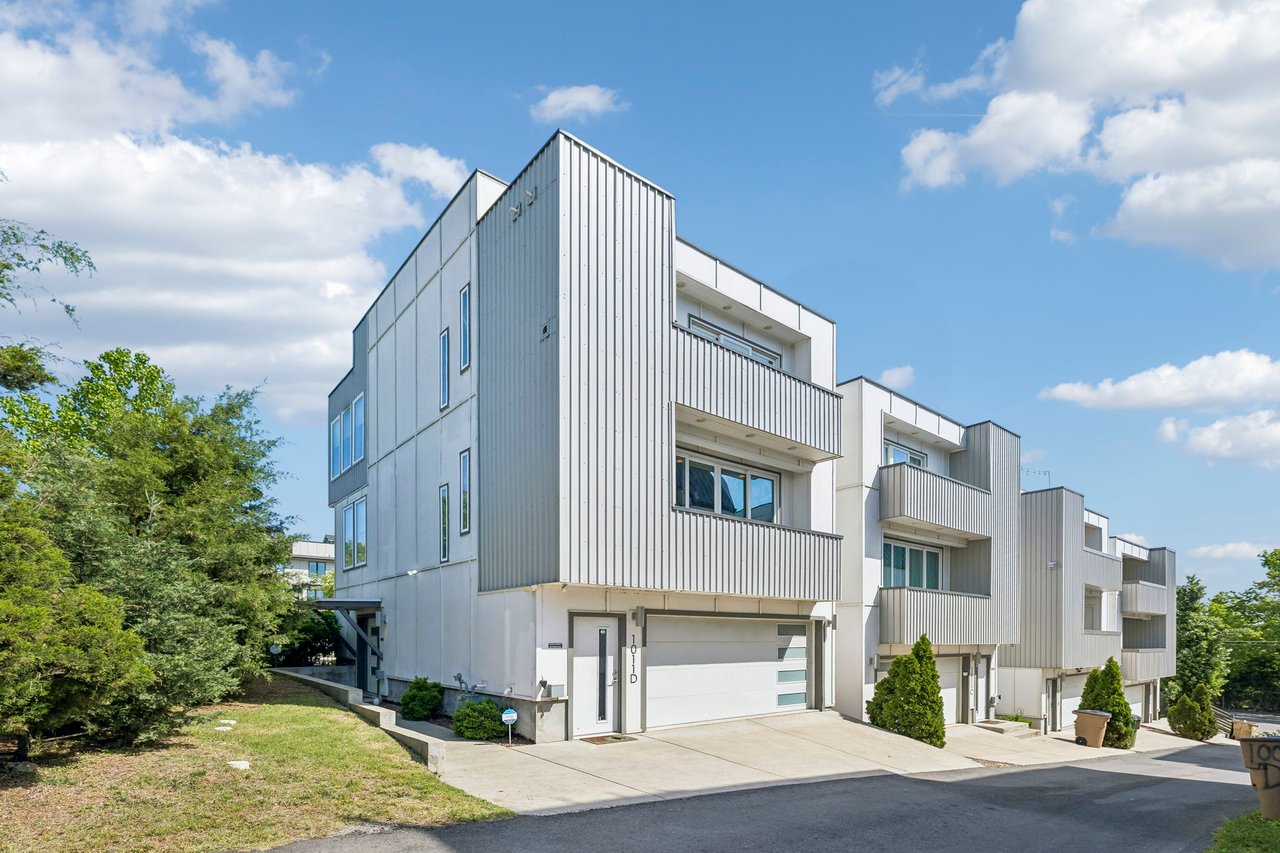
That gap is real money. A four-bedroom, four-bath Nashville STR townhome near Downtown or Germantown with clean 12-month revenue records, a verified permit in good standing, and a healthy forward booking calendar is a fundamentally different product on the market than an identical unit being sold as a potential STR. One is a business acquisition. The other is a hope. Price them accordingly — and bring the proof.
Our Nashville STR underwriting process runs both sides of this analysis for sellers: what an investor-buyer will realistically pay based on your income documentation, and what the property would trade for without it. The spread is almost always worth the preparation time.
The Super Bowl Window Is a Timing Variable, Not a Holding Strategy
Nashville will host Super Bowl LXIV at the new Nissan Stadium on February 10, 2030. Every STR owner in Davidson County is thinking about it. Some are using it as a reason to hold indefinitely. That reasoning deserves scrutiny.
The 2019 NFL Draft brought more than 600,000 visitors and an estimated $224 million in economic impact. Nashville STR owners collectively earned $5 million from that three-day event. The Super Bowl will almost certainly be larger. The Super Bowl draws buyers who consistently spend two to four times the daily rate of a typical Nashville weekend.
But here is what that actually means for your exit decision: the Super Bowl revenue event is one booking week in February 2030, 43 months from today. If you have been running a property that needs capital repairs, is facing a management transition, has seen occupancy slide, or is sitting on $300,000 or more in equity that is not producing returns at pace with its opportunity cost — holding for one outsized February is not a strategy. It is a lottery ticket dressed up as analysis.
Real estate economists note that property owners considering selling could take advantage of heightened interest in Nashville as the Super Bowl approaches, with AirDNA's director of economics and forecasting predicting that demand will likely peak after the competing teams are revealed. The appreciation story around the Super Bowl is real. But the appreciation is already priced into Nashville real estate values, which have come in at $475K median over the last three months as of Redfin's most recent data. The investor buyer who acquires your property today is also priced into that demand curve.
The Super Bowl is a hold argument only if your property is performing cleanly, your equity position is modest relative to current market value, and you have the operational bandwidth to manage it for four more years. If any of those conditions fail, the argument collapses.
Four Signals That a Performing STR Is Ready to Sell
This is not a checklist for distress. These are signals that a working property has hit its optimal exit window — meaning the market is still paying full price for the income it produces, the buyer pool is active, and the hold case no longer outperforms the exit case.
- Revenue has plateaued or dipped two consecutive years. Nashville's average revenue per listing is down 6.1% from June 2025 to June 2026, now averaging $40.9K a year. If your property is tracking at or below that curve, you are not beating the market — you are the market.
- Equity-to-cash-flow ratio has inverted. If your property is worth $700,000 and generating $35,000 in annual net operating income, you are sitting on a 5% unlevered return. A 1031 exchange into a different asset class or geography could do better. That is a math question, not a sentiment question.
- Management fatigue is degrading the product. Hospitality-grade STR operations require consistent attention. A property that is being managed at 80% is performing at 80% and will be priced like it. Exit before the reviews follow the management down.
- The permit status has become uncertain. Properties with three noise or code complaints in 12 months face non-renewal risk. A permit that is in jeopardy is an unsellable business. Exit before that risk materializes, not after.
- A major capital event is approaching. HVAC, roof, major furnishing refresh — these are sell triggers in any income-producing property. Price the repair into the exit, not into three more years of diminishing returns.
The Buyer Side of Your Exit: Who Is Buying Nashville STRs Right Now
Understanding your buyer determines how you position and price the sale. In 2026, the dominant Nashville STR buyer is a disciplined investor underwriting on income, not a speculative buyer counting on appreciation alone. The speculative "anything will sell" phase of the early expansion cycle has passed. In its place is a more mature investment environment where information, product selection, and disciplined underwriting play a much larger role.
That buyer wants revenue documentation. They want the permit verified. They want the complaint history clean. They want forward bookings to transfer with the sale if possible. And they want to model the property at conservative assumptions — a realistic 55% occupancy floor and $225 ADR, not the peak-era numbers.
Positioning your STR for that buyer is a pre-listing process, not a disclosure checklist. It means organizing 12 to 24 months of revenue records, reconciling them to bank statements, and being able to walk a buyer through your actual operating expenses — not an optimistic pro forma. Buyers who cannot verify the numbers will discount heavily or walk. Buyers who can verify clean numbers will compete for the asset.
For sellers who have operated in East Nashville, The Nations, Germantown, or SoBro, the investor buyer pool is real and active. These corridors have established STR track records that buyers can benchmark. That context supports price. Use it.
One More Thing Most Agents Will Not Say
Most real estate agents will not tell you to sell a property that is still working. There is no commission incentive to suggest an exit when the listing conversation has not started. I will say it plainly: the optimal time to sell a Nashville STR is when you do not have to. When the numbers are good, the permit is clean, and the market is paying full investor-grade pricing for operating income — that is the moment. Not when revenue has dropped three years straight. Not when the permit is under review. Not when the property needs $60,000 in capital work and you are deciding whether to spend it.
The sellers who regret their exits are almost never the ones who sold too early. They are the ones who held through the inflection and then sold into a buyer's market at residential-only pricing.
If you own a Nashville STR and want an honest read on where your asset sits in this cycle — what it would trade for today, what the buyer would actually pay, and whether the hold case pencils — that is exactly what we do at The Costigan Group. We have been featured specifically for this kind of data-driven STR advisory work, and we do the underwriting before the conversation, not after the listing agreement is signed.
The decision to sell a working short-term rental is a financial decision, not an emotional one. Run the numbers. If you want help running them, reach out directly — before the market runs them for you.
Frequently Asked Questions: Selling a Nashville Short-Term Rental
Does my Nashville STR permit transfer to the buyer when I sell?
No. Nashville STR permits are annual and non-transferable — they end on sale or any change of ownership entity. The buyer must apply for a new permit in their own name after closing. In most commercial and mixed-use zones, a new non-owner-occupied permit can be issued to the incoming buyer. In residential zones where new NOO permits are banned, existing permits may renew for the current owner but are not transferable when the property sells — when it sells, the permit dies with the transaction. Buyers and sellers should both understand this dynamic before pricing or making an offer.
Will I pay capital gains taxes when I sell a short-term rental in Tennessee?
Tennessee has no state income tax, so your exposure is federal capital gains only. If you have held the property more than one year, long-term capital gains rates apply — currently 0%, 15%, or 20% depending on your income level. Depreciation recapture at 25% applies to the portion of gain attributable to prior depreciation deductions. A 1031 exchange can defer both if you reinvest into a like-kind property within the required timeframe. Consult a CPA before closing — the tax picture on a performing STR with several years of depreciation is rarely simple.
How do investor-buyers price a Nashville Airbnb when making an offer?
Serious buyers run an income approach: annual gross revenue minus documented operating expenses equals net operating income, divided by a market cap rate to produce valuation. The quality and completeness of your revenue documentation directly affects what they will pay. The difference between selling at "residential property with STR potential" pricing and "performing STR business" pricing is documentation. Clean P&Ls reconciled to bank statements, 12 to 24 months of data, a transparent expense schedule, and a verified permit in good standing are what move an investor-buyer from cautious to competitive.
Is now a good time to sell a Nashville STR, or should I wait for the Super Bowl in 2030?
It depends on the health of your specific asset, not the macro event. Super Bowl buyers consistently spend two to four times the daily rate of a typical Nashville weekend — that one event week in February 2030 will be substantial. But holding a softening or capital-intensive asset for 43 months to capture a single booking week is rarely the right financial move. If your property is performing cleanly, your equity position is reasonable, and operations are tight, holding may make sense. If any of those conditions are slipping, the Super Bowl is not a strategy — it is a rationalization.
What documentation should I prepare before listing my Nashville STR for sale?
Six items matter most to investor-buyers: 12 to 24 months of monthly rental income statements reconciled to bank statements; a line-item operating expense schedule covering cleaning, supplies, management, software, HOA, insurance, taxes, and debt service; your current STR permit number and status from Metro Nashville's Codes database; your complaint and violation history; your forward booking calendar; and your platform review scores and listing performance history. Gaps in any of these create negotiating leverage for the buyer and reduce your final price.
Can I sell my Nashville STR as a package with an existing management arrangement in place?
Yes, and doing so can be a significant selling point for out-of-state investor-buyers who need a turnkey operation. A verified management contract, platform login transfer, and guest communication history all add confidence. That said, management agreements are typically between the management company and the owner personally — they do not bind the buyer automatically. Coordinate with your manager before listing so both sides understand what transfers, what needs to be renegotiated, and how to handle forward reservations made under your ownership.
What neighborhoods produce the strongest buyer interest for Nashville STR exits in 2026?
STR-eligible properties trade at a premium in The Gulch, downtown high-rises, Germantown, East Nashville STR-eligible pockets, and Wedgewood-Houston. These corridors have established revenue track records that buyers can benchmark against active comparables. The Nations and SoBro also draw consistent investor attention for four-bedroom townhome product. Our STR advisory work covers all of these submarkets, and buyer depth varies meaningfully by zone and permit class — which affects how aggressively you should price your exit.
Jack Costigan is the founder of The Costigan Group at Compass in Nashville, where his team has closed more than $100 million in real estate across Greater Nashville and Middle Tennessee. Specializing in luxury advisory, investment, and short-term rental real estate, Jack is known for a data-driven approach that helps buyers, sellers, and investors understand the numbers, the neighborhood, and the long-term value before making a decision. Featured in Apple News as one of Nashville's most sought-after short-term rental advisors, Jack pairs deep local expertise with modern marketing and a strategy-first approach to real estate. Learn more at thecostigangroup.com.