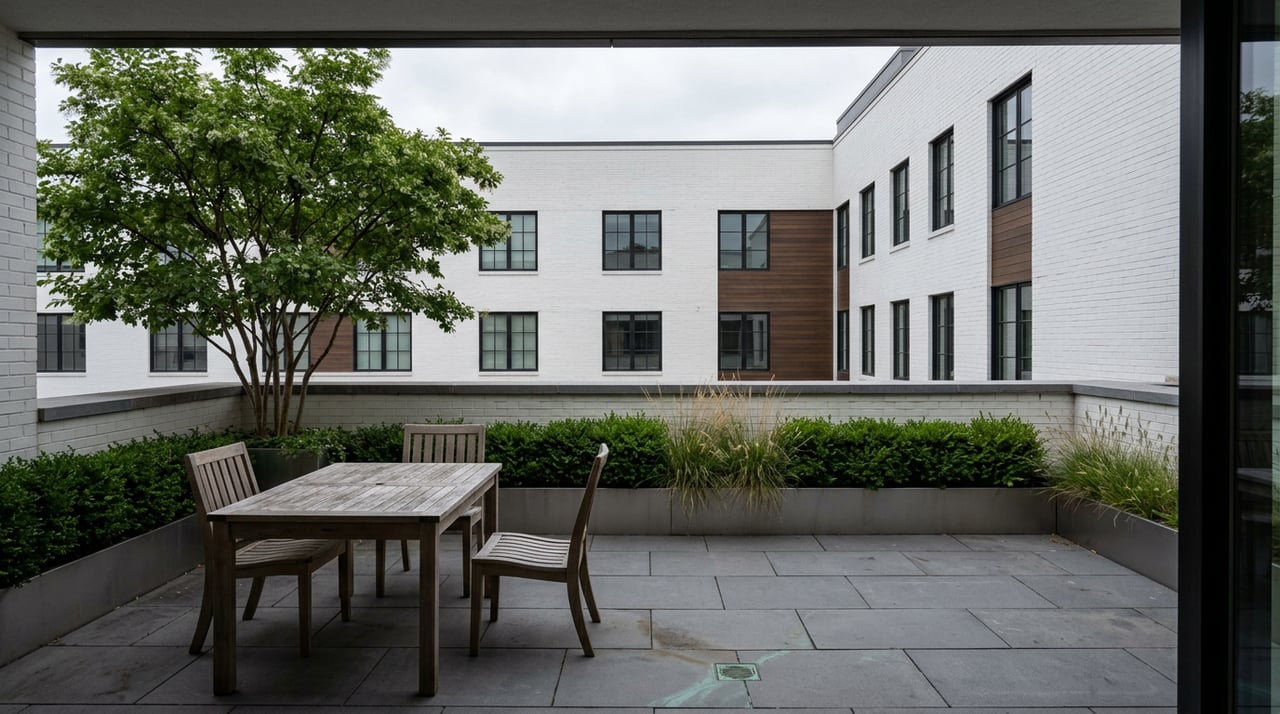
This is not a hypothetical. It is the exact failure mode that plays out when buyers skip one specific verification step before closing on a Nashville short-term rental. This post takes that failure apart.
Here is how the deal dies quietly: a buyer goes under contract on a four-bedroom investment property in East Nashville, zoned R6, listed with an active Metro Nashville non-owner-occupied STR permit attached. The property grossed over $80,000 in the trailing twelve months. The listing notes the permit. The buyer's agent confirms the permit is active. Nobody checks whether the permit is eligible for re-issuance in that zone after a sale. They close. The seller's grandfathered NOOSTR permit terminates at the moment of deed transfer — and the buyer cannot apply for a new one, because R6 is a residential zone and new non-owner-occupied permits have been banned in residential zoning districts since BL2017-608 took effect on January 23, 2018. The property that underwrote at $80K annual revenue is now a long-term rental. The investor paid STR pricing for residential-only rights.
The Core Rule Buyers Misread
Nashville STR permits are annual and non-transferable. They end on sale or any change of ownership entity. That part most investors now know. What fewer understand is the second-order consequence: the non-transferability rule is not the fatal blow in all cases. Existing permit holders in residential zoning districts may be eligible to apply for renewals, but those permits are not transferable if the property is sold or transferred.
Read that carefully. The seller could have renewed. The buyer cannot get a replacement. Those are two completely different outcomes, and the listing description rarely distinguishes between them.
Because new non-owner-occupied permits are no longer issued in residential zones - AR2A, R, RS, RM - a conventional sale of a residential-zone rental can mean the buyer cannot get a permit at all. In a commercial or mixed-use zone, a buyer who closes and files for a new permit faces a processing delay. In a residential zone with a grandfathered NOOSTR, a buyer who closes faces a permanent dead end.
What the Grandfathered Status Actually Means
Tennessee's Short-Term Rental Unit Act, which took effect in 2018, provides that the rules in place at the time a property first began operating as an STR and obtained its permit will continue to govern that property so long as ownership does not change. This means existing NOO permit holders in residential zones can continue to renew their permits and operate legally. However, if the property is sold or transferred, the grandfathered status is generally lost, and the new owner would not be eligible for a new NOO permit in that zone under current rules.
The practical translation: the grandfathered permit belongs to the owner, not the property. When the owner sells, the protection walks out with them. The existing NOOSTR permit dies at closing and the buyer cannot apply for a new one. The property's STR business value goes to zero at the moment of sale. The buyer can still operate it as a primary residence, a long-term rental, or an owner-occupied STR if they personally move in.
The grandfathered pool is also shrinking faster than most buyers realize. Of 11,157 NOOSTR permits Metro Nashville has ever issued, 4,897 remain active as of July 3, 2026. Every time a grandfathered residential NOOSTR property sells through a conventional real estate transaction, that permit exits the inventory permanently.
The Exact Step Buyers Skip
Buyers verify whether a permit exists. They almost never verify whether a permit of that type can be re-issued at that parcel after they take title.
Those are two different questions and only the second one matters for the buyer's investment thesis.
The check is straightforward. New non-owner-occupied permits will only be issued as a use permitted with conditions in MUN and MUN-A, MUL and MUL-A, MUG and MUG-A, MUI and MUI-A, OG, OR20 through OR40-A, ORI and ORI-A, CN and CN-A, CL and CL-A, CS and CS-A, CA, CF, DTC North, DTC South, DTC-West, DTC Central, SCN, SCC and SCR zoning districts. If the property's zoning code isn't on that list - and it isn't, if it reads R6, RS5, RM20, or any other residential classification - the buyer's ability to operate a non-owner-occupied STR ends the moment the deed records.
The verification takes less than five minutes on Metro Nashville's parcel viewer. Not doing it has cost investors the entire income thesis on deals priced at $600,000 and above.
The Entity Purchase: A Real Workaround With Real Risk
Some investors have structured around this problem by purchasing the LLC that holds the property rather than the property itself. The logic: if the owning entity doesn't change, the permit stays alive. Because entities can hold NOOSTR permits, some investors acquire the owning entity itself rather than the real estate, which can leave the permit-holding entity unchanged. Whether that preserves a permit depends on Metro's current rules and how the deal is structured, so confirm it with Metro Codes and your attorney before relying on it.
This is a real strategy, but it introduces its own complexity. Treat entity changes as permit-killers. LLC restructures, estate transfers, refinancing into a new entity, and person-to-trust moves all void permits and trigger a re-file or permanent loss in residential zones. A Membership Interest Purchase Agreement (MIPA) keeps the permit-holding LLC intact. Any restructuring of that entity after acquisition - adding a partner, changing the registered agent structure, refinancing into a new holding company - can terminate the permit. Consult a real estate attorney who understands Metro Code 6.28 before relying on this path.
What the New Permit Application Actually Requires
For buyers purchasing in a zone where a new NOOSTR permit can be issued, the permit does not simply carry over from the seller. The buyer starts fresh. The short-term rental permit is valid for 12 months from the time of approval and may be renewed on an annual basis. The short-term rental permit fee is $313.00 due at the time the application is approved.
The timeline is the more consequential issue. Metro Codes processing runs four to six weeks for review and approval, with a total timeline from start to permit in hand of nine to fourteen weeks. Rejected applications restart the clock. That means a buyer who closes in a commercially-zoned building and assumes they can list immediately may face a three-month gap before a single booking is legal.
The application also requires neighbor notification. In order to apply for a Short Term Rental Property permit, the applicant must notify adjacent properties of the application. This can be done either through in-person conversations with neighbors that result in a signature from the property owner, or mailed notification letters. Most applicants opt for the latter. The city requires documented proof of written notification to owners of all adjacent properties. Adjacent properties are defined as those bordering yours, even if across the street or an alley. Send letters registered or certified mail so you receive notifications of delivery attempts.
Failure to register is equivalent to operating without a permit and will result in enforcement action, including citations, and a mandatory waiting period of one year before applying for a permit and beginning operation as a short-term rental. A buyer who lists on Airbnb before the new permit is issued - assuming it will be approved - doesn't just risk a fine. They trigger a one-year blackout window.
The Pre-Closing Verification Checklist
This is the sequence the deal described at the top of this post skipped. Run it before you write an offer - not during due diligence, before the offer. Zoning is not something you negotiate out of after you're under contract.
Pull the parcel's base zoning code from Metro Nashville's Property Lookup or ParcelViewer. One field. Five seconds.
Check the zone against the approved NOOSTR district list. If the zoning code is R, RS, RM, AR2A, or any variant, a new NOOSTR permit cannot be issued to the buyer under current Metro Code.
Confirm whether the active permit is grandfathered residential or commercially-issued. The Metro permit lookup at Nashville.gov shows permit class, issue date, expiration date, and holder of record. A grandfathered residential NOOSTR is not available to the buyer under a standard deed transfer.
Check for overlay districts. Historic Preservation Overlays, Neighborhood Conservation Zoning Overlays, and Urban Design Overlays can layer additional restrictions on top of base zoning. Some overlays explicitly prohibit STR use even where base zoning would otherwise allow it.
Confirm SP and PUD conditions if applicable. Permits for Specific Plan (SP) zoned properties or properties within a Planned Unit Development (PUD) will be issued only if allowed by the SP or PUD. The specific plan ordinance is what controls - not a generic zoning category.
Verify HOA rules in writing. Homeowners association rules can be more restrictive than Metro regulations. A Metro permit does not override an HOA prohibition.
Write the permit contingency into the contract. Condition closing on successful permit issuance - not on permit eligibility, on actual issuance - with a defined timeline and exit right if Metro denies the application.
Our Nashville STR advisory practice runs this verification before every offer we write on an investment property. It takes longer to rebuild the deal than to check the zone.
How This Changes the Underwriting
The permit status doesn't just affect whether you can operate. It affects what the property is worth and how you should price the offer.
A commercially-zoned building with confirmed NOOSTR eligibility - like a unit in Germantown, SoBro, or an SP-approved development - is a different asset class than a grandfathered residential STR. Permits add significant value to a purchase price, often ranging from $40,000 to $90,000 depending on the location. That premium is only valid if the permit survives the transaction.
A grandfathered NOOSTR in a residential zone that terminates at closing is worth what it would trade for as a long-term rental or owner-occupied home. The STR income history is real. The STR permit rights are not transferable. Price the deal accordingly - or don't buy it at all unless you're converting to your primary residence and operating it as an owner-occupied STR.
We build this distinction into every underwriting model we run through the Costigan Group STR Underwriting Calculator before an offer goes in. The two scenarios produce fundamentally different returns. They also produce fundamentally different offers.
If you're evaluating Nashville STR investments as part of a broader relocation or portfolio-building plan, our Nashville relocation resource covers how Davidson County's zoning landscape compares to the surrounding suburbs - where STR rules differ materially.
Related reading
- Nashville Short-Term Rental Investment
- STR Permit Transferability Tennessee: What Happens to Your Nashville Permit When Ownership Changes
- Nashville STR LLC Structure: The Operating Agreement Decisions to Make Before Closing
Frequently Asked Questions
Do Nashville STR permits transfer when a property is sold?
Nashville STR permits are not transferable. The buyer must apply for a new permit. This applies to both owner-occupied and non-owner-occupied permit classes. The permit that existed under the seller is cancelled at the change of ownership, and the buyer files a separate application in their own name.
What happens to a grandfathered NOOSTR permit in a residential zone when the property sells?
If the property is sold or transferred, the grandfathered status is generally lost, and the new owner would not be eligible for a new NOO permit in that zone under current rules. This is permanent. The buyer cannot replicate the permit the seller held. The property can still be used as a long-term rental or as an owner-occupied STR if the buyer personally moves in as their primary residence.
How long does it take to get a new STR permit in Nashville after closing?
The total timeline from start to permit in hand runs nine to fourteen weeks, including four to six weeks for Metro Codes processing. Rejected applications restart the clock. Buyers who close and immediately list on Airbnb before receiving their own permit are operating without a permit — which triggers enforcement action and a mandatory one-year waiting period before reapplying.
Can buying the LLC instead of the property preserve the STR permit?
It can, but the strategy carries risk and must be verified with Metro Codes and a real estate attorney before closing. Because entities can hold NOOSTR permits, some investors acquire the owning entity itself rather than the real estate, which can leave the permit-holding entity unchanged. Whether that preserves a permit depends on Metro's current rules and how the deal is structured. Any restructuring of the LLC after acquisition — refinancing, adding partners, converting to a new holding entity — can void the permit.
What zoning zones allow new non-owner-occupied STR permits in Nashville?
Non-owner-occupied permits are what investors need, and Nashville has severely limited where they can operate. New NOO permits are only issued in commercially zoned or mixed-use districts: MUN, MUL, MUG, MUI, OG, OR20 through OR40-A, ORI, CN, CL, CS, CA, CF, DTC (Downtown Code), SCN, SCC, and SCR zones. Residential zones — R, RS, RM, AR2A — are excluded. If the property you're evaluating carries one of those residential codes, a new NOOSTR permit cannot be issued regardless of the operating history.
Does an active STR permit on a listing mean the buyer can operate as a short-term rental?
Not automatically. An active permit on a listing confirms the seller's legal operation. It does not confirm the buyer's ability to obtain a new permit after closing. The buyer must separately verify that the property's zoning allows a new NOOSTR application, that no overlay district restricts STR use, and that any applicable SP or PUD conditions permit it. Most failed Nashville Airbnb investments trace back to assuming a property qualifies for NOOSTR use because comparable nearby properties operate as STRs. Nashville STR eligibility is parcel-specific. Two adjacent townhomes can have entirely different STR rights depending on their zoning classification, overlay district, and Specific Plan or Planned Unit Development conditions.
What documentation does a new STR permit application require in Nashville?
All documents must be in PDF format to be uploaded during the online application process. Required materials include proof of ownership matching the Davidson County deed, neighbor notification letters sent via certified mail to all adjacent property owners, a floor plan showing bedrooms and fire alarms, local responsible party information (someone within 25 miles), and proof of $1 million liability insurance. The permit fee is $313.00, due at the time the application is approved. For owner-occupied permits, four documents proving primary residency are required.
About The Costigan Group
Jack Costigan is the founder of The Costigan Group at Compass in Nashville, where his team has closed more than $100 million in real estate across Greater Nashville and Middle Tennessee. Specializing in luxury advisory, investment, and short-term rental real estate, Jack is known for a data-driven approach that helps buyers, sellers, and investors understand the numbers, the neighborhood, and the long-term value before making a decision. Featured in Apple News as one of Nashville's most sought-after short-term rental advisors, Jack pairs deep local expertise with modern marketing and a strategy-first approach to real estate. Learn more at thecostigangroup.com.