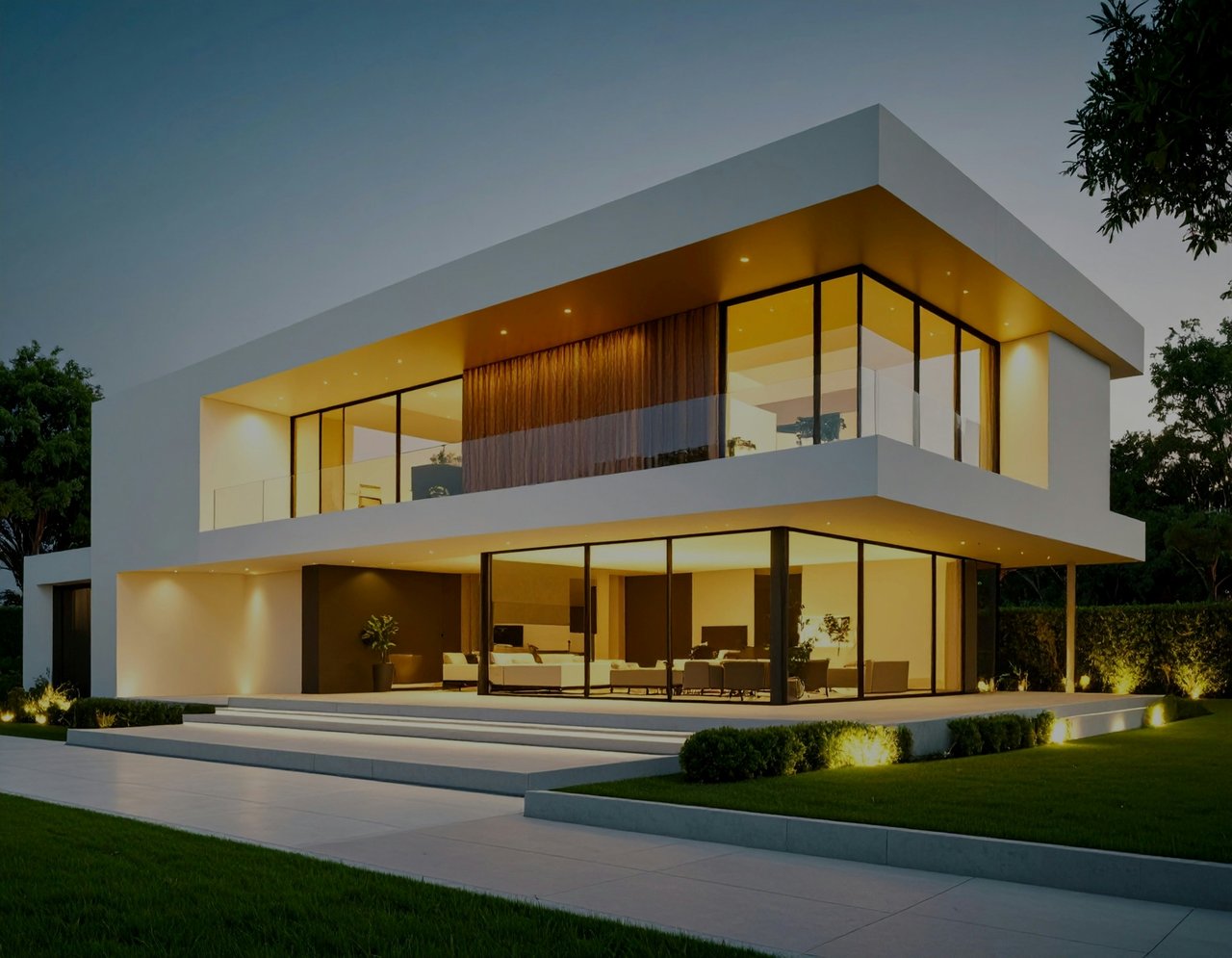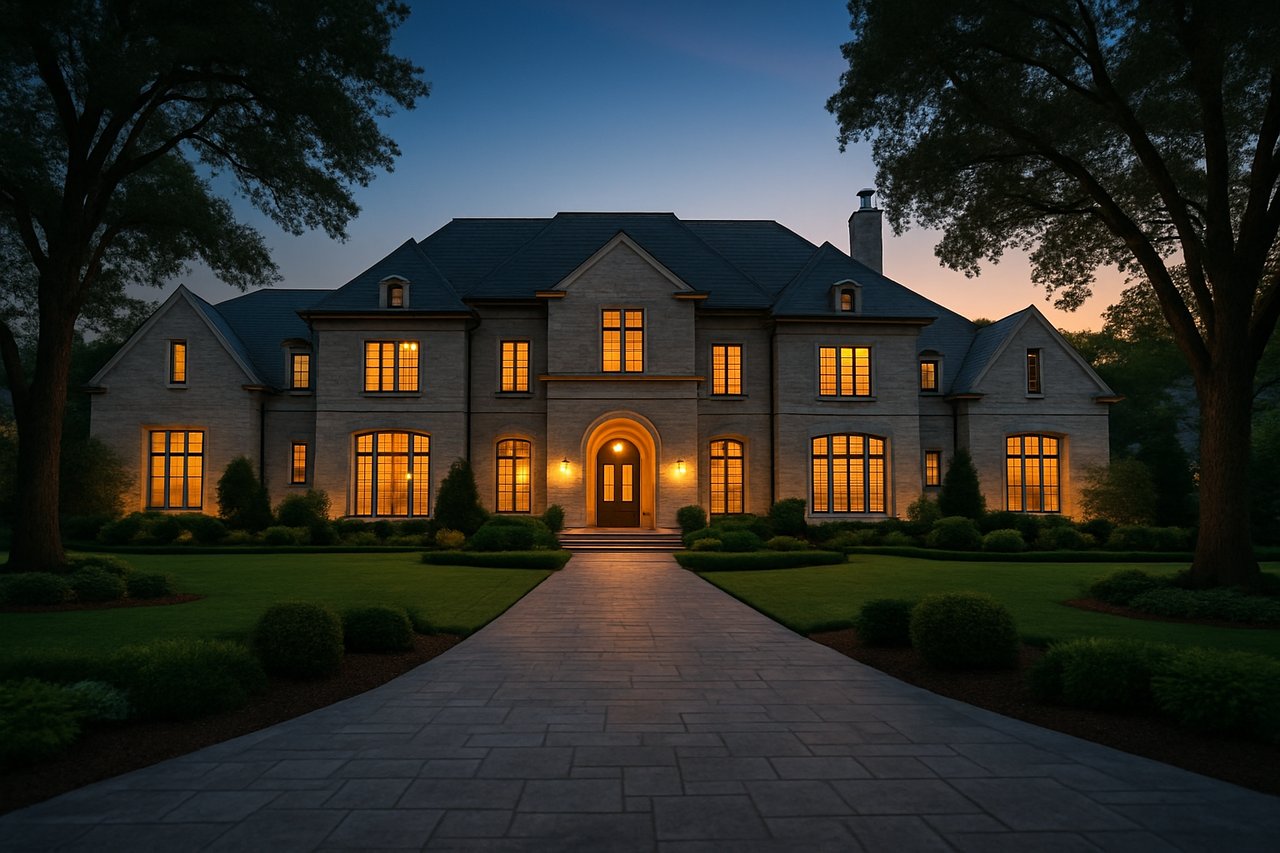
A seller calls. They have a four-bedroom estate in Green Hills, fully renovated kitchen, custom Wes Cook millwork throughout, and a pool terrace that backs to a wooded ridge. Their Zestimate says $1.87 million. Their neighbor — same street, same square footage, dated 2008 finishes, no outdoor living — just closed at $2.05 million. The seller wants to know why the algorithm thinks their home is worth less.
That question is the starting point for almost every luxury pricing conversation we have at The Costigan Group. And the honest answer is: automated valuation models are not built for this market. They were designed for uniformity and volume. Luxury Nashville is neither.
If you are preparing to price a luxury home in Nashville — or trying to understand why the number on your screen does not match what the market will actually pay — this post is written for you.
Why the Zestimate Is Structurally Broken Above $2 Million
Zillow's Zestimate is a capable tool for what it was designed to do: estimate value in high-volume, low-variance markets using public records, tax data, and comparable sales. It considers factors like square footage, location, bedroom and bath count, age, and lot size. That logic works reasonably well in a subdivision where 30 nearly identical homes sold in the last 12 months.
It does not work in Belle Meade. It does not work in Forest Hills. And it does not work for a heavily renovated estate in Green Hills where no truly comparable home has traded in the last 18 months.
The accuracy data confirms this. As of mid-2025, Zestimate's median error rate for on-market homes nationwide is 1.9% — but for off-market homes, the median error jumps to around 7.0%. That sounds manageable until you apply it to a $3 million property. A 7% error on a $3 million estate is a $210,000 swing. In either direction. That is a negotiation, a renovation budget, or an entire adjacent lot in some markets.
The structural problem runs deeper than just percentages. Zestimates do not consider the condition of a property or its unique features. If the house needs repairs, the Zestimate could be higher than the actual value. Conversely, a new kitchen or beautifully landscaped yard might not be factored in, causing the Zestimate to undervalue the home. Put another way: the algorithm cannot see inside your house. It does not know you spent $400,000 on a kitchen, a theater room, and a heated pool. It sees a 5,400-square-foot home in 37215 and pulls from whatever sold nearby.
Zillow and Redfin consistently misread high-end properties because they cannot grasp what actually matters to wealthy buyers. "A Zestimate might look reasonable on paper but miss the features that command top dollar in luxury markets." That is not an indictment of the technology. It is a structural limitation. The algorithm requires data density. Nashville's luxury submarkets are too thin and too idiosyncratic to feed it reliably.
What Nashville's Luxury Market Actually Looks Like Right Now
Before we talk pricing methodology, let's ground this in real numbers.
Over the past 12 months, 656 luxury homes closed in Davidson County at a median price of $2.2 million and an average of $2.6 million. Of those, 385 closed at $2 million or above, 190 at $3 million or above, and 45 at $5 million or above. That is not a thick market. Forty-five closings above $5 million across an entire year means pricing in that band is highly event-driven — each sale either anchors or resets the range.
The luxury concentration sits in a tight geographic belt: Belle Meade, Green Hills, Forest Hills, Oak Hill, and West Meade make up roughly 75% of all Davidson County sales above $2 million. Within that belt, each submarket operates on its own logic. Green Hills and Forest Hills are not the same market. Belle Meade and West Meade are not the same market. Pricing one using comps from the other is the most common mistake we see — and it costs sellers real money.
Consider the spread. Eighty-two closed sales in Green Hills over the past 12 months carried a median price of $2.18 million and a top sale of $9.13 million on Shys Hill Road. Meanwhile, twelve closed sales in Forest Hills carried a median price of $3.76 million, with most homes sitting on one to three acres of mature wooded lots. Twenty-six closed sales in Oak Hill carried a median price of $2.53 million and an average of $3.08 million. Three adjacent luxury submarkets. Three completely different pricing frameworks. A Zestimate cannot navigate those distinctions. A well-prepared advisor can.
The Real Mistake: Treating the Zestimate as a Baseline
Here is the thing sellers and buyers both get wrong. They do not necessarily trust the Zestimate blindly — but they use it as a psychological anchor. They see $2.1 million and walk into every conversation with that number in their heads. If a well-supported CMA comes back at $2.55 million, they wonder if the agent is just inflating their ego. If it comes back at $1.95 million, they assume the agent is lowballing them. Either way, the Zestimate has poisoned the conversation before it started.
The clearest proof that even Zillow does not fully trust its own algorithm? In 2021, Zillow shut down its Zillow Offers iBuying program after losing $500 million or more. They bought homes based partly on their own Zestimates, which overestimated values in a shifting market. When they could not resell profitably, they took major losses. The company that built the Zestimate could not rely on it to price homes accurately at scale. That is the most important data point in this entire discussion.
Additionally, once a home is listed, an old or inaccurate Zestimate can stick — and if it is lower than your asking price, it creates doubt in the buyer's mind before they have even scheduled a showing. That is not a neutral starting point. That is a headwind you are fighting before the first tour.
For a deeper look at how we approach luxury listings from the ground up, see our Nashville luxury real estate advisory page — it outlines the full Black Label process.
How We Actually Price a Luxury Home in Nashville: 4 Checks
Pricing a luxury home correctly is not about pulling three comps and adjusting for square footage. At this price point, the work is more like underwriting a deal than running a formula. Here is how we approach it.
Check 1: Submarket, Not Just City
The first thing we do is establish which micro-market the property actually competes in. A $3.5 million home in Forest Hills is competing against a completely different buyer pool and a different set of comparables than a $3.5 million home in Brentwood or Green Hills. Luxury home transactions behave differently than the broader Nashville market. Off-market inventory plays a larger role. Buyer privacy is a more dominant variable. And days-on-market metrics distort because many luxury transactions never appear on the open MLS. If you are only looking at what is publicly visible, you are working with incomplete information before you have written a single number.
Check 2: Condition-Adjusted True Comparables
At the luxury level, no two homes are genuinely comparable without a condition layer. We look at finishes, renovation recency, architectural provenance (who designed it, who built it), lot quality, and buyer-perceived lifestyle features — outdoor kitchens, motor courts, guest houses, pool specifications. A 6,000-square-foot home with a 2024 renovation by a recognized builder is not comparable to a 6,000-square-foot home with a 2014 renovation, regardless of what the tax record says. The algorithm will price them similarly. We will not.
Check 3: Off-Market Transaction Intelligence
Publicized MLS sales are only part of the picture at the top of the market. Luxury home transactions behave differently than the broader Nashville market. Off-market inventory plays a larger role, and buyer privacy is a more dominant variable. We track off-market activity — deals done through broker-to-broker networks, Compass private exclusives, and pre-list conversations — because those transactions often anchor buyer expectations at the $3 million and above level. Pricing without that intelligence is pricing blind.
Check 4: Days-on-Market Sensitivity by Price Band
Every price band above $1 million in Nashville carries its own absorption rate. The luxury market does not move at the same speed as the broader city. Over the three months ending May 2026, Nashville homes broadly were up just 0.5% year over year and selling after an average of 70 days on market. But in thin luxury submarkets, a single overpriced listing that sits for 120 days creates a perception problem that follows the property — and sometimes the street — for months after a price cut. Pricing correctly from day one is not about being conservative. It is about understanding where the real buyer pool is, what they have already seen, and what they will tolerate before moving on.
If you want to explore the specific submarket dynamics across Nashville's luxury corridors, our Nashville neighborhood guides break down the key areas, price bands, and what differentiates each one.
The Black Label Approach: What Pricing Strategy Looks Like in Practice
Pricing is only one piece of a luxury listing strategy — but it is the decision that everything else is built around. If the price is wrong, the photography does not save it. The video does not save it. The open house does not save it.
Our Black Label process at The Costigan Group starts with a full advisory session before we agree on price. We present a layered analysis: the public MLS picture, the off-market context, the condition-adjusted comp set, and a clear range with an explanation of what drives price within that range. We do not hand a seller one number and call it done. We show them where the risk is. If the property is priced $200,000 above the demonstrated market, we say that — even when it means a harder conversation.
From there, pricing is paired with presentation. At this level, a buyer considering a $3 million home in Belle Meade has likely seen properties in Nashville, Brentwood, Franklin, and potentially markets in other cities. The price tells them where to put the property on their internal list. The presentation — the quality of photography, the depth of the marketing narrative, the access strategy — determines whether they actually schedule a showing. Both have to work together. The advisory model applies equally to sellers, who receive strategic pricing guidance, targeted marketing to qualified buyers, and skilled representation during negotiations.
The Luxury LA Mag recently recognized The Costigan Group for setting a new standard in Nashville's luxury real estate market — a recognition built on exactly this combination of pricing discipline and elevated marketing execution.
For sellers curious about the full scope of how we position luxury listings differently than the standard brokerage model, our Nashville luxury real estate page covers the Black Label process in detail.
A Note for Luxury Buyers Reading This
If you are a buyer, the algorithm problem cuts both ways. A Zestimate that is 10% low on a $2.8 million Forest Hills estate might make a property look underpriced — or it might make a fairly priced home look overpriced if the Zestimate comes in high. Neither scenario serves you.
The correct move is to request a full submarket analysis before you make an offer, not after. What have similar homes in this specific corridor sold for in the last 12 months, condition-adjusted? How long did they sit? Where did they price relative to where they closed? Those answers tell you far more than any online estimate. If you are relocating to Nashville from another market and navigating this for the first time, our Nashville relocation advisory outlines how we walk out-of-state buyers through this exact process.
Frequently Asked Questions
How accurate is a Zestimate on a luxury home in Nashville?
Zillow's median error rate is approximately 1.94% for on-market homes and 7.06% for off-market properties. That means an off-market home valued at $1 million could be off by as much as $70,000. On a $3 million luxury home in Belle Meade or Forest Hills, that same error rate could represent a $200,000 swing. In practice, luxury homes with recent renovations, bespoke finishes, or off-market sale histories often fall outside even those stated error bands because the algorithm does not have enough true comparable data to anchor its estimate.
What neighborhoods make up Nashville's core luxury market above $2 million?
The luxury concentration in Davidson County sits in a tight geographic belt: Belle Meade, Green Hills, Forest Hills, Oak Hill, and West Meade make up roughly 75% of all Davidson County sales above $2 million. Each submarket operates on different price-per-square-foot dynamics, lot premiums, and buyer profiles. Green Hills leads in transaction volume. Forest Hills leads in median price-per-sale. Belle Meade commands the highest prestige premium and has the most restrictive zoning, which limits supply and supports long-term value.
How do you price a luxury home that has no recent true comparables?
When true comparables do not exist — which is common above $3.5 million in Nashville — pricing requires a layered analysis: condition-adjusted cost-approach reasoning, off-market transaction intelligence, current active competition analysis, and buyer demand mapping by price band. We also look at how the specific home competes against alternatives buyers would consider in adjacent markets like Brentwood and Franklin. The goal is to find the range where a serious buyer would not hesitate to engage — and then position the listing to attract exactly that buyer, not the general market.
Should a luxury seller in Nashville price high and negotiate down?
In most cases, no — and this is one of the places where we push back directly with clients. Sellers who price competitively will still do well. Those who overprice will sit longer and potentially have to make bigger price cuts. In the luxury segment, an extended days-on-market history is visible to every serious buyer's advisor, and it creates a perception of defect even when none exists. A sharp, well-supported list price from day one typically produces a better outcome than a high opening price that requires two or three reductions to find the real buyer.
What is the Black Label listing process at The Costigan Group?
Black Label is our elevated listing approach for luxury and high-value properties. It combines a full advisory pricing analysis, professional photography, architectural videography, and a targeted marketing strategy designed to reach buyers already active in Nashville's luxury corridors — including relocating executives, athletes, and investors. The pricing work is the foundation: we do not launch until the number is defensible and the presentation matches the product. For sellers ready to explore the full process, our Nashville luxury real estate page outlines it step by step.
If you are preparing to list a luxury home in Nashville — or trying to understand what your property is actually worth in the current market — start with a real conversation, not a Zestimate. The Costigan Group offers a full luxury pricing advisory session, no strings attached. Reach out at thecostigangroup.com to get started.
Jack Costigan is the founder of The Costigan Group at Compass in Nashville, where his team has closed more than $100 million in real estate across Greater Nashville and Middle Tennessee. Specializing in luxury advisory, investment, and short-term rental real estate, Jack is known for a data-driven approach that helps buyers, sellers, and investors understand the numbers, the neighborhood, and the long-term value before making a decision. Featured in Apple News as one of Nashville's most sought-after short-term rental advisors, Jack pairs deep local expertise with modern marketing and a strategy-first approach to real estate. Learn more at thecostigangroup.com.