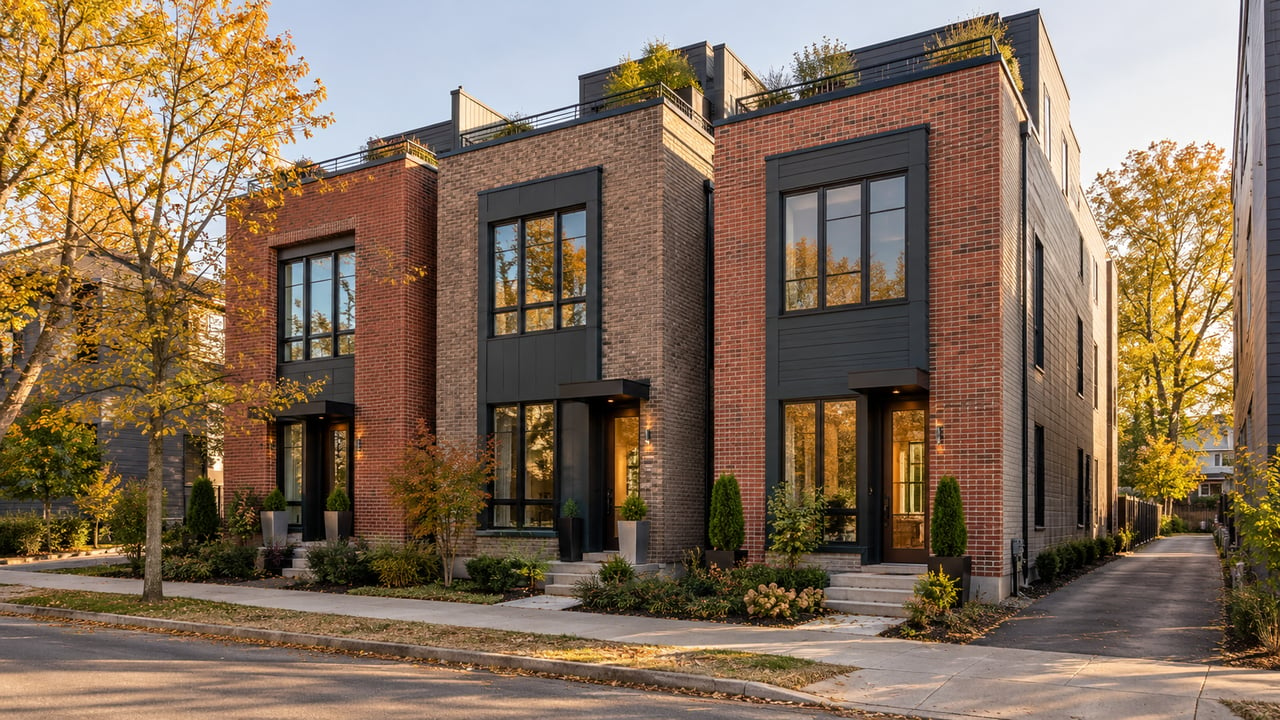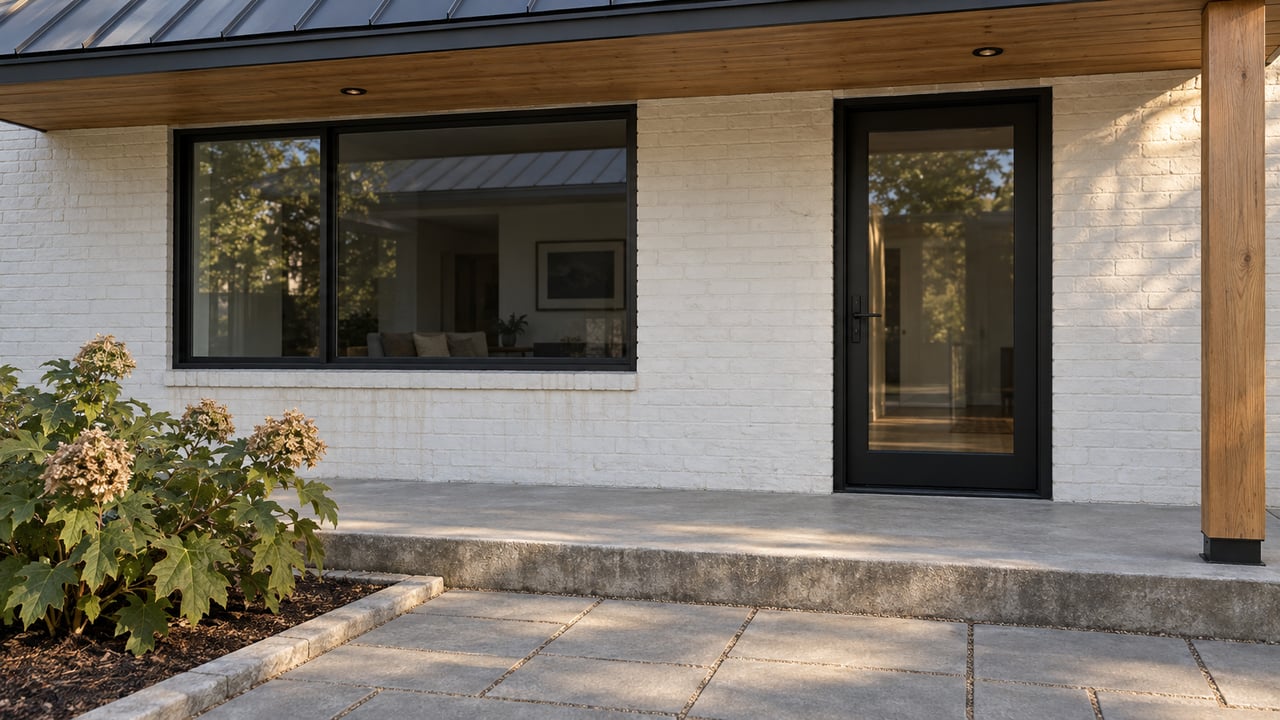
A backyard cottage behind an East Nashville bungalow photographs well and suggests easy income. Under Metro's current rules, the building itself guarantees very little. What a cottage can legally be used for depends on when it was permitted, how it was permitted, and who will live on the lot after closing. None of that shows up in the photos, and none of it automatically passes to the next owner with the deed.
For buyers comparing Lockeland Springs, Eastwood, and Edgefield against other close-in neighborhoods, this changes how a listing should be read. The cottage is a structure. The rights to use it are separate, and Metro ties them to the owner and the permit file.
The December 2025 Law Expanded Building, Not Renting
In December 2025, Metro Council passed BL2025-1007. It widened where detached accessory dwelling units, or DADUs, can be built. The Nashville Banner reported that it passed 29-8, with an amendment that scaled back the allowed square footage to a maximum of 850 square feet on larger lots. The full ordinance text posted on Legistar shows higher limits, so the size caps are worth confirming directly with Metro Codes. Most coverage treated the law as a housing supply measure, and the eligibility rules support that reading.
The use rules point a different way. According to Metro Codes' DADU guidance, a DADU must have the same owner as the main house, and one of the two dwellings must be owner-occupied. The ordinance text words the ownership requirement as the same "person, or entity." The guidance says a DADU should not be confused with a duplex, which can be sold separately and has different development requirements. Only one DADU is allowed per parcel, and only when the lot has one single-family principal structure.
The short-term rental provision is the one that matters most to investors. When a new DADU is built on a single-family, Residential Neighborhood, or Residential Limited lot, or an existing accessory structure is converted into one, owner-occupied short-term rental is not a permitted use in that DADU. The cottages the new law makes possible are designed for long-term occupants, not nightly guests.
Why Two Similar Cottages Can Have Different Rights
That provision applies to DADUs built or converted after enactment. An older cottage behind a 1920s bungalow on Boscobel Street and a new one going up next door may look alike. Legally, each is governed by its own permit history, and a buyer should not assume an older structure carries rental rights just because it predates the law.
Metro's short-term rental permit rules make the gap wider. On the STR permit types page, Metro states that new non-owner-occupied permits are not issued in AR2A, R, RS, or RM zones. Existing holders in those zones may be eligible to renew. Their permits are not transferable if the property is sold or transferred. Metro's STR FAQ repeats that permits are nontransferable and valid for 12 months.
The owner-occupied permit can't be bought either. To qualify, the owner must permanently live at the property and must be a natural person. LLCs, corporations, trusts, and partnerships are ineligible. In single-family and two-family zoning districts, Metro issues only one such permit per lot.
Taken together, a seller's booking history describes how the seller was allowed to use the property. A buyer buying through an LLC, or one who won't live on site, can't rely on that history in an underwriting model. Any income projection has to start from the buyer's own eligibility, not the seller's.
Building One in a Historic Overlay Adds a Second Rulebook
Buyers who plan to add a cottage after closing face a different constraint. Much of the East Nashville housing stock sits inside protected districts. Metro's historic overlay directory lists Eastwood and Lockeland Springs-East End as Neighborhood Conservation Overlays and Edgefield as a Historic Preservation Overlay.
In those districts, the Historic Zoning Commission enforces setbacks, size limits, and design. Zoning still enforces the use and living-space conditions, and a Historic permit is required in addition to the Codes building permit. Each agency measures something different, and a buyer's plan has to satisfy both.
| Constraint | Zoning, per Metro Codes | Conservation overlay guidelines |
|---|---|---|
| Size measure | Living space | Building footprint |
| Lots under 10,000 sq ft | 700 sq ft max | 750 sq ft max |
| Lots 10,000 sq ft and up | 850 sq ft max | 1,000 sq ft max |
| Height | Eave max of 10 ft for one story, 17 ft for two; ridge under the main house and 27 ft max | Ridge max of 25 ft on interior lots; walls max of 12 ft behind a one- or one-and-a-half-story house |
| Who reviews | Zoning examiners | Historic Zoning Commission staff |
The zoning column uses the living-space limits in Metro Codes' current DADU guidance. The ordinance text on Legistar lists 850 square feet for lots under 10,000 square feet and 1,200 square feet for larger lots. Until a zoning examiner confirms which figure governs a specific parcel, any plan priced at the larger number carries risk. Inside a conservation overlay, the footprint guidelines may limit the building first either way.
The row that matters most for East Nashville is the wall height. Many bungalows in the conservation districts are one or one-and-a-half stories. Behind a house like that, the Neighborhood Conservation design guidelines cap outbuilding walls at 12 feet from existing grade and allow a full two-story outbuilding only behind a two-story primary building. A garage-apartment plan that works behind a two-story house can stop working when the main house is a single-story cottage. Edgefield has its own separate design guidelines, so a buyer there has a different document to check.
Zoning also requires the cottage to match the main house in style, materials, and roof form. A property owner can't self-permit a new DADU or a garage conversion. A registered contractor has to pull the permit.
What the 2026 Commission Agendas Show
The Historic Zoning Commission's 2026 agendas show a steady flow of outbuilding applications from East Nashville, and staff don't recommend approval for all of them. The April 15 agenda included a new outbuilding on Holly Street in the Lockeland Springs-East End overlay, and staff recommended disapproval. On the August 19 agenda, an addition and outbuilding on Boscobel Street in the same overlay also drew a disapproval recommendation. The September 16 agenda listed projects on Benjamin Street and Shelby Avenue as tentative consent items.
The agendas don't publish the square footage or heights requested. They do show that design review in these districts is an active gate on each parcel, and a buyer paying for future cottage potential is paying for an approval that hasn't been granted yet.
A Slower Market Leaves Time for Due Diligence
According to Greater Nashville REALTORS, regional inventory in September 2026 was up 6% from a year earlier, supply was nearly six months, and sales below $1 million were generally softer. Those are nine-county figures, not East Nashville numbers. Still, in a market like that, a buyer has more room to ask for permit records and to negotiate on what a cottage can actually do, not on what the listing suggests.
The checks follow the order the rules apply:
- Look up the parcel in Metro's Parcel Viewer to confirm base zoning and any overlay.
- Ask for the permit history on the existing cottage, including when and how it was established as a dwelling.
- Confirm whether any STR permit tied to the property is owner-occupied or non-owner-occupied, and treat it as ending at closing.
- Decide whether you will live on the lot, since both DADU owner-occupancy and the owner-occupied STR permit depend on it.
- In an overlay, compare any building plan against the conservation or Edgefield guidelines before pricing in an addition.
This post is general information about Metro's published rules. It is not legal, tax, or financial advice, so confirm your own parcel and plans with Metro Codes, the Historic Zoning Commission, and your attorney or tax advisor.
Frequently Asked Questions
Can a backyard cottage be sold separately from the main house? Not as a DADU. Metro's conditions say the cottage can't be divided from the ownership of the principal dwelling.
Did the new zoning districts change East Nashville lots automatically? No. The Banner reported that BL2025-1005, which created the Residential Neighborhood and Residential Limited districts, does not apply them anywhere on its own. A separate rezoning is required.
Can an LLC hold an owner-occupied short-term rental permit? No. Metro limits owner-occupied permits to natural persons who permanently live at the property.
If a Lockeland Springs or Edgefield listing is pricing in its backyard cottage, The Costigan Group can review the zoning, overlay, and permit file with you before you make an offer. Book a consultation to check what that cottage can legally do for you.