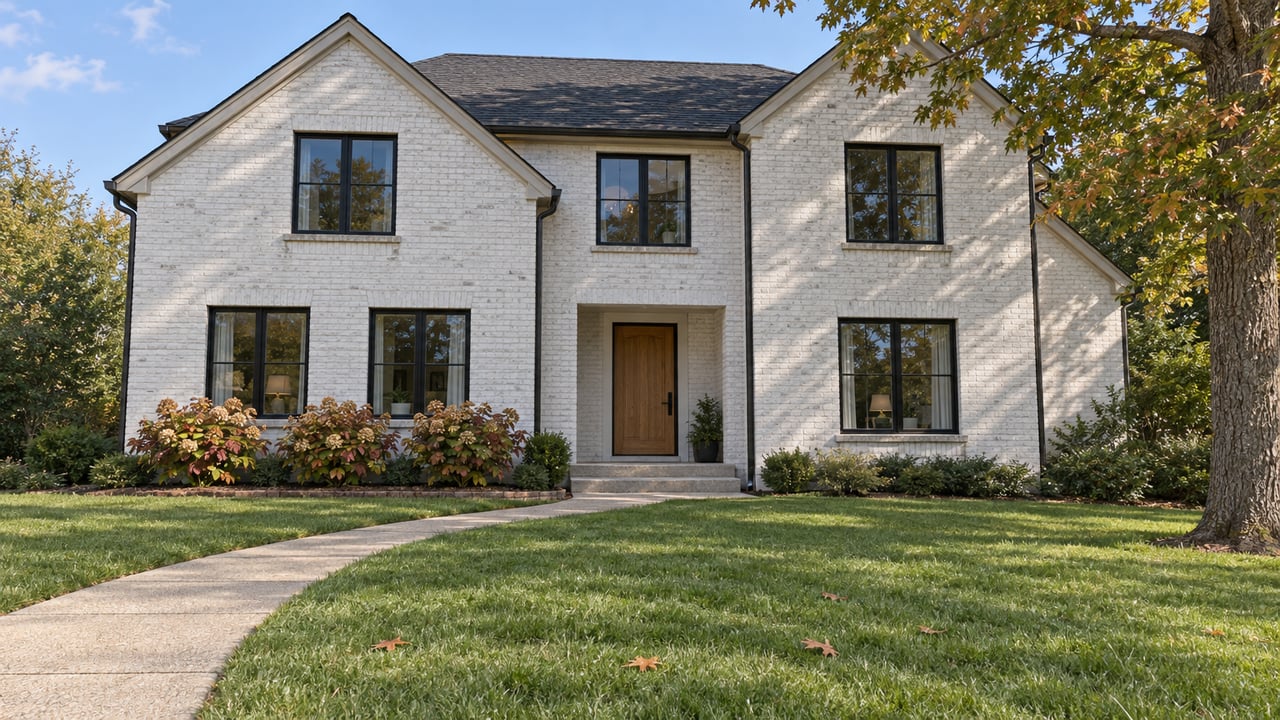
$369,640. That is the gap between the California Association of Realtors' reported statewide median home price of $904,640 as of June 2026 and Nashville's median single-family price of $537,000 through Q2 2026, per Greater Nashville Realtors data. Before a single tax rate is discussed, that spread alone restructures the conversation. But the tax rates matter too — and most California-to-Nashville relocation content gets this math wrong by focusing exclusively on the income tax delta and calling it done. The real comparison runs deeper.
Here is the full accounting.
The Income Tax Number: $0 vs. Up to 13.3%
Tennessee does not have an individual income tax on wages or salaries. The Hall Income Tax on interest and dividends has been phased out, so no individual income tax returns are required for 2026. Zero. On any amount. California runs the opposite direction.
California income tax rates range from 1% to 13.3% in 2026 across 10 tax brackets. Most two-earner professional households top out at the 9.3% marginal rate, which starts at $145,449 of taxable income on a joint return. That is where most of our relocating clients live. A dual-income household earning $300,000 combined is not paying 13.3% — but they are paying a meaningful chunk at 9.3%, with no equivalent liability the moment they establish Tennessee residency.
Run the numbers on a $300,000 household income: at an effective California state rate of roughly 7%, that household is paying approximately $21,000 per year in state income tax. In Tennessee, the bill is zero. That single line item funds a mortgage payment on a $400,000 home. It is not a minor rounding error.
For a single filer earning $150,000 in 2026, the federal marginal rate under IRS rules is 22%. Add California's 9.3% marginal rate and the combined marginal rate on the next dollar earned is 31.3%. In Nashville, that same earner carries only the federal obligation. Wages also pay California SDI with no income cap: 1.3% in 2026. Tennessee has no equivalent.
The Housing Number: $904,640 vs. $537,000
The California housing market in 2026 has a statewide median home price of $904,640 as of June 2026, per the California Association of Realtors, down from a record $930,260 in May but still up 0.4% year over year. Affordability stands at 18%, meaning only 18% of California households can afford a median-priced home. Eighty-two percent of California households cannot buy the median home in their own state. That context matters enormously when someone asks whether Nashville is "getting expensive."
Even with increased inventory, prices in Greater Nashville remain strong and steady, with the median single-family home price settling at $537,000 through Q2 2026. Davidson County, including Metro Nashville proper, stands at $525,000 for median home sales for the year through June 22, according to Greater Nashville Realtors.
The practical consequence: a California buyer selling a $900,000 LA-area home and arriving in Nashville with equity can frequently buy in Green Hills, East Nashville, or the Nations at or near full price without a mortgage, or carry a meaningfully smaller one. That changes the monthly budget math by four figures.
If they are targeting Williamson County — Franklin or Brentwood — the numbers spread further. Brentwood's median home sales price sits at an astronomical $1.6 million and three zip codes in Franklin were $870,000 and up, with Nolensville at $915,000. Still cheaper than comparable square footage in the Bay Area or coastal LA. And with no state income tax cushioning the payment.
For a full breakdown of where these submarkets actually differ on price, lifestyle, and commute, our Nashville Relocation guide walks through the Davidson vs. Williamson County decision in detail.
The Property Tax Number: What Both States Actually Cost to Own
This is where the popular talking point about California's low property tax rate needs serious context.
California has a 0.70 percent effective property tax rate on owner-occupied housing value. That sounds manageable. But apply it to a $900,000 home and the annual bill runs roughly $6,300 to $8,000 once local bonds, parcel taxes, and Mello-Roos fees are added, pushing the real effective rate for 2025–2026 buyers to typically 1.1%–1.3%+. A $930,000 home at a 1.2% blended rate costs $11,160 per year in property tax.
Now run the Davidson County math. Tennessee uses a two-part formula: assessed value times the tax rate. Residential property is assessed at 25% of appraised value. So a $400,000 home has an assessed value of $100,000. Davidson County's combined tax rate is approximately $3.254 per $100 of assessed value. On a $525,000 Nashville home, that produces an assessed value of $131,250 and an annual tax bill of approximately $4,272. Roughly $6,900 less per year than the California example — on a home that cost $375,000 less to buy.
Williamson County's rate is lower, approximately $1.73 per $100 of assessed value. That same $400,000 home would cost roughly $1,730 per year in property taxes. This is why Williamson County communities like Franklin and Brentwood attract buyers despite higher home prices.
The Sales Tax Number: Tennessee's Real Trade-Off
Every honest California-to-Nashville comparison has to acknowledge this one. Tennessee funds government without income tax revenue — and sales tax carries the load.
Tennessee's combined sales tax in Nashville is 9.75%, one of the highest in the country — a deliberate design choice by Tennessee to fund state and local government without income tax. California has a 7.25 percent state sales tax rate, and an average combined state and local sales tax rate of 8.99 percent. So on general retail purchases, Tennessee is about 0.75 percentage points higher in Nashville than the average California combined rate.
For most professional households relocating from California, this spread is immaterial relative to the income tax savings. A household spending $80,000 per year on taxable goods and services pays roughly $600 more in sales tax in Nashville than in California. Compare that to the $15,000–$20,000 in annual income tax savings at a $250,000 income level and the math is not close.
Critically, Tennessee taxes groceries at a reduced 4% state rate — a notable burden for lower-income families that most states avoid by exempting groceries entirely. Worth knowing, particularly for buyers calibrating a tighter monthly budget.
The Capital Gains Number: The Conversation Most Advisors Skip
This is the one that matters most for the California seller arriving in Nashville with significant equity or a portfolio of appreciated assets.
California treats all capital gains as ordinary income. It makes no difference whether you've held an asset for 60 days or 60 years. California has the highest effective state capital gains tax rate at 13.3%.
Tennessee has no capital gains tax. Zero. On stock sales, real estate gains, business liquidations, or investment portfolio distributions. There is no capital gains tax, no estate tax, and no tax on retirement income in Tennessee.
The implication for a California tech employee exercising stock options, a business owner approaching an exit, or a real estate investor selling appreciated California property is significant. On a $1 million gain, California's 13.3% top rate would cost $133,000 in state tax alone. In Tennessee, that bill is zero. A California investor selling stock with $200,000 in long-term gains faces a combined federal and state rate of up to 33.3% — not the 23.8% they might expect from federal rates alone.
Establishing Tennessee residency before a major liquidity event is a legitimate planning strategy. It requires consulting a qualified tax attorney and meeting residency requirements — this is not legal or tax advice — but the number is large enough that serious buyers need to understand it exists. For clients navigating this kind of transition, our relocation advisory process connects buyers with the right professionals early.
The Net Picture: What a $250,000 Income Earner Actually Keeps
Pull the categories together on a single earner making $250,000 per year, owning a $750,000 home, and spending $75,000 annually on taxable purchases. California vs. Nashville, 2026.
- State income tax: California, approximately $20,000–$23,000. Tennessee, $0.
- Property tax on $750,000 home: California (at 1.1% blended), approximately $8,250. Davidson County Nashville (at effective ~0.81%), approximately $6,075. Williamson County at $1.73 per $100 assessed, approximately $3,244.
- California SDI (1.3% uncapped in 2026): approximately $3,250. Tennessee equivalent, $0.
- Sales tax differential: approximately $600 more per year in Nashville Davidson.
The rough annual advantage of Tennessee residency for this household: $16,000 to $20,000, before accounting for the capital gains difference on any investment activity. Over ten years, with conservative investment of that savings, this is a material wealth delta — not a lifestyle preference conversation.
The Costigan Group's relocation division works through exactly this kind of household-specific analysis with clients before they decide where to plant in the metro.
What the Numbers Do Not Settle
A client who earns $80,000, rents in Nashville, and does not own a portfolio of appreciated assets captures most of the benefit through lower housing costs and modest income tax savings. The marginal income tax delta at lower incomes is smaller than the headline suggests.
And Nashville's pricing is not static. Home prices in the Nashville area continued to climb during the first half of 2026, and experts expect costs will stay on an upward trajectory for the foreseeable future. According to the latest report from Greater Nashville Realtors, the region had 9,929 total home closings in Q2 2026, a 6% increase compared to last spring. Inventory has expanded, but prices have not fallen. Buyers arriving expecting California-era distress pricing will be disappointed.
The suburbs also carry their own trade-offs. Franklin and Brentwood offer lower property tax rates and top-ranked school zones — buyers should review specific zoning maps and public data themselves or with a buyer's agent — but home prices in those corridors overlap with Southern California's mid-tier market. The tax savings are real either way; the entry price point is not always as dramatic as the headline comparisons suggest.
Our Nashville neighborhood guide breaks down the submarkets by price band, commute pattern, and buyer profile so you are not making a $600,000 decision based on a ZIP code you Googled at midnight.
The One Number That Changes the Whole Math
Most relocation content treats the tax comparison as the main event. It is not. The main event is the housing equity unlocked by the transaction itself.
A California homeowner selling a $900,000 LA or Bay Area property with $500,000 in equity arrives in Nashville with a down payment that covers a median Davidson County home — at $525,000 — with no mortgage, or funds a Williamson County purchase with a small one. They then redirect what was a $4,000-per-month California mortgage payment plus $20,000 in state income tax into savings, investment, or lifestyle.
That is not a tax story. That is a wealth restructuring story. The tax rates are the multiplier. The housing equity is the event. Buyers who understand this distinction make better decisions about where to live, what to buy, and when to move.
If you are running this math for a real household — specific income, specific California sale price, specific Nashville neighborhood target — reach out to the Costigan Group's relocation team and we will run it with you before you commit to a single showing.
Related reading
- Nashville Relocation Services
- Nashville Neighborhoods: The Complete 2026 Guide to Where to Buy, Invest, and Live
Frequently Asked Questions
Do I stop paying California income tax the day I move to Nashville?
Not automatically. California is aggressive about residency audits and uses multiple factors to establish domicile — driver's license, voter registration, bank accounts, primary residence, and time spent in-state. You need to formally establish Tennessee residency and sever California ties. For high-income earners, this means working with a tax professional who specializes in California residency exits, not just filing a change-of-address form. California can and does audit former residents who maintain financial, family, or business ties to the state.
Is Nashville's property tax actually lower than California's?
In effective dollar terms, usually yes — and often dramatically so. Davidson County, Tennessee has an effective property tax rate of 0.60%, which is 35% lower than the national average of 0.92%. On a home valued at $417,400, homeowners pay approximately $2,506 per year in property taxes. A comparable California home at $900,000+ would generate a property tax bill three to four times higher once Mello-Roos and local bonds are included. The dollar gap is larger than the rate comparison alone suggests because California home values are so much higher.
How does the Tennessee sales tax hit a typical Nashville household?
Nashville's combined sales tax is 9.75% — 7% state plus 2.75% county — one of the highest combined rates in the US. For most professional households, the practical annual cost increase over California's 8.99% average combined rate on $75,000–$100,000 in taxable spending is $500–$750 per year. This is real, but it does not come close to offsetting the income tax savings for earners above $150,000. At lower income levels, where taxable spending represents a larger share of take-home pay, the sales tax burden is proportionally heavier.
If I sell my California home before moving to Nashville, do I owe California capital gains tax?
On the gain from selling your California-located property, California will generally assert tax regardless of where you live at the time of sale, because the asset is California-sourced. The exclusions for primary residence sales ($250,000 for single filers, $500,000 for married) still apply at the federal level. Gains above those thresholds on a California property sale may still be subject to California tax even after you move. Consult a CPA who specializes in California non-resident taxation before timing your sale around a move.
What income do I need to comfortably afford a Nashville home in 2026?
A report found you need to make $120,000 annually to afford the median home in Nashville. That figure assumes a conventional 20% down payment and current mortgage rates in the 6.25%–6.75% range for a 30-year fixed. California buyers arriving with significant home equity often clear this bar easily, since their effective down payment is larger and their monthly obligation is lower than that income threshold implies. The constraint for most California relocators is not qualifying — it is deciding how much equity to deploy versus retain as liquidity.
Is the Williamson County property tax rate really that much lower than Davidson County?
Yes, significantly. Davidson County's combined tax rate is approximately $3.254 per $100 of assessed value. Williamson County's rate is lower — approximately $1.73 per $100 of assessed value. Since Tennessee assesses residential property at 25% of appraised value, a $700,000 Brentwood home carries an assessed value of $175,000 and an annual tax bill of approximately $3,028. That same home in Davidson County at the same price would generate a bill of roughly $5,695. The Williamson County savings partially offset the higher purchase prices in Franklin and Brentwood, which is exactly why those markets compete on total cost of ownership rather than sticker price alone.
How long does a California-to-Nashville relocation typically take from decision to close?
Most buyers we work with who are moving to Nashville from California operate on a 60-to-120-day timeline from first serious conversation to closing. The process typically includes one or two Nashville visit trips, a remote offer period if timing is tight, and a 30-to-45-day contract-to-close window once under contract. Buyers who try to compress this into a single trip without pre-underwriting their budget or previewing neighborhoods virtually typically make slower decisions on arrival, not faster ones. The market does not wait. Median days on market in Nashville as of mid-2026 per Redfin data is approximately 70 days — there is no fire drill, but well-priced homes in sought-after corridors still move.
About The Costigan Group
Jack Costigan is the founder of The Costigan Group at Compass in Nashville, where his team has closed more than $100 million in real estate across Greater Nashville and Middle Tennessee. Specializing in luxury advisory, investment, and short-term rental real estate, Jack is known for a data-driven approach that helps buyers, sellers, and investors understand the numbers, the neighborhood, and the long-term value before making a decision. Featured in Apple News as one of Nashville's most sought-after short-term rental advisors, Jack pairs deep local expertise with modern marketing and a strategy-first approach to real estate. Learn more at thecostigangroup.com.