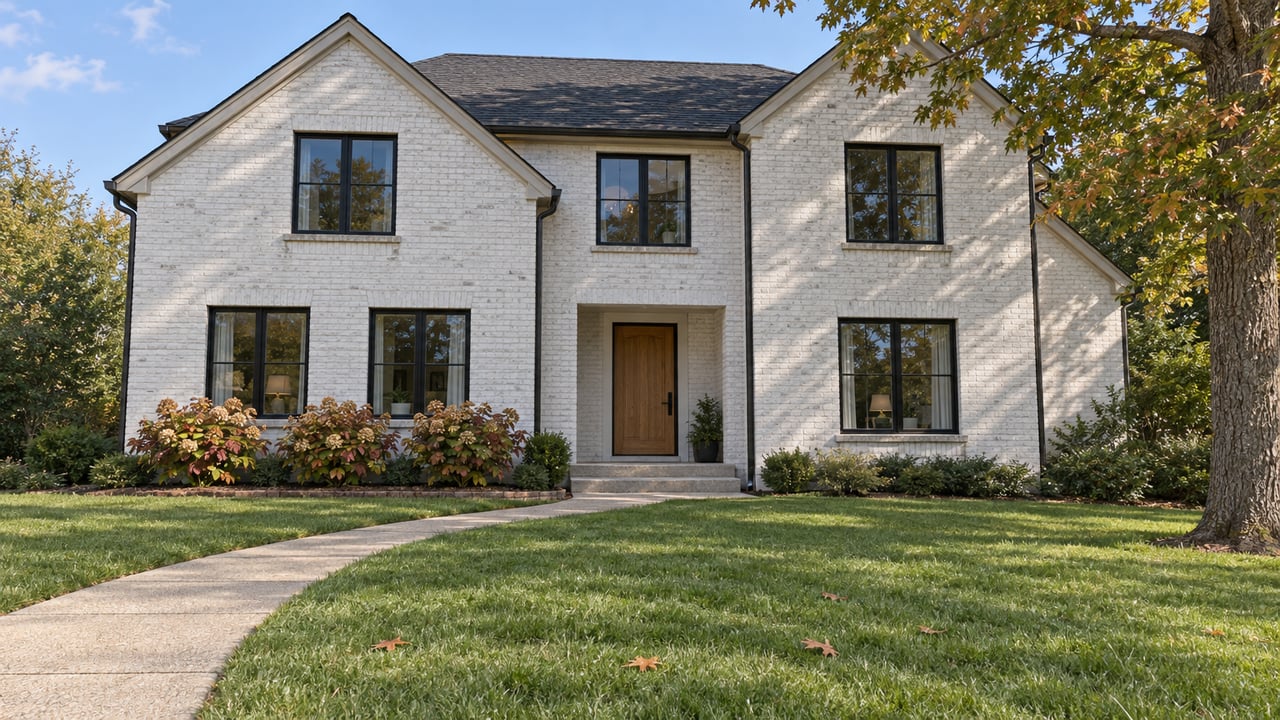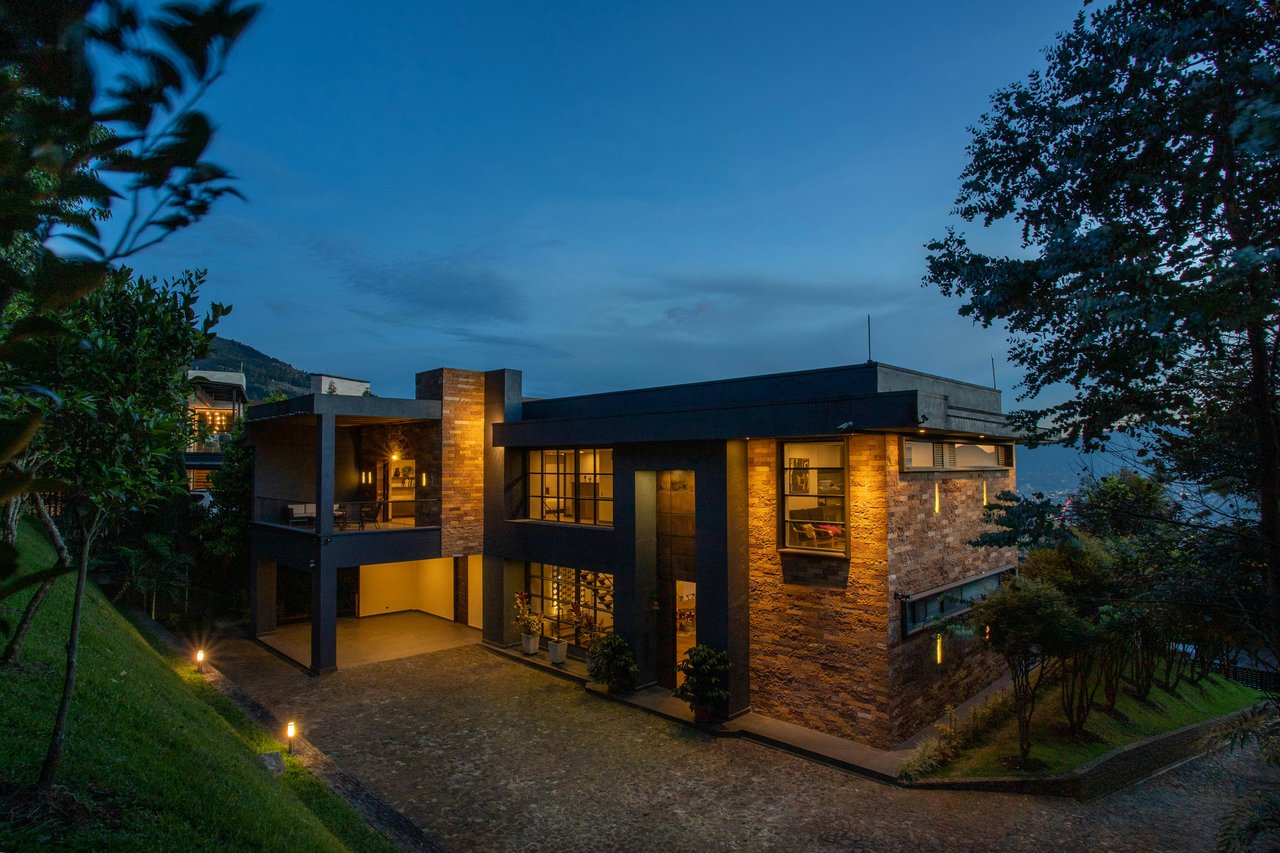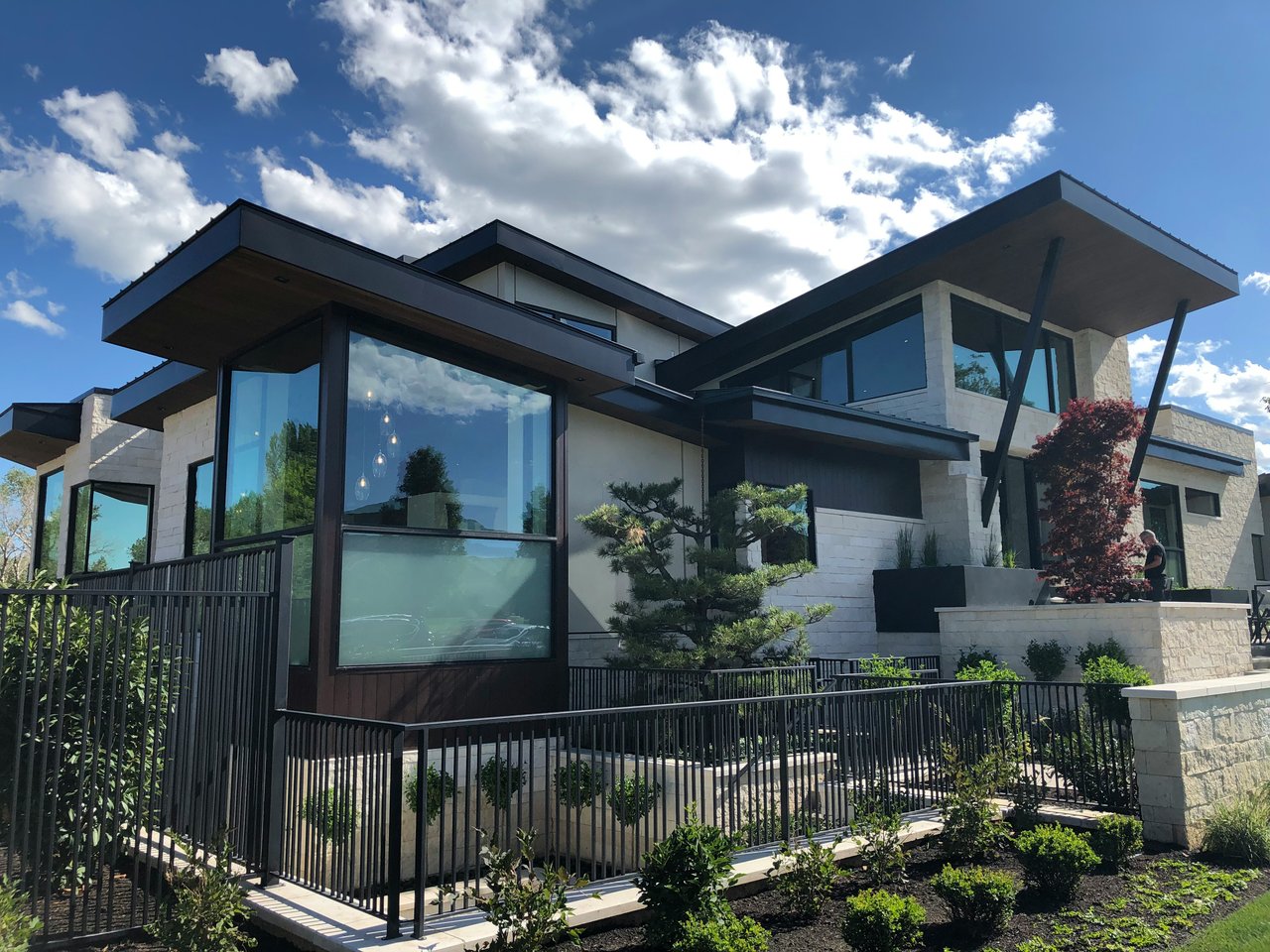
Two nearly identical Belle Meade properties sold within eight weeks of each other in 2025. One closed quietly, off-market, to a buyer sourced through an agent's private network. The other went through Compass's three-phase marketing strategy — Private Exclusive, Coming Soon, then full MLS — and generated multiple offers before closing at a price that made the first transaction look underpriced by a meaningful margin. Same street. Comparable square footage. Different strategy. Very different outcomes.
That comparison is not an argument against off-market selling. It is an argument for understanding exactly what off-market is and is not before you choose it. It's no longer a "quieter alternative" to listing on the MLS, and sellers need to understand exactly what they gain and what they stand to lose. In Nashville's current luxury environment, that calculus is sharper than it has been in years.
The Two Paths: What Off-Market Actually Means in 2026
First, a definition problem. "Off-market" gets used loosely to describe several different things, and conflating them leads to bad decisions.
A Compass Private Exclusive is a property shared within the Compass agent network — and since May 2025, made available in physical Compass Private Exclusive Books accessible to agents from any brokerage at Compass offices. Compass launched this initiative so agents from all brokerages are invited to visit any Compass office to individually browse Private Exclusives listings on a one-to-one basis that are not publicly available online. The property does not appear on Zillow, Redfin, or Realtor.com, but it is not invisible to the agent community.
A true office exclusive is more restrictive. An office exclusive listing, as defined under NAR's Clear Cooperation Policy, refers to one in which sellers have directed that their property may not be disseminated through the MLS and may not be publicly marketed. This is the narrowest path — your buyer pool is limited to whoever your listing agent knows or can reach directly.
A third option emerged in March 2025. NAR's updated Clear Cooperation Policy, effective March 25, 2025, with an implementation deadline of September 30, 2025, introduced a new category called "delayed marketing exempt listings" alongside the existing "office exclusive listings" option. Under this framework, sellers can instruct their listing agents to delay marketing their properties through IDX and syndication for a set period. The listing still exists in the MLS during that window — agents can see it — but it does not push out to consumer portals. Think of it as a controlled slow release rather than a full blackout.
These are three different tools. They serve different situations. Treating them as interchangeable is where sellers get into trouble.
What Off-Market Protects
For the right seller at the right price point, a private sale solves real problems. High-profile celebrities, landlords with live-in tenants, or families navigating a messy divorce often prioritize discretion over the potential of a higher profit. That is a legitimate choice, not a failure to understand the market.
In Nashville specifically, this plays out in Belle Meade, Forest Hills, and parts of Green Hills where sellers are often longtime residents, semi-public figures in the healthcare or entertainment industries, or estate executors managing a transition that is not purely financial. Belle Meade does not advertise its luxury. It expects you to recognize it.
What off-market gives you concretely:
- No public days-on-market clock. If a home sits on MLS for 60 or 90 days in a price band where buyers are patient, that number damages negotiating position. Off-market prevents the accumulation of that data entirely.
- No parade of unqualified lookers. At $3M and above, open-house tourism is real. Private showings to vetted, represented buyers only is a reasonable demand.
- No public photography or floorplans. For sellers with specific security concerns, keeping the home's interior off Zillow permanently has genuine value.
- Price discovery without commitment. Testing a number privately before committing to a public list price is one of the more legitimate uses of the Compass Private Exclusive phase — provided the seller understands it is a test, not a final strategy.
Sellers choose private paths for privacy — no public photos, no open houses, no days-on-market record. When discretion is the primary goal, that trade is worth taking with open eyes.
What Off-Market Costs
Here is where the conversation gets uncomfortable, and most agents will not say it plainly: off-market almost always leaves money on the table. The degree depends on the price point, the property type, and who actually has access to your listing.
The Bright MLS/Drexel University study provides the most comprehensive evidence: sellers who bypass the MLS leave an average of 17.5% on the table compared to those who list publicly. That figure includes all property types and price bands, and it includes transactions like estate sales and family transfers that skew the numbers. WAV Group notes that many "off-market" sales in these studies include family transfers or inherited properties, which are often sold at a steep discount. So the real-world figure for a well-advised off-market luxury sale with serious buyer outreach is lower than 17.5%. But it is still real.
The trade-off is typically a 3 to 7 percent lower sale price versus full MLS marketing. Buyers who access pocket listings face 1 to 2 competing offers versus 5 to 15 on a comparable MLS listing. Fewer competing offers means less upward pressure. Less upward pressure means a lower ceiling on the final number.
Apply that to Nashville's current luxury market. Belle Meade's median sale price increased from $2,562,500 in 2024 to $2,750,000 in 2025. A 5 percent off-market discount on a $2.75M home is $137,500. A 7 percent discount is $192,500. Those are not rounding errors — they are meaningful sums on transactions where sellers often believe discretion is costing them nothing.
Nashville luxury inventory has increased and days on market have extended. Buyers in this range have more negotiating power than they have had in years. Sellers of luxury homes need realistic pricing and patience. That context matters. A soft luxury market and an off-market strategy together form a one-two punch against price. In a tight seller's market, off-market can still command strong numbers. In a market where buyers have options and time, it rarely closes that gap.
The Dual Agency Risk Most Sellers Miss
There is a financial risk embedded in off-market transactions that gets almost no attention from sellers, and it deserves to be stated directly.
Dual agency — one agent representing both buyer and seller in the same transaction — is the primary financial risk in any off-market luxury sale. A Zillow study released May 2026 found sellers in dual-agency transactions lost $1.49 billion from 2023 to 2025, averaging more than $2,000 per transaction. At the luxury level, where stakes are proportionally higher, that average understates the exposure considerably.
The dynamic is predictable: an agent recommends a private sale, markets it quietly within their own network, and surfaces a buyer they also represent. The conflict is structural. The seller's negotiating advocate is the same person closing a commission on the buyer side. When reviewing any off-market proposal, ask explicitly whether the agent intends to represent both parties — and if the answer is ambiguous, that ambiguity is your answer.
The Compass Three-Phase Framework: Where Off-Market Belongs
The smarter use of off-market in Nashville luxury is not as a permanent strategy. It is as a first phase inside a larger campaign — specifically, the Compass three-phase approach of Private Exclusive, Coming Soon, then full MLS. Used this way, privacy and competitive tension are not opposites. They sequence.
Compass data for the 12-month trailing period ending March 31, 2026 shows that homes pre-marketed as a Compass Private Exclusive and/or Coming Soon had a 34% faster time-to-contract and a 29% reduced likelihood of a price drop compared to homes that went directly to MLS. That is not an argument for staying permanently off-market. It is an argument for building anticipation before public exposure, then capturing competition when the property goes fully live.
The distinction is timing and intent. A seller who uses Private Exclusive as a six-week price-testing phase with a clear MLS date on the calendar is managing the process intelligently. A seller who decides "we'll just sell it quietly and see what happens" with no MLS plan has outsourced control to whoever happens to call first.
For a deeper look at how our team structures this for Nashville luxury listings, including the underwriting we run before recommending a strategy at all, reach out directly before making a decision either way.
Belle Meade vs. Green Hills: Where the Trade-Off Lands Differently
The off-market calculation does not apply uniformly across Nashville luxury. Two submarkets illustrate why: Belle Meade and Green Hills, four miles apart, but meaningfully different in buyer behavior.
As of early July 2026, Belle Meade carried 44 active listings with an average listing price of $3,390,032, and properties averaged $584 per square foot. Over a third of Belle Meade sales exceed $3 million. The buyer pool for a $4M Belle Meade estate is small by definition — there are fewer than a few dozen genuinely qualified buyers in Nashville at that level on any given month. The agent network and relationship channels matter proportionally more at this tier.
That is the one setting where a well-connected off-market play can genuinely work: ultra-high price points where the qualified buyer universe is so thin that MLS exposure adds less competitive pressure than it would at $1.8M, and where the seller's social network overlaps meaningfully with that buyer pool. Even then, the Compass Private Exclusive phase still outperforms a pure office exclusive — because reaching agents who represent those buyers is still broader than reaching the buyers directly.
Green Hills is a different story. Green Hills is the largest luxury submarket in Nashville by transaction volume. Eighty-two closed sales in the Green Hills subdivision over the past 12 months carried a median price of $2.18 million. That volume means genuine buyer competition is possible — if you create the conditions for it. A $2.5M Green Hills home taken off-market to avoid "inconvenience" is almost certainly leaving $100,000 to $200,000 on the table relative to a properly staged and fully marketed MLS campaign with professional photography, video, and targeted paid reach.
The rule of thumb: the thinner the qualified buyer pool at your price point, the more a trusted agent network can substitute for MLS exposure. Below $3.5M in Green Hills or Brentwood, that substitution is expensive. Above $5M in Belle Meade, a thoughtful hybrid approach can protect privacy without catastrophic price impact — if it is structured correctly from the start.
If you are also considering out-of-state buyers — a meaningful segment of the Nashville luxury pool — know that relocating buyers rarely know to ask for off-market inventory unless they are working with an agent plugged into the private network. That is another reason full MLS exposure serves most sellers in the $1.5M to $3.5M range better than a quiet sale. Our relocation clients specifically ask for off-market access, which is why having a foot in both channels matters for the buyer's agent side of this equation.
The Decision Framework
Off-market is right for a Nashville luxury seller when all of the following are true: the seller has a specific privacy need that outweighs the financial cost, the agent has verified access to the relevant buyer network at that price point, the transaction will be managed with independent representation for both sides, and the seller has seen a written estimate of what full MLS exposure would likely produce versus the private path.
It is wrong when it is positioned as "less stressful," when the agent's motivation is an easier dual-agency close, or when the seller has never been shown the 3 to 7 percent discount data and asked to decide with full information in hand.
A signed disclosure is required for any seller who chooses to delay the public marketing of their listing — documenting their informed consent to waive the benefits of immediate public marketing through IDX and syndication. That disclosure exists for a reason. It is not a formality. It is acknowledgment that you are giving something up. Make sure you know what it is before you sign.
Our team underwrites Nashville luxury listings before recommending a strategy — not after. If you are preparing to sell above $1.5M in Davidson or Williamson County, the Costigan Group's approach starts with a full market analysis comparing both paths with actual numbers from recent comparable sales in your submarket. You can explore the breadth of what we cover on the press page, or go directly to neighborhood-level data to build your own baseline before we talk.
The right strategy for your property will depend on price point, submarket, buyer profile, and your personal priorities. What it should never depend on is your agent's convenience. If that conversation has not happened yet, it needs to before a listing agreement is signed.
Related reading
- Nashville Luxury Real Estate
- Nashville Home Valuation
- Nashville Neighborhoods: The Complete 2026 Guide to Where to Buy, Invest, and Live
- Nashville Rental Market: What Falling Rents Are Telling Buyers About Home Prices
Frequently Asked Questions
Does selling off-market in Nashville actually get you a lower price?
In most cases, yes — though the size of the discount depends on price point and execution. Research consistently shows off-market homes sell for less than comparable MLS-listed properties, with estimates ranging from 3 to 17 percent depending on the study and market. In Nashville's $1.5M to $3.5M luxury band, where buyer competition is still achievable on MLS, a well-marketed public listing typically outperforms a quiet sale by $100,000 or more. Above $5M in Belle Meade, where the qualified buyer pool is thin, a connected off-market approach narrows that gap — but the price risk never fully disappears.
What is the difference between a Compass Private Exclusive and a pocket listing?
A pocket listing is a broad term for any property sold outside the MLS, often with no structured exposure at all. A Compass Private Exclusive is a specific program in which the property is shared across the Compass agent network and, since May 2025, made available in the Compass Private Exclusives Book accessible to agents from all brokerages at Compass offices. The Private Exclusive is a phase in a larger strategy, not a permanent alternative to public marketing. Used correctly, it builds buyer anticipation before a property goes fully live.
Can I test my price off-market before going on MLS in Nashville?
Yes, and it can be strategically useful — with one important caveat. Price testing off-market only gives you signal if you see qualified, arm's-length buyers engaging at that number. If the only offers you receive are low and uncompetitive, you have not learned that your price is wrong — you may simply not have reached the right buyers. Use the Private Exclusive phase for signal, not as a fallback if MLS exposure intimidates you. Set a clear date to go public if the private phase does not produce a compelling offer.
If I sell off-market, can the sale still show up in public records?
Yes. The deed recording is a matter of public record in Tennessee regardless of how the home was marketed. What stays private is the listing itself — no photos, no days-on-market counter, no public price history on Zillow or Redfin. The sale price and transfer will appear in Davidson or Williamson County property records once the deed is filed. If your concern is protecting the property during the marketing period rather than permanently hiding the transaction, that distinction matters.
What happened to the NAR Clear Cooperation Policy in 2025?
NAR retained the Clear Cooperation Policy but added a new category effective March 25, 2025. Sellers can now designate their listing as a "delayed marketing exempt listing," which delays public IDX and syndication for a period set by the local MLS, while the listing remains visible to MLS agents. This is different from a full office exclusive, where the property cannot be publicly marketed at all. Both options require a signed seller disclosure acknowledging that immediate public exposure benefits are being waived. Work with your agent to confirm how RealTracs, Nashville's MLS, implements the delay window locally.
Does Zillow still show off-market Nashville listings?
No. Starting May 2025, Zillow implemented a policy requiring that any property publicly marketed — including on social media, email campaigns, or with a yard sign — be entered into the MLS within 24 hours, or be permanently blocked from the Zillow platform for the life of that listing. A true Compass Private Exclusive that is never publicly marketed avoids this restriction, but any public marketing activity before MLS entry triggers the ban. This makes compliance sequencing critical: do not post on Instagram before the listing is in the system.
Is off-market selling more common at certain price points in Nashville?
Yes. In Nashville's luxury market above $3 million, private and semi-private transactions account for a meaningfully higher share of total volume than in the broader market. Belle Meade, where the average active listing price was approximately $3.39 million as of July 2026, sees a higher proportion of relationship-driven sales than Green Hills or Brentwood, partly because the qualified buyer pool is smaller and more connected. Below $2.5M, the economics strongly favor full MLS exposure in most cases, and the privacy rationale needs to be genuine to justify the financial trade-off.
About The Costigan Group
Jack Costigan is the founder of The Costigan Group at Compass in Nashville, where his team has closed more than $100 million in real estate across Greater Nashville and Middle Tennessee. Specializing in luxury advisory, investment, and short-term rental real estate, Jack is known for a data-driven approach that helps buyers, sellers, and investors understand the numbers, the neighborhood, and the long-term value before making a decision. Featured in Apple News as one of Nashville's most sought-after short-term rental advisors, Jack pairs deep local expertise with modern marketing and a strategy-first approach to real estate. Learn more at thecostigangroup.com.