70%. That is the share of buyers who skip a listing entirely when the photography is low quality, according to PhotoUp's 2025 analysis of buyer behavior. They do not click through to the description. They do not save it to revisit. They scroll past and open the next one. In a Nashville market where active listings jumped 8% year-over-year to 15,617 homes in Q2 2026, the competition for that click is as real as the competition for an offer.
This post is built around the numbers — what bad Nashville listing photos cost at each stage of the transaction, from the first online impression through days on market to the final sale price. Every figure has a consequence. Here is what they add up to.
118%: The View Gap Between Professional and Amateur Photography
Listings featuring professional photography receive up to 118% more online views compared to those without. That is not a rounding difference. On a platform like Zillow or Realtor.com, it means one version of a home gets seen by twice as many buyers as an identical home listed with phone camera snapshots.
The practical consequence: more views means more saves, more saved listings means more showing requests, and more showing requests is the only path to competitive offers. In a market where the average home sells for about 2% below list price and goes pending in around 63 days, early momentum is not cosmetic. It determines whether you price from a position of leverage or a position of desperation.
Well-located, move-in-ready homes continue to attract serious interest, while overpriced listings are sitting longer. Greater Nashville Realtors noted that we've entered a market where staging, details, and marketing play a huge factor in how a listing performs. Photography is the front door to all of it.
20%: The Probability Drop When a Listing Has Fewer Than 9 Photos
Zillow found homes with fewer than nine photos were 20% less likely to sell within 60 days than similar homes with 22–27 images. This is not about padding a gallery — it is about giving buyers enough visual information to commit to a showing.
Think about how a serious buyer uses Zillow or Realtor.com. The average home buyer spends eight weeks searching, narrows their choice to nine houses, but only views four in person. That cut from nine to four happens almost entirely in the photo gallery. A listing with six dark, wide-angle shots of three rooms does not make the cut. It gets mentally filed as "not enough information" — which reads as "not worth driving to."
Listings under nine photos attract fewer clicks and sell slower. The optimal number of photos is 22–27 for best engagement and sales performance. For a $537,000 Nashville home — the median single-family price in Q2 2026 per Greater Nashville Realtors — shortchanging the photo count is one of the cheapest mistakes a seller can make, and one of the most avoidable.
The right neighborhood presentation matters too. In a place like Germantown or 12 South, where architecture and streetscape are part of the value proposition, photo count and quality are not separable from how much the home is worth to a relocating buyer seeing it for the first time online.
32 Days: What a Full Professional Media Package Saves You
Listings that feature more than 20 high-quality images typically spend 32 days less on market compared to those with fewer photos. In the current Nashville market, where homes were selling for a median price of $475K over the three months ending May 2026, with homes averaging 70 days on market compared to 58 days last year, 32 fewer days is not just a convenience. It is real money.
Every day a property remains on the market costs money in mortgage payments, utilities, property taxes, insurance, and opportunity costs. For a typical property, holding costs range from $150 to $500 per day. Shaving 13 days off market time saves $1,950 to $6,500 in holding costs alone. A full professional media package — photography, video, aerial, twilight — runs $800 to $2,500 in most Nashville markets. The math is not close.
There is also a second-order cost most sellers miss. A listing that sits accrues what buyers privately call "stale" stigma. In a market with 15,617 active listings, buyers see DOM. A 60-day listing in Green Hills looks different than a 12-day listing in Green Hills, even if the price is identical. Photography is not just marketing. It is damage prevention.
$3,400 to $11,200: The Sale Price Impact
Professionally photographed homes sell 32% faster and for $3,400 to $11,200 more according to Redfin research. The mechanism is straightforward: more views generate more competition, more competition generates more offers, and more offers push price up or eliminate the downward pressure that comes from a seller negotiating from a position of low demand.
With the sale-to-list price ratio at 97.25% in June 2026, only 13.87% of homes sold over asking price down from 14.33% last year. That top 14% is not made up of better houses. It is made up of better-presented houses. The listings that capture multiple offers in the first week in East Nashville or The Nations are almost universally the ones with full professional media packages, not iPhone galleries uploaded the morning of the MLS go-live.
For sellers in the luxury segment above $1.5 million, the stakes scale with the price. Half of properties valued over $1 million are presented with subpar photographs. That is a competitive advantage for the sellers who do it right — and a costly mistake for the ones who do not.
68% Faster: What Drone Aerial Photography Does to Sale Speed
According to the National Association of Realtors, properties marketed with aerial photos sell 68% faster than those using standard images alone. This figure surprises agents who treat drone photography as a luxury add-on for estate properties. It is not.
In Nashville neighborhoods with strong lot value Brentwood, Forest Hills, Belle Meade, properties on the east side with outdoor entertaining spaces — aerial photography communicates context that ground-level shots physically cannot. The lot size, the backyard, the tree cover, the relationship to the street, proximity to a park. Buyers are 65% more likely to schedule an in-person showing for listings featuring drone aerial photography. That conversion from click to showing visit is exactly where most listings lose the transaction.
Drone service in the Nashville market typically runs $150 to $350 added to a photography package. Against a $537,000 sale, that is 0.06% of the transaction value. The ROI argument does not require a spreadsheet.
76%: The Case for Twilight Photography as the Lead Image
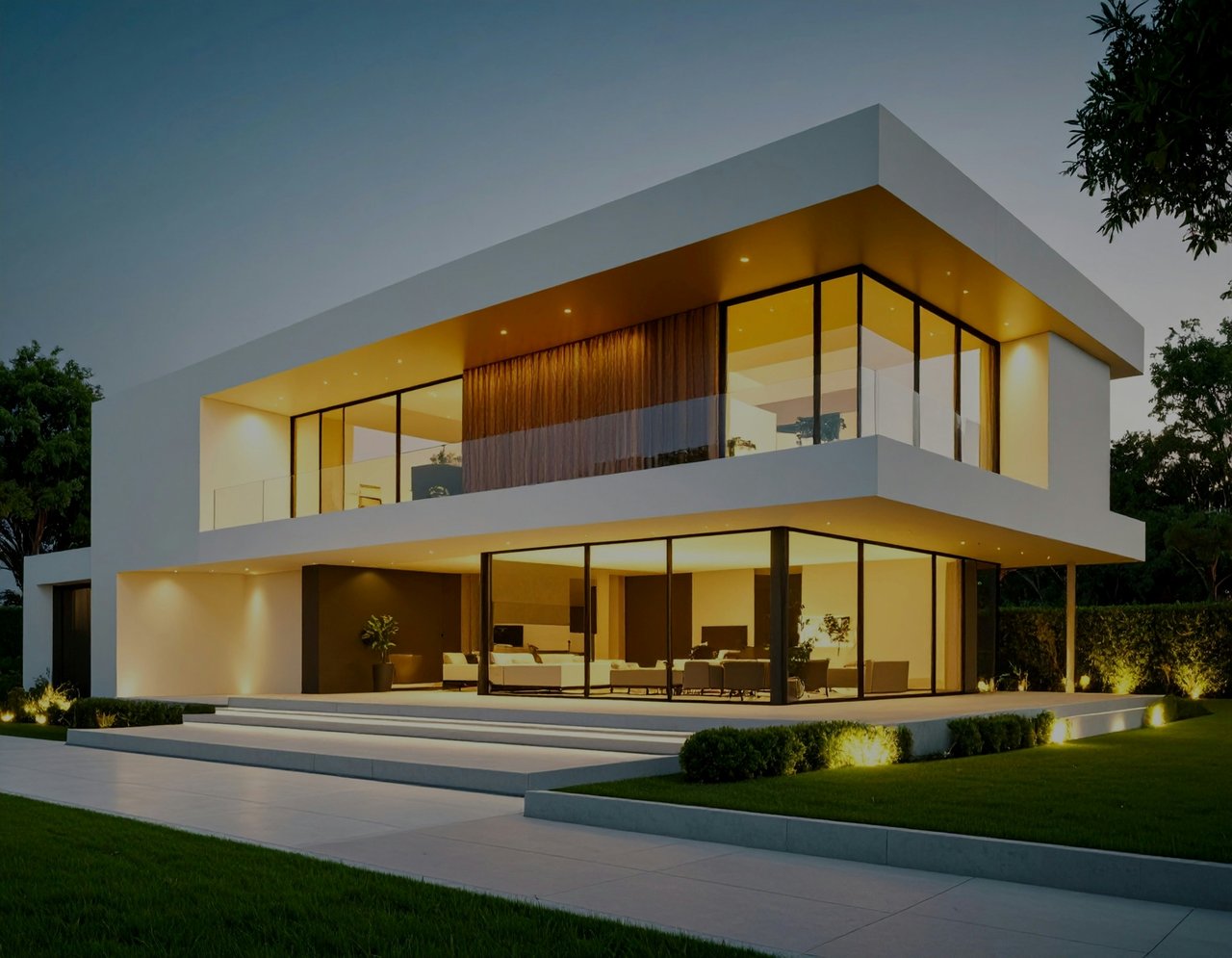
The lead photo — the first image a buyer sees in the thumbnail before clicking — is the single highest-leverage decision in the entire listing presentation. Real estate listings with twilight photos receive 66% more views than standard daytime listings. When twilight imagery is used as the primary listing photo, views increase by 76%.
The reason is not aesthetic preference. It is psychology. A warm twilight exterior — lights on inside, landscaping lit, sky transitioning to deep blue — sells the feeling of home before a buyer processes a single feature. They click because they want to feel what living there feels like. Daytime exteriors in flat midday light sell the square footage. Twilight exteriors sell the life.
Twilight photography, which captures properties during the golden hour, increases showings by 3x. Incorporating virtual tours alongside high-quality photos can reduce the time a listing stays on the market by up to 31% and help sell for a higher price — up to 9% more. For a $700,000 home in Germantown or 12 South, 9% is $63,000. That is not the cost of a better photographer. That is the cost of not having one.
Our approach at The Costigan Group treats the lead image as a strategic decision, not a default. We select the hero shot based on the property's strongest visual asset — sometimes twilight, sometimes a drone pull-back, sometimes an interior architectural detail that stops the scroll. The point is that it is chosen deliberately, not uploaded in the order the photographer sent the files.
The Honest Trade-Off Your Agent Probably Will Not Say Out Loud
Here is the version most sellers do not hear: professional photography does not rescue a mispriced or poorly prepared home. It amplifies whatever the home is. If the kitchen has not been decluttered, professional photography makes the clutter sharper. If the paint colors are dated, HDR photography makes them more vivid. The listing presentation is a multiplier, not a repair.
The sequence matters. Preparation first. Staging or decluttering second. Photography third. Then the MLS go-live. Sellers who reverse that order listing first and planning to "fix it later" — burn through the first-week buyer pool, which is statistically the highest-engagement window in any listing's life. Well-located, move-in-ready homes continue to attract serious interest, while overpriced listings are sitting longer. The photography must match the preparation. Neither alone closes the deal.
For sellers considering what a full marketing package looks like in practice — from photography brief to final MLS upload to how we sequence the media release — our approach has been covered in detail and it is a meaningful departure from how most Nashville listings are launched.
If you are selling a home in Greater Nashville and want a second opinion on your current listing's photo strategy — or want to build the presentation correctly before you go live — reach out to The Costigan Group directly. The conversation costs nothing. A bad launch does.
Related reading
- Nashville Luxury Real Estate
- Nashville Home Valuation
- Nashville Neighborhoods: The Complete 2026 Guide to Where to Buy, Invest, and Live
- Nashville Rental Market: What Falling Rents Are Telling Buyers About Home Prices
Frequently Asked Questions
How much does professional real estate photography cost in Nashville?
A professional real estate photography package in Nashville typically runs $250 to $600 for standard interior and exterior stills, with full media packages — including drone, twilight, and video — ranging from $800 to $2,500 depending on property size and the provider. Against a median Nashville single-family sale price of $537,000 in Q2 2026, even a $2,000 full-media package represents less than 0.4% of the transaction value, and the documented sale price lift of $3,400 to $11,200 makes it one of the highest-ROI line items in any seller's budget.
Does professional photography really help homes sell faster in Nashville's current market?
Yes, and the current market makes it more important, not less. According to Redfin, homes with professional photography sell 32% faster than those without. In Nashville's mid-2026 environment — where active listings are up 8% year-over-year and the average days on market has stretched — presentation quality is a primary differentiator. Listings that stand out in the first week collect the most serious buyers; listings that stall lose negotiating power and often require price cuts to generate interest.
What's the biggest photography mistake Nashville sellers make?
Underinvesting in the lead image. The first photo in the gallery determines whether a buyer clicks or scrolls past — it functions as the listing's thumbnail on every major search platform. Twilight exterior photos used as the lead image generate 76% more views than standard daytime listings used as the lead. Many sellers also launch with too few photos: fewer than nine images reduces the probability of selling within 60 days by 20%, according to Zillow data.
Does drone photography make sense for a standard Nashville home, or just luxury?
For most Nashville homes above $400,000 — which covers a large share of the Davidson and Williamson County market — drone photography is worth adding to the media package. Properties marketed with aerial photos sell 68% faster per NAR data, and buyers are 65% more likely to schedule a showing when a listing includes drone imagery. The cost in the Nashville market ranges from $150 to $350 added to a standard photo package, making it one of the best dollar-for-dollar investments in the listing presentation.
How does bad listing photography affect the final sale price?
Directly. Fewer views produce fewer showings, fewer showings produce fewer offers, and fewer offers eliminate the competitive dynamic that pushes buyers toward list price or above it. Redfin's research shows professionally photographed homes sell for $3,400 to $11,200 more than comparably priced homes with amateur photography. In Nashville's June 2026 market, where only 13.87% of homes sold over asking price, the listings that do attract multiple offers are almost always the ones with strong visual presentations from day one.
Should I stage my Nashville home before the photography shoot?
Yes. Professional photography amplifies what is already in the frame — it does not hide clutter or dated finishes, it sharpens them. The correct sequence is: prepare and stage the home first, then shoot. Sellers who go live with raw photos and plan to improve presentation later burn through the highest-engagement window of the listing cycle, which is the first seven to ten days on market. That window does not reset.
Does photo count actually matter on Zillow and Realtor.com?
Yes, in two ways. First, buyer behavior: homes with 22 to 27 professional photos consistently outperform both under-photographed listings (fewer than 9) and bloated galleries (30+) on click-through rates and showing conversion, per Zillow's analysis. Second, MLS algorithm weighting: some MLS search systems prioritize listings with higher photo counts in default sort results. A listing with 25 quality photos competes at a structural advantage over an identical listing with 6, independent of price or location.
About The Costigan Group
Jack Costigan is the founder of The Costigan Group at Compass in Nashville, where his team has closed more than $100 million in real estate across Greater Nashville and Middle Tennessee. Specializing in luxury advisory, investment, and short-term rental real estate, Jack is known for a data-driven approach that helps buyers, sellers, and investors understand the numbers, the neighborhood, and the long-term value before making a decision. Featured in Apple News as one of Nashville's most sought-after short-term rental advisors, Jack pairs deep local expertise with modern marketing and a strategy-first approach to real estate. Learn more at thecostigangroup.com.