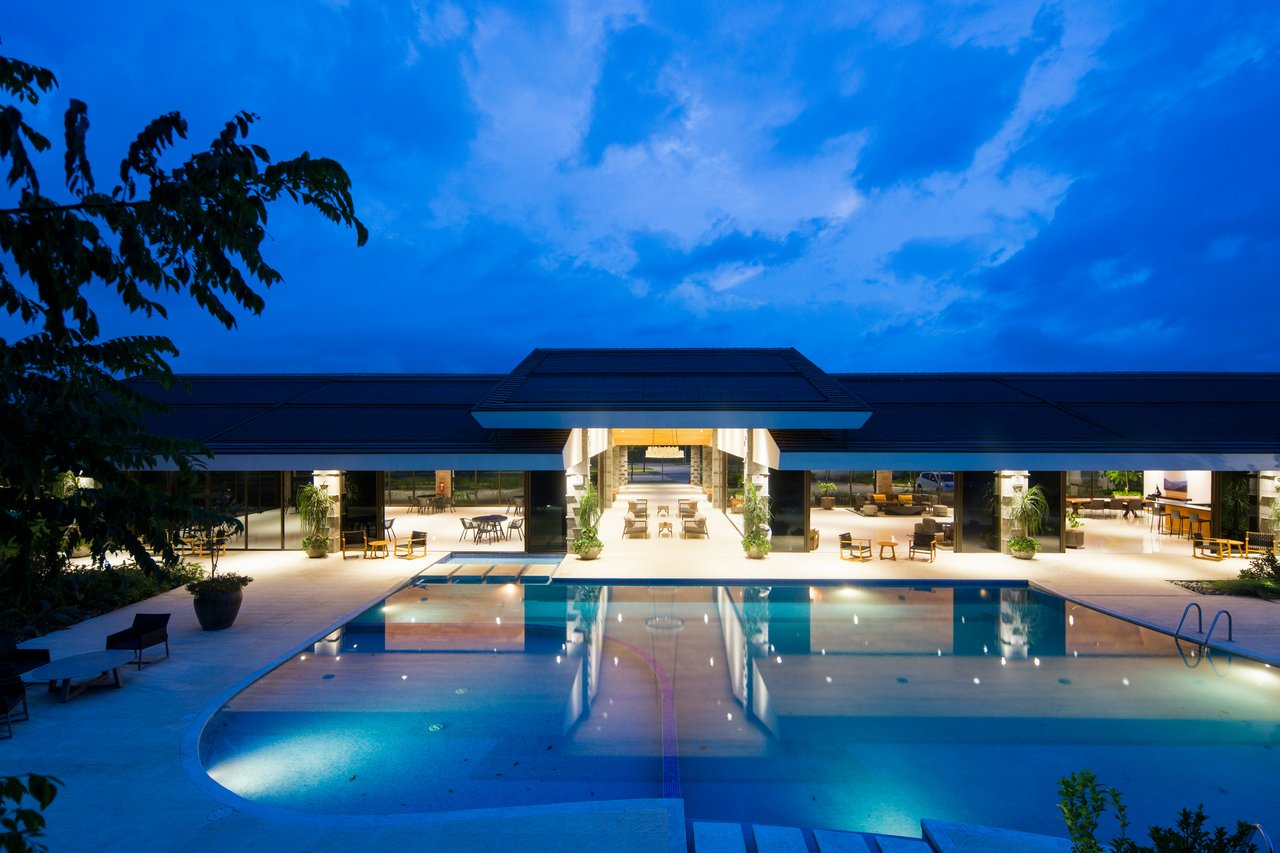
The largest residential closing in Davidson County over the past three years happened at 1304 Chickering Road in Forest Hills — $32 million. The property at 1410 Chickering Road, half a mile away, closed at $12.5 million. Those two transactions alone define the ceiling of what Forest Hills Nashville real estate can reach. Oak Hill, the incorporated city that shares a border, a zip code, and much of the same wooded topology, has never produced a closing at that scale. That gap is not accidental. It reflects two markets operating on genuinely different dynamics — and if you are buying above $2 million in southwest Davidson County, understanding the difference can determine whether you get the right house or just a good one.
Two Incorporated Cities, Not One Neighborhood
Most agents treat Forest Hills and Oak Hill as a single market. They are not. Both are incorporated cities with their own governments, tax structures, and municipal services. Six municipalities within Davidson County — Belle Meade, Berry Hill, Forest Hills, Goodlettsville, Lakewood, and Oak Hill — maintain independent municipal governments and administer their own zoning codes separately. That is not a trivial legal distinction. It means Metro Nashville's zoning authority stops at both city limits. What gets built, how large it can be, how close to the property line — all of that is governed locally, not by Metro.
Oak Hill was incorporated in 1952 to preserve its residential character before Nashville and Davidson County merged their governments. Forest Hills followed a few years later with the same logic. When Nashville and Davidson County consolidated their governments in 1963, cities such as Forest Hills were allowed to keep their existing charters and municipal authorities, including their own mayor and commissioners, while still cooperatively receiving certain services from Metro Nashville. Both cities have now maintained strictly residential zoning for over 70 years. No commercial development. No apartments. No mixed-use corridors breaking up the tree canopy.
The shared DNA stops there.
Forest Hills Nashville Real Estate: The Price Tier That Behaves Like a Private Market
As of March 2026, there were 11 active properties for sale in Forest Hills with an average listing price of $7,014,627. The highest-priced listing was $22,000,000, while the lowest was $2,299,000. Properties averaged $745 per square foot across listings averaging 8,966 square feet of living space. Those are listing-side numbers. The transaction-side tells a sharper story.
Forest Hills carries a median sale price of $2,025,000 and an average of $2,689,842 based on the past 12 months of sales. Forest Hills also commands a higher average price per square foot — $527 versus $449 in Oak Hill — and a greater share of transactions above $3 million: 36.2% compared to Oak Hill's 26.6%. That $78-per-square-foot premium is not just about finishes. It reflects scarcity of large wooded parcels and the gravitational pull of the Chickering Road corridor, which functions as its own submarket within a submarket.
Inventory at the top tier of Forest Hills transacts off-market more often than not. Portal-only buyers miss most of the available properties above $10 million. That is a structural feature of this market, not a coincidence. Sellers at the $8M to $20M range have no incentive to expose their homes publicly. When a buyer capable of writing that check appears, the deal gets done privately. It is one of the reasons working with an advisor connected to the luxury network in this submarket is not a luxury — it is the price of admission.
Recent verified closings in Forest Hills include $8.15M at 4335 Chickering Lane, $7.55M at 1134 Balbade Drive, $7.5M at 3815 Harding Place, $7.35M at 1335 Otter Creek Road, and $7.0M at 2026 Priest Road. Forest Hills occupies the wooded ridgelines south of Green Hills and west of Brentwood, separated from the rest of Davidson County by Old Hickory Boulevard and a topography that has protected it from the kind of dense development reshaping much of Nashville.
Oak Hill: Serious Luxury, More Approachable Entry Point
Oak Hill is not a consolation prize. The Tennessee Governor's Mansion calls Oak Hill home, and so does Radnor Lake State Park, a 1,368-acre nature preserve that ranks among the finest urban wilderness areas in the country. Country music legends like Minnie Pearl, Hank Williams, and Tammy Wynette once lived here. The pedigree is not in question. What differs is the pricing architecture and the buyer pool it attracts.
As of May 2026, Oak Hill carried 24 active properties for sale with an average listing price of $3,981,196. The highest-priced listing was $9,750,000, while the lowest was $1,250,000. Properties averaged $629 per square foot across listings averaging 6,007 square feet of living space. That spread — from $1.25M to $9.75M — is the defining characteristic of Oak Hill as a market. It is genuinely tiered in a way Forest Hills is not.
Based on the past 12 months of sales, homes in Oak Hill sold between $250,000 and $8,450,000, with a median sale price of $1,687,500. Entry-level opportunities exist for smaller homes or properties needing renovation, while luxury estates can exceed $5 million. About 25% of sales were under $1 million. That bottom quarter matters to a specific kind of buyer: the value-oriented luxury purchaser who wants the Oak Hill address, the lot size, and the residential zoning protection — but is willing to take on a renovation to get in at a lower basis.
The city encompasses 8 square miles with about 1,800 homes. Its 4,700 residents are drawn to the exclusive single-family zoning and low-density housing on large, tree-filled lots. Oak Hill zoning ranges from 10,000-square-foot minimum lots up to 4 acres depending on the zone. The variance in lot minimums across Oak Hill's six residential zones is one reason the price range is so wide — a modest 1960s ranch on 10,000 square feet and a gated five-acre estate on Lealand Manor both technically sit inside Oak Hill's city limits.
For buyers relocating from markets like Los Angeles, New York, or Chicago, Oak Hill often lands higher on the shortlist than Forest Hills — not because it is better, but because the entry point and the visual familiarity are easier. The homes look like luxury homes immediately. The layout is more conventional. Forest Hills rewards buyers who understand land value, topography, and canopy as long-term appreciators of value. Those are different mental models.
What the Numbers Say About Each Strategy
Here is the frame that most agents skip: Forest Hills and Oak Hill are not competing for the same buyer on the same decision. They are competing for different versions of the same buyer's priorities.
A buyer spending $3M to $5M in Forest Hills is almost certainly buying land as much as house. Most lots in Forest Hills range from 1 to 2 acres, though some properties exceed 5 acres. The rolling, wooded terrain means even smaller lots of 0.75 acres often feel much larger due to topography and tree cover. Flat, usable acreage is rare and commands a premium. When you are buying a $4M home on Chickering Lane and the lot is 2.3 acres of usable ridgeline, the ground underneath you is carrying real value independent of the structure.
A buyer spending $3M to $5M in Oak Hill is more likely prioritizing an already-finished, move-in estate on a single-level lot. Significant new construction has reshaped parts of Oak Hill in recent years. New builds tend to be substantial estate homes, often designed in French Country, transitional, or modern styles by well-known Nashville architects and builders. The city's strict building standards mean new construction here tends to be more thoughtfully designed than speculative builds elsewhere in Nashville. The buyer getting a $3.8M new construction in Oak Hill is buying certainty — new systems, designed layout, known condition — at the cost of some of the raw land premium that Forest Hills carries.
Neither approach is wrong. But they produce different outcomes over a 10-year hold, and conflating the two markets during your search is how buyers end up overpaying in one or underbidding in the other.
The Governance Difference Most Buyers Overlook
Both cities operate their own building and zoning departments entirely separately from Metro Nashville. Land within those six municipal boundaries is not covered by Metro Nashville's zoning authority, and permit applicants in those areas must contact the relevant municipal office directly. That matters in practice. If you plan to add a pool, expand a structure, remove mature trees, or do any significant ground work, your permit application goes to Forest Hills City Hall or Oak Hill City Hall — not to Metro. The timelines, the standards, and the fees are different.
Forest Hills states that most tree removals require a permit. Buyers should closely review zoning, setbacks, lot coverage, height limits, topography, steep-slope issues, tree-protection rules, and local permit requirements before planning changes. This is pre-offer work, not post-closing homework. A buyer who falls in love with a Forest Hills property on the basis of what they plan to build on it needs to know what the city will actually approve before the contract is signed. The Costigan Group treats this as standard protocol on every luxury transaction — you do not write a $4M offer and hope the zoning works out.
Neither city has a citywide HOA. Some individual subdivisions within each city may have their own HOAs with separate dues and covenants, but many properties have no HOA at all. This varies by specific neighborhood and lot. That surprises some buyers who assume the pricing implies organizational oversight. It is actually a feature — no HOA-imposed architectural review committee above the municipal level — but it also means that what your neighbor does on their property is governed by municipal code, not HOA enforcement.
Which One Is Right for Your Search?
Forest Hills is the right market if your ceiling is $5M or higher, you are placing a premium on land, topography, and mature canopy, and you are comfortable with the reality that the best properties may never hit the MLS. You need to be in the network or working with someone who is. The broader luxury corridor running from Belle Meade through Forest Hills represents the most durable long-term hold in Davidson County at the upper end.
Oak Hill is the right market if you want strong residential zoning protection and a recognizable luxury product — new construction or thoroughly updated — with a slightly more accessible entry point and a more predictable transaction. The community lies no more than 4 miles from 12 South and Green Hills, both renowned for dining, shopping, and entertainment. Proximity is not a differentiator between the two cities, but Oak Hill's access to Franklin Pike and Battery Lane creates commute patterns that suit different household routines than Chickering Road and Hillsboro Pike do.
The honest advisory position: if you are buying for a long-term primary hold above $4M, Forest Hills carries more ceiling. If you are buying for a lifestyle-ready luxury home between $2M and $4M with less complexity around land and permitting, Oak Hill delivers more certainty. Both are exceptional markets. They just require different strategies, and they will not perform identically in your next cycle.
If you are comparing these two markets as part of a broader search for Nashville luxury real estate, the decision rarely comes down to which neighborhood is "better." It comes down to what you are actually buying — land, structure, lifestyle, or some calibrated mix of all three. Get that question answered before you write the offer, not after.Related reading
- Explore Nashville Neighborhoods
- Nashville Luxury Real Estate
- Nashville Neighborhoods: The Complete 2026 Guide to Where to Buy, Invest, and Live
- Nashville Rental Market: What Falling Rents Are Telling Buyers About Home Prices
Frequently Asked Questions
What is the price difference between Forest Hills and Oak Hill?
Forest Hills carries a median sale price of $2,025,000 and an average of $2,689,842 over the past 12 months, while Oak Hill's median is $1,687,500 with an average of $2,259,620. Forest Hills also commands a higher average price per square foot — $527 versus $449 — and a greater percentage of transactions above $3 million. The gap widens significantly above $7M, where Forest Hills has logged multiple closings that Oak Hill has not matched.
Are Forest Hills and Oak Hill the same zip code?
Much of both cities falls within the 37220 zip code, and portions of Forest Hills also carry 37215 and 37027. But zip code overlap does not mean market overlap. Both are incorporated cities with their own governments, tax structures, and municipal services. Zoning, permitting, and building rules are administered separately by each city — not by Metro Nashville.
Do homes in Forest Hills and Oak Hill have HOAs?
Neither city has a citywide HOA. Some individual subdivisions within each city may have their own HOAs with separate dues and covenants, but many properties have no HOA at all. Buyers should verify HOA status property by property, not assume it based on the neighborhood. The absence of a metro-level HOA means your primary oversight is municipal zoning and building code.
Can I add on or renovate a home in Forest Hills without Metro Nashville permits?
Correct — Forest Hills is an independent incorporated city and operates its own building and zoning department. Land within those municipal boundaries is not covered by Metro Nashville's zoning authority, and permit applicants in those areas must contact the relevant municipal office directly. Forest Hills requires a permit for most tree removals , and any structural addition or ground alteration requires review through the city's own codes department. This is pre-offer due diligence, not something to sort out post-closing.
Why do some of the most expensive Forest Hills properties never appear on Zillow or Realtor.com?
Inventory at the top tier of Forest Hills transacts off-market more often than not. Portal-only buyers miss most of the available properties above $10 million. Sellers at the $8M to $20M+ level have no commercial incentive to expose their homes publicly, and serious buyers at that level typically prefer a controlled, discreet process. Access to off-market inventory in Forest Hills requires a network relationship, not a Zillow account.
Which neighborhood is better for a buyer relocating to Nashville from a major coastal city?
It depends on the buyer's priorities. Oak Hill tends to appeal to relocating buyers who want a recognizable luxury product — move-in-ready estate homes — at a slightly more accessible price point. Forest Hills rewards buyers comfortable buying for land value, topography, and long-term appreciation, where the best opportunities may require more sourcing work. If you are relocating from a market like New York, Los Angeles, or Chicago, the two neighborhoods represent meaningfully different housing philosophies and should be evaluated as such — not toured interchangeably on the same Saturday.
What is the lot size difference between Forest Hills and Oak Hill?
Most lots in Forest Hills range from 1 to 2 acres, though some properties exceed 5 acres. Oak Hill zoning ranges from 10,000-square-foot minimum lots up to 4 acres depending on the zone. In practice, both cities deliver estate-scale lots by Nashville standards, but the floor is meaningfully lower in parts of Oak Hill — which is why the price range there runs from $250K to $8M+ while Forest Hills rarely dips below $2M.
About The Costigan Group
Jack Costigan is the founder of The Costigan Group at Compass in Nashville, where his team has closed more than $100 million in real estate across Greater Nashville and Middle Tennessee. Specializing in luxury advisory, investment, and short-term rental real estate, Jack is known for a data-driven approach that helps buyers, sellers, and investors understand the numbers, the neighborhood, and the long-term value before making a decision. Featured in Apple News as one of Nashville's most sought-after short-term rental advisors, Jack pairs deep local expertise with modern marketing and a strategy-first approach to real estate. Learn more at thecostigangroup.com.