Seventy days. That's how long the average Nashville home is sitting on the market right now, according to Redfin's July 2026 data — up from 58 days during the same period last year. What's changed is buyer patience. With over 13% of listings sitting with price cuts, buyers are doing their homework and they have options. In that environment, the first impression a listing makes online has never carried more weight. And yet most sellers still don't understand that which format of video they choose matters as much as whether they use video at all.
This post is about that choice. Specifically, the three formats that dominate Nashville listing marketing right now — cinematic video, walkthrough video, and social-native short-form content — and how each one performs a completely different job. Agents and sellers who treat them as interchangeable are wasting budget. The ones who understand the distinction are the ones closing faster and cleaner.
The Case for Nashville Real Estate Video: One Number You Should Not Ignore
Listings with video receive 403% more inquiries than listings without video, according to NAR 2024 data. And 73% of homeowners say they are more likely to list with an agent who uses video. Those figures have been circulating for a couple of years and they still don't move the needle on behavior. Only 38% of real estate agents include video in their marketing. Just 9% make listing-specific videos. And only 10% of sellers report that their agent used video at all.
So the gap between data and practice is enormous. That's the good news for sellers who invest in this correctly — you are already ahead of most of the competition before the first frame is shot. The bad news is that producing the wrong video format for the wrong platform is almost as useless as producing nothing at all. You can spend $2,500 on a cinematic reel that gets zero qualified buyer inquiry. You can also post a 22-second vertical clip that drives three showing requests in a day. The difference is almost never budget. It's format selection.
Cinematic Video: Sells the Dream, Not the Details
A cinematic listing video is a 60-to-120-second produced piece — color-graded, scored with licensed music, typically shot on a gimbal with a professional mirrorless or cinema camera, and delivered as a polished MP4 or Vimeo embed. The goal is emotion. The buyer finishes watching it and feels something about the home before they've counted the bedrooms.
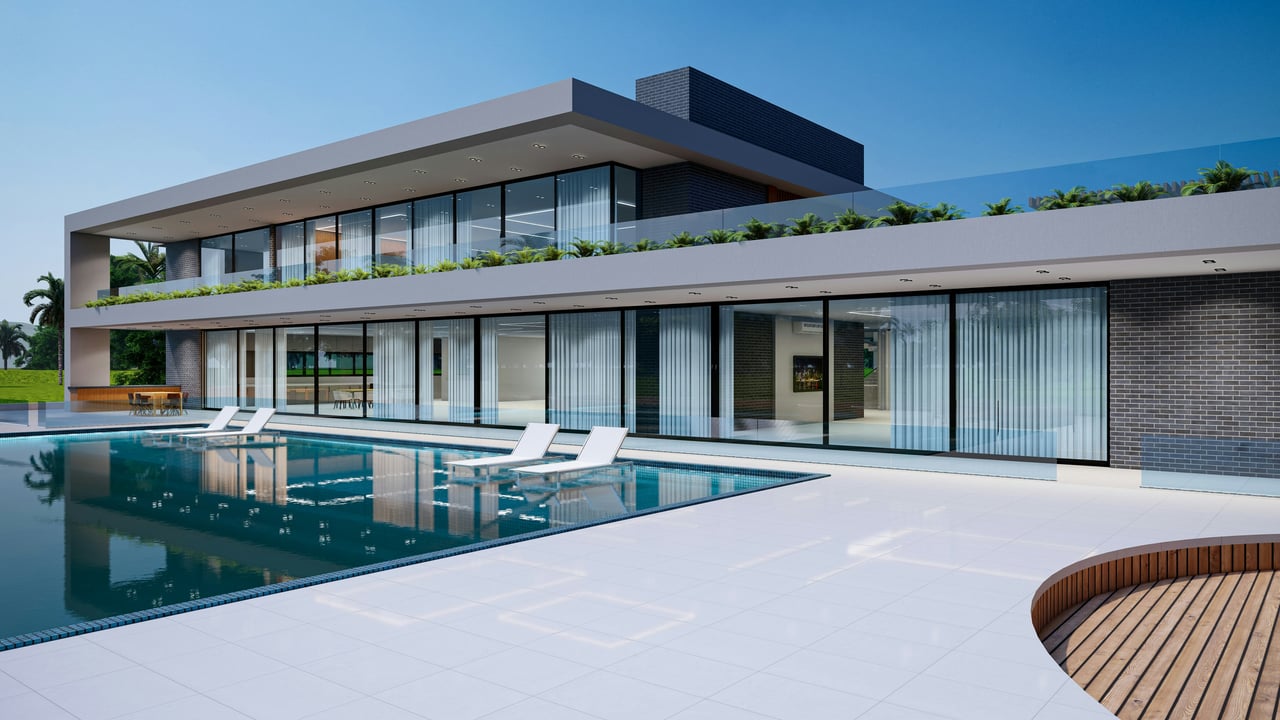
This format earns its cost in two specific scenarios. First, design-forward properties where the architecture or interior design itself is the differentiator. Think a new-construction home on Shys Hill Road in Green Hills, or a custom build in Forest Hills with floor-to-ceiling glass and exposed steel. Cinematic highlight is best for design-forward homes where mood sells. The walkthrough would bog down in room inventory when what you actually need is for a buyer to feel the light at 4 p.m. in that kitchen.
Second, luxury price bands where the competition is global. Davidson County luxury starts at the $1 million entry point and runs to $33.5 million. Over the past 12 months, 656 luxury homes closed at a median of $2.2 million and an average of $2.6 million. At that level, you are frequently marketing to buyers in California, New York, or overseas who are making a decision on a $3 million home largely from a screen. A cinematic video earns trust and credibility before they ever board a plane. For Nashville luxury listings, this is the non-negotiable format.
Where cinematic video fails: mid-range homes in the $450K–$750K band where layout legibility matters more than mood. A buyer shopping in East Nashville or Germantown at $600K wants to know if the floor plan works before they schedule a showing. A cinematic video that lingers on kitchen countertops and backyard canopy shots without orienting them to the floor plan is not moving that buyer to action. It's performance without utility.
Walkthrough Video: Earns the Showing, Filters the Tire-Kickers
A walkthrough video is linear and functional. The camera moves through the home in a logical sequence — entry, living, kitchen, primary suite, secondary rooms, exterior. It typically runs two to five minutes on YouTube and prioritizes spatial clarity over cinematic mood. Walkthroughs maximize clarity — layout and flow — while cinematic videos maximize emotion and shareability.
The walkthrough's job is qualification. Virtual tours and walkthrough videos act as a filter. By the time a buyer schedules an in-person walkthrough, they are already 90% sold on the layout. This means fewer unserious inquiries and more serious offers. In a market where Nashville homes are averaging 70 days on the market, eliminating wasted showings from buyers who didn't understand the floor plan is genuinely valuable. Every unqualified showing is a cost — in time, in staging wear, in seller stress.
A recent study showed that video walkthroughs reduced the sales process by an average of 21 days. That's not a statistic to shrug at when you're sitting at 70 days average. More practically: the walkthrough format is what performs on YouTube, where search intent is highest. Listing tours, neighborhood guides, and market update videos on YouTube build a searchable archive that keeps generating views long after posting. A cinematic Vimeo embed dies the day you close the listing. A well-titled walkthrough on YouTube for a 12 South home at $875K can continue driving organic traffic to your brand for months.
The walkthrough is also the right format for the large majority of Nashville listings — the occupied homes, the renovated bungalows, the townhomes in The Nations, the infill new construction in Germantown. If a buyer is going to drive 25 minutes from Brentwood to see your listing, they should be able to watch a 3-minute video first that tells them definitively whether it fits their life. If it doesn't, great — that's a showing you didn't have to do. If it does, you've got a motivated buyer walking in the door.
Social-Native Short-Form Video: Reach Engine, Not Closing Tool
This is the format where the most confusion — and the most wasted effort — lives.
Social-native short-form video means a vertical, 15-to-30-second clip produced specifically for Instagram Reels, TikTok, or YouTube Shorts. It is cut for the scroll, not the showing. The buyer who watches your Reel is not necessarily in decision mode. They are browsing. Your job with this format is one thing only: stop the scroll long enough to make them curious about the home and, by extension, the agent.
In 2026, short-form vertical video dominates engagement on Instagram Reels, TikTok, and YouTube Shorts, consistently outperforming static posts in both visibility and reach. Instagram Reels command a 30.81% average reach rate, more than double that of carousels or image posts. Those numbers are real, and they matter. But reach is not the same as buyer intent. An agent who confuses social reach with listing performance is making a category error that will cost them real hours.
The correct role for social-native video in a Nashville listing strategy is top-of-funnel brand building and algorithm distribution. TikTok's algorithm prioritizes geographic location when distributing content, meaning a well-produced neighborhood video can reach buyers and sellers in Brentwood, Franklin, or across Middle Tennessee. That's genuinely useful — but it's building a pipeline, not driving a specific showing. Post the social clip on launch day to seed momentum. Then point any traffic it generates toward the full walkthrough on YouTube or the property page where there's actually something to act on.
The vanity trap in social video: sellers and agents who measure listing success by Reel views. A Green Hills listing at $2.1M that accumulates 80,000 TikTok views and gets two showing requests has a video problem, not a reach problem. Views without qualified intent are exactly that — vanity.
The Format Decision Is Really a Price Band Decision
Here is the framework we use at The Costigan Group, and it's not complicated once you see it clearly:
- Under $500K: Walkthrough is primary. Social clip is distribution. Cinematic is overkill and an unnecessary budget item.
- $500K–$1.2M: Walkthrough is required. Social clip is required. A tight cinematic highlight reel (60–90 seconds) is worth the add-on if the home has a design story to tell.
- $1.2M and above: All three formats, produced as a set from a single shoot day. The cinematic piece anchors the luxury listing presentation. The walkthrough lives on YouTube and the property page. The social clip runs in paid and organic rotation for the first two weeks.
Many top-performing strategies use both a hero video for attention and a walkthrough for decision-making. The logic behind producing both from a single shoot day is economic: the incremental cost of cutting a 90-second social clip and a walkthrough from the same footage is minimal compared to scheduling a second crew day. Cinematic listing walkthroughs, social cut-downs, and agent-narrated tours are three distinct video formats that serve different stages of the buyer journey and should be planned as a set from a single shoot.
What Out-of-State Buyers Actually Watch
Nashville's relocation buyer pool is a specific and important variable in the video format question. In 2026, the traditional Sunday open house is no longer the primary way buyers see a home. With a significant influx of out-of-state buyers moving to Middle Tennessee, the first showing almost always happens on a smartphone.
The buyer relocating from Chicago or Los Angeles is not browsing Reels to find their next home. They are on YouTube and Zillow with specific search intent. They want the walkthrough. They want to see the kitchen-to-living flow, understand the garage situation, and know whether the primary suite is on the main level. They have already done enough social media research to know they want Nashville. Now they want to evaluate whether this specific property is worth getting on a plane for.
That's a different psychological moment than a local buyer scrolling Instagram at 9 p.m. The relocation buyer at that point of decision needs a walkthrough with enough length and coverage to replace the in-person preview. A cinematic piece alone will not do it. And a social clip will not do it. This is another reason the $1.2M-and-up playbook calls for all three — because at that price point you almost certainly have out-of-state buyers in the pool, and those buyers need orientation before they'll commit to a flight.
The One Execution Mistake That Kills All Three Formats
The most common video failure we see on Nashville listings has nothing to do with format choice. It's this: the video is shot but never distributed correctly.
A cinematic video that only lives on the listing agent's Instagram is not a marketing asset. It's content. A walkthrough buried in the MLS without a dedicated YouTube URL, a property page embed, and social distribution is invisible to 90% of the buyers who could benefit from it. Real estate listings with video get 157% more organic search traffic compared to text-and-photo-only listings, according to Realtor.com market research. But that search lift only materializes if the video is properly embedded, titled, and distributed across the right platforms.
The Costigan Group's approach to our neighborhood-specific listings is to treat distribution as part of the production plan, not an afterthought. The YouTube title matters. The description matters. The social caption matters. A perfectly produced cinematic video with a generic title and no distribution strategy will consistently underperform a medium-quality walkthrough that's properly indexed and shared.
Video format is the first decision. Distribution is the one that actually determines how many buyers see it. Get both right, and the 403% inquiry lift is real. Get only one right, and you've spent money on content that mostly lives in a Google Drive folder.
If you're listing in Nashville this fall — whether it's a $650K East Nashville renovated cottage or a $3M Green Hills new build — we'll tell you exactly which format makes sense before you spend a dollar on production. That conversation costs nothing and saves more. Reach out to The Costigan Group here.Related reading
- Nashville Luxury Real Estate
- Nashville Home Valuation
- Nashville Neighborhoods: The Complete 2026 Guide to Where to Buy, Invest, and Live
- Nashville Rental Market: What Falling Rents Are Telling Buyers About Home Prices
Frequently Asked Questions
How much does a listing video cost in Nashville?
The average real estate walkthrough video in the United States runs between $200 and $600 for a standard single-family home under 3,000 square feet. Pricing climbs from there for luxury properties, extended run times, and full cinematic packages with color grading, motion graphics, and licensed music. In Nashville specifically, full cinematic productions for luxury listings at $2M+ typically run $1,500–$3,500 when produced by a professional crew with a gimbal, drone footage, and post-production color work. A three-format package (cinematic hero, walkthrough, and social clips) shot on a single day often pencils out at $2,000–$4,500 depending on home size and crew scope.
Does listing video actually help sell a home faster in Nashville?
Yes, with specificity. A study showed that video walkthroughs reduced the sales process by an average of 21 days. In Nashville's current market — where Redfin shows the average home sitting 70 days as of mid-2026 — that's a meaningful reduction. The mechanism is buyer qualification: video filters out non-serious inquiries so the showings that do happen are from buyers who already understand and like the property.
Is a cinematic listing video worth it for a home priced under $800K?
Usually not as a standalone product. Below $1.2M, a well-executed walkthrough paired with a social-native clip delivers better ROI than a full cinematic production. The cinematic format justifies its cost when the home's design, views, or architecture are legitimately differentiated — not because the price point demands it. If you're selling a solid but unremarkable infill townhome in The Nations at $710K, spend the budget on a clean walkthrough and sharp photography, not a $2,500 cinematic reel.
What's the right length for a Nashville listing video on Instagram versus YouTube?
A solid rule of thumb is 60–120 seconds for a cinematic hero video, 2–5 minutes for a walkthrough on YouTube, and 15–45 seconds for Reels. The key variable is viewer intent: YouTube users are actively searching and will watch longer if the content is relevant; Instagram Reels users are scrolling and make a drop-off decision in the first three seconds. YouTube Shorts perform best at 30–60 seconds, TikTok at 15–60 seconds, and Instagram Reels at 7–30 seconds — the sweet spot for cross-posting is a master cut at 60 seconds or less.
Can a social media video alone sell a Nashville home without a full listing video?
It can generate awareness but rarely drives the qualified showings that convert to offers. Video attracts attention at the top of the funnel — scroll-stopping content on Instagram Reels, Facebook, and YouTube that drives initial interest. But awareness without a longer-form walkthrough for buyers to evaluate layout, scale, and condition is an incomplete strategy. Social-native video without a destination to send interested buyers — a YouTube walkthrough, a property page, a direct inquiry path — generates views, not offers.
Do Nashville luxury buyers watch listing videos before scheduling showings?
Increasingly yes, and particularly out-of-state buyers. In 2026, the first showing for most Nashville homes almost always happens on a smartphone, driven heavily by the influx of out-of-state buyers moving to Middle Tennessee. A buyer relocating from New York or California evaluating a $2.5M Belle Meade property needs enough video content to justify the trip. A cinematic video alone creates desire but doesn't answer practical questions. The combination of a cinematic hero and a full walkthrough is what converts a remote buyer from curious to committed to a flight.
Should the listing agent appear in the video?
It depends on the format. Agent-on-camera commentary is appropriate for social-native content and YouTube brand-building videos — it builds personal trust with buyers who will later work with that agent. It is typically not appropriate inside a cinematic listing video, where the home is the subject and agent appearances interrupt the emotional experience the video is designed to create. For luxury properties in particular, the home should command 100% of the frame in the produced piece. Agent presence belongs in the social distribution layer, not the hero asset.
About The Costigan Group
Jack Costigan is the founder of The Costigan Group at Compass in Nashville, where his team has closed more than $100 million in real estate across Greater Nashville and Middle Tennessee. Specializing in luxury advisory, investment, and short-term rental real estate, Jack is known for a data-driven approach that helps buyers, sellers, and investors understand the numbers, the neighborhood, and the long-term value before making a decision. Featured in Apple News as one of Nashville's most sought-after short-term rental advisors, Jack pairs deep local expertise with modern marketing and a strategy-first approach to real estate. Learn more at thecostigangroup.com.